
Spruce needle tortrix
Epinotia nanana
Description
How to identify
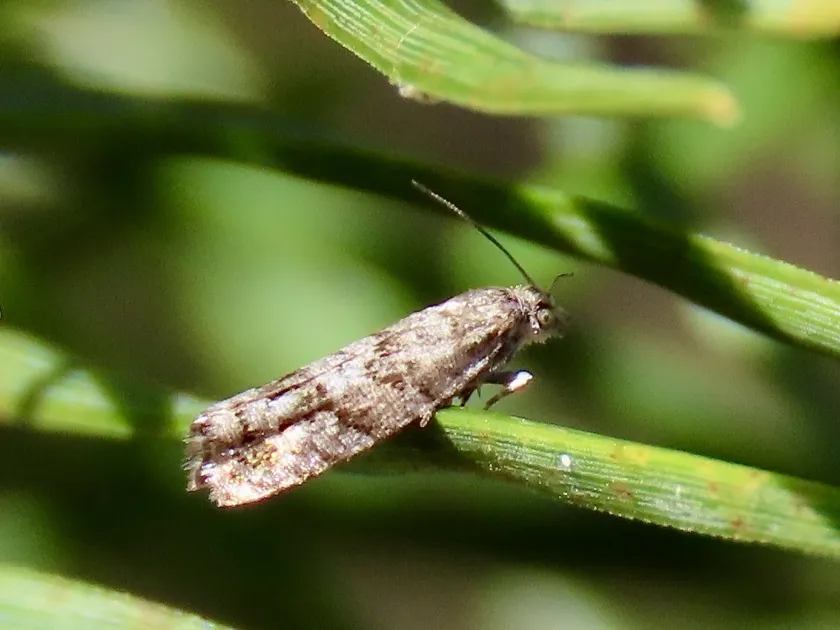
The spruce needle tortrix (Epinotia nanana) is a member of the Tortricidae family within the order Lepidoptera. The adult moth is a small insect with a wingspan of approximately 10–13 mm and a greyish-brown coloration.
The larvae are approximately 8–10 mm long, usually displaying a yellowish-green or grey body with a distinct dark head capsule. They are often difficult to spot due to their habit of hiding inside needles.
The life cycle involves four stages: egg, larva, pupa, and adult. The insect typically overwinters as a young larva inside the mined spruce needles, which provides insulation against cold temperatures.
Pupation occurs during late spring or early summer inside silk-lined chambers within the needles. Adult moths emerge during June and July to mate and lay their eggs.
Females deposit eggs at the base of young spruce needles. A single female is capable of producing several dozen eggs, facilitating the spread of the population across host trees.
What it damages
The primary host for this pest is the Norway spruce (Picea abies), though other species of spruce trees in nurseries and ornamental landscapes are frequently affected as well.
Larvae feed by boring into the internal tissues of the needles, which disrupts the tree’s photosynthetic capacity and leads to the death of the affected foliage.
While the larvae prefer the current year's growth, heavy infestations can result in damage across the entire crown, significantly reducing the aesthetic value of the tree.
Trees that are already under stress, such as those suffering from drought or poor soil conditions, are particularly susceptible to severe damage from this moth.
Repeated or severe infestations weaken the trees, potentially creating conditions favorable for secondary attacks by wood-boring insects and other opportunistic pathogens.
Signs of infestation
The first signs of infestation include the browning and eventual yellowing of needles, which are often webbed together by fine silk produced by the larvae.
Observant growers may notice tiny entry holes at the base of the needles, which serve as the point of entry for the developing larvae.
Inside the hollowed-out needles, one can find small brown pellets, which are the excrement (frass) left behind by the feeding larvae during their development.
In cases of heavy infestation, the tree crown may appear sparse and discolored with a noticeable reddish-brown tint as a large percentage of needles drop prematurely.
- Discoloration (yellowing/browning) of needles.
- Silk webbing connecting individual needles.
- Premature needle drop upon shaking the branch.
- Small entry holes located at the needle base.
Control measures
Management of the spruce needle tortrix requires an integrated approach that emphasizes timely monitoring and the use of targeted control strategies.
Regular visual inspections during the summer months are critical. Pruning and destroying heavily infested branches can help reduce the local population of the moth.
Biological control using Bacillus thuringiensis sprays is an effective, environmentally friendly option to target larvae without harming beneficial pollinators or predators.
If chemical intervention is necessary, systemic insecticides applied during the peak hatching period can prevent the larvae from successfully boring into the needles.
Maintaining tree vigor through proper irrigation and balanced fertilization helps trees withstand minor infestations and recover more quickly from damage.
Taxonomy
- Latin name
- Epinotia nanana
- Order
- Lepidoptera (butterflies)
- Family
- Tortricidae
- EPPO code
- EPINNA
Discussion
No discussions yet — be the first.