
Epinotia meritana
Epinotia meritana
Description
How to identify
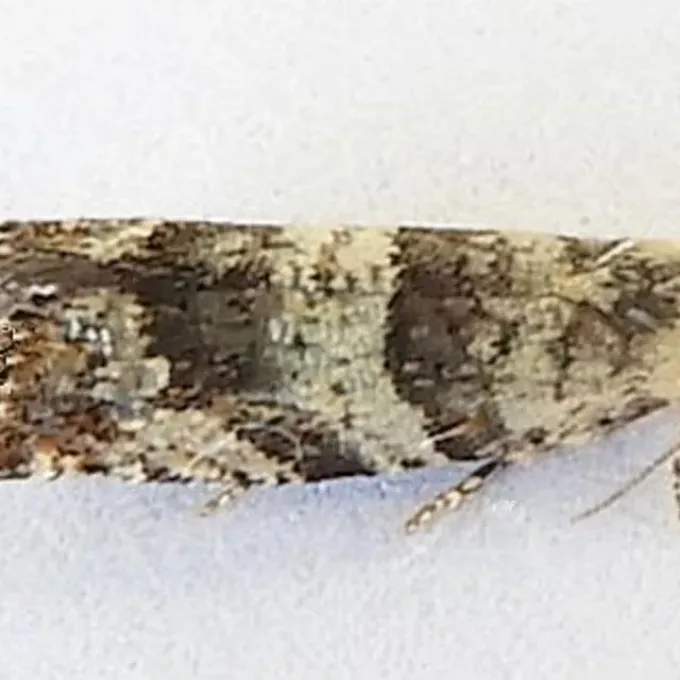
Epinotia meritana is a species of moth belonging to the order Lepidoptera and the family Tortricidae. Adult moths are relatively small, typically with a wingspan of 12–15 mm.
The forewings display a complex pattern of grey, brown, and white scales, providing effective camouflage when the insect rests on the rough bark of host trees.
The larvae are typical of tortricid moths, shifting from a yellowish color in early stages to a brownish-green hue as they reach maturity with a distinct head capsule.
Pupae are usually brown and protected within silken cocoons, which are often woven between needles or hidden within crevices of the tree bark.
As a specialized pest, Epinotia meritana has co-evolved with specific coniferous species, adapting its life cycle to the phenology of its host plants.
What it damages
The primary host plants for this pest are fir trees (Abies genus), where larvae cause damage by feeding on the needles, impacting tree vitality.
The larvae consume the foliage, leading to needle drop, which reduces the overall photosynthetic capacity and aesthetic value of the affected trees.
In cases of heavy infestation, the cumulative damage can result in the thinning of the canopy and the drying out of individual branches or entire saplings.
Beyond direct foliage loss, the feeding activity often leaves behind silk webs that trap frass, further deteriorating the health and appearance of the tree.
Chronic damage over several seasons can severely stress the host plant, making it more susceptible to secondary environmental or pathological threats.
When it appears
Adult moths typically emerge in late spring or early summer, depending on the local climate and temperature accumulation patterns.
Eggs are deposited on the young needles or shoots, providing the hatching larvae with immediate access to tender, nutrient-rich foliage.
Larval development is most intense during the summer months, coinciding with the peak vegetative growth phase of the fir trees.
The pest generally overwinters in the pupal or larval stage, tucked away in bark crevices or forest litter to survive harsh winter conditions.
Climatic variations such as early warm spells can influence the timing of emergence, potentially altering the synchronized development of the pest.
Signs of infestation
One of the earliest indicators of an infestation is the presence of silk webbing that larvae use to tie needles together into small protective shelters.
Affected needles begin to lose their color, turning yellow and eventually brown as they die off and drop from the branch prematurely.
Visual inspection of the canopy often reveals sparse or damaged needles, especially at the tips of the branches where feeding is concentrated.
Small particles of frass (excrement) caught within the webbing are a telltale sign that the larvae are active and currently feeding in the area.
- Yellowing and browning of fir needles.
- Webbed needle clusters on branch tips.
- Premature needle fall when branches are shaken.
Control measures
Biological control using microbial insecticides, such as those derived from Bacillus thuringiensis, is effective for targeting young larvae with minimal environmental impact.
Systemic insecticides may be employed in cases of significant infestation to provide long-term protection, particularly for high-value ornamental trees.
Pruning and proper disposal of heavily infested branches can help reduce the local population density of the pest within a garden or plantation.
Pheromone monitoring traps are an essential tool for detecting the arrival of adult moths and timing interventions for maximum efficacy.
Promoting overall tree vigor through adequate irrigation and balanced fertilization strengthens natural resistance against pest pressure.
Taxonomy
- Latin name
- Epinotia meritana
- Order
- Lepidoptera (butterflies)
- Family
- Tortricidae
- EPPO code
- EPINME
Discussion
No discussions yet — be the first.