
Fir needle moth
Epinotia fraternana
Description
How to identify
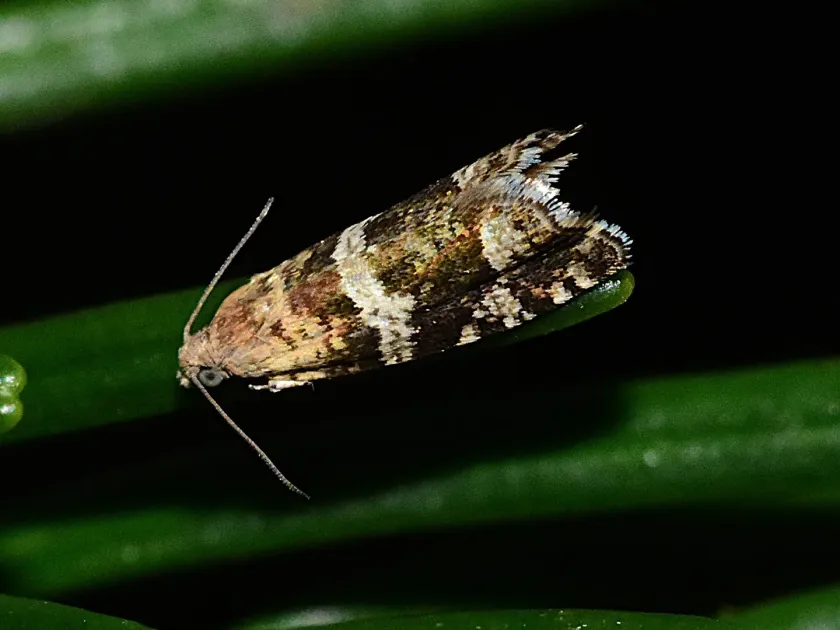
The fir needle moth (Epinotia fraternana) is a species of moth belonging to the Tortricidae family. Adult moths are small, with a wingspan of approximately 12–15 mm. Their forewings are decorated with a mottled gray-brown pattern, which provides excellent camouflage against the bark of host trees.
The larvae, or caterpillars, are about 10–12 mm long and possess a yellowish-green body with a distinct dark brown or black head. They are rarely seen in the open as they spend most of their life cycle protected within silken webs spun between needles or near the buds of host trees.
What it damages
The primary hosts of this pest are fir trees (Abies), although it is also commonly found infesting various species of spruce (Picea). The larvae cause damage primarily to the needles, which serves as their main source of nutrition during their development.
By mining the internal tissues of the needles and webbing them together, the larvae create unsightly nests. This feeding behavior leads to the premature browning and shedding of needles, which significantly impacts the health and decorative value of the trees, especially in nursery settings.
When it appears
The flight period for the adult moths typically occurs in early summer, from June to July. Eggs are laid individually on needles or near buds. The larvae hatch and begin feeding, eventually overwintering as young caterpillars in dense silk-spun hibernacula located at the base of the tree buds.
In the spring, as temperatures rise, the overwintered larvae resume feeding on the developing needles and young shoots. This period of activity is critical, as it coincides with the spring growth of the host plant, making the tree particularly vulnerable to stunted development.
Signs of infestation
The most visible sign of an infestation is the presence of small, silk-bound clusters of needles located at the tips of shoots. If these clusters are opened, one will find frass (caterpillar excrement) and hollowed-out needle remnants, which are diagnostic indicators of this moth species.
As the infestation progresses, the affected areas of the crown turn yellow and then reddish-brown. If the larvae have been active in large numbers, the needles will drop easily when the branch is shaken, and the tips of the shoots may show signs of deformation or necrosis due to larval feeding.
Control measures
Integrated pest management starts with sanitation; physical removal and destruction of infested twigs and webbing are effective for small trees or isolated infestations. Early monitoring during the spring months allows for the prompt identification of the larvae before they cause widespread aesthetic damage.
Chemical control involving systemic or contact insecticides may be necessary in nurseries or landscapes with high pest pressure. Applications should be timed to coincide with the period of larval activity in the spring, ensuring thorough coverage to reach the larvae hidden within their protective silk nests.
Taxonomy
- Latin name
- Epinotia fraternana
- Order
- Lepidoptera (butterflies)
- Family
- Tortricidae
- EPPO code
- EPINFR
Discussion
No discussions yet — be the first.