
Epinotia albangulana
Epinotia albangulana
Description
How to identify
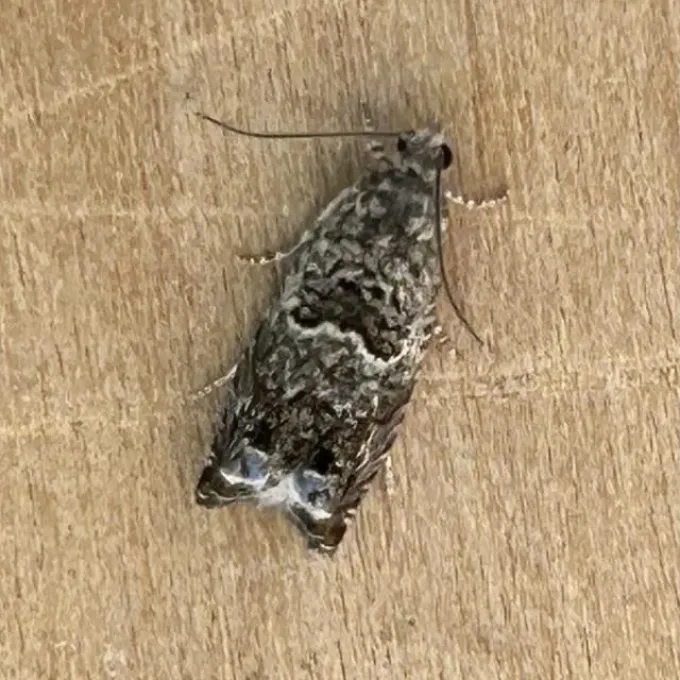
Epinotia albangulana is a species of moth belonging to the family Tortricidae, within the order Lepidoptera. The common name refers to the distinct white patch located at the angle of the forewings, which is a key identification feature for this species.
The adult moth is relatively small, with a wingspan ranging from 14 to 18 millimeters. The wing coloration typically varies between shades of grey and brownish-brown, providing excellent camouflage against the bark of host trees during the daytime.
Larvae (caterpillars) of this species are typically 12–15 mm in length. They possess a cylindrical, elongated body, often colored in shades of green or brown, allowing them to blend in with the needles and buds of their host conifers.
The life cycle involves a complete metamorphosis including egg, larva, pupa, and adult stages. In most climates, this species completes one generation per year, with the timing closely aligned with the budding period of host trees.
These moths are primarily found in coniferous forests and plantations. Their distribution is closely linked to the presence of host species, particularly in regions where environmental conditions favor the development of the larvae.
What it damages
The primary hosts for Epinotia albangulana are coniferous trees, specifically species of the genera Abies (fir) and Picea (spruce). It can cause significant damage in both commercial nurseries and established forest stands.
The larvae feed on the buds and emerging shoots of these trees. By hollowing out the buds, they prevent normal shoot development, which leads to stunted growth, apical dominance loss, and crooked crowns in young trees.
This feeding activity significantly reduces the commercial value of timber and the aesthetic appeal of ornamental conifers. Severely infested young trees may experience long-term growth defects that persist throughout their lives.
Furthermore, the damaged tissues serve as entry points for secondary pathogens, such as fungi, which can exacerbate the harm caused by the larvae and weaken the tree's overall resistance to environmental stressors.
During outbreak years, the cumulative impact of larvae feeding can result in large-scale defoliation and widespread stress across affected stands, requiring active management intervention to prevent significant economic losses.
Signs of infestation
The most prominent sign of infestation is the presence of silk webbing around the buds and terminal shoots. The larvae use this webbing to bind needles together, creating a protected micro-environment for their feeding.
In early spring, the wilting, yellowing, or browning of buds is a clear indicator of larval presence. Dissecting these damaged buds often reveals larval frass or the presence of the caterpillars themselves.
The arrest of the central leader shoot in young saplings is a critical symptom. When the main growing tip is destroyed, the tree may produce multiple side branches, leading to a deformed, bushy appearance rather than a single, straight trunk.
Twilight flights of adult moths around the canopy indicate the start of the egg-laying period. Monitoring these flights with pheromone or light traps is a standard procedure for early detection and population management.
Accumulations of dry, necrotic needles held together by webbing at the tips of the shoots are definitive signs of an Epinotia infestation that distinguish it from various other conifer-feeding caterpillars.
Control measures
Management of Epinotia albangulana involves an integrated pest management (IPM) strategy that combines monitoring, physical removal, and chemical or biological control methods to maintain populations below economic thresholds.
Physical measures, such as the pruning and destruction of infested buds and shoots during the larval stage, can significantly reduce local populations, especially in small nurseries or landscape settings.
Chemical control is most effective when targeted at the early larval stage, shortly after egg hatch. Systemic insecticides are preferred as they penetrate the tissues where larvae feed, protecting the developing buds from internal damage.
Biological control options include the encouragement of natural predators and parasitoids that target tortricid larvae. Additionally, biological insecticides based on specific strains of bacteria are effective and environmentally friendly.
- Apply insecticides during the bud-burst phase.
- Deploy pheromone traps to monitor adult flight activity.
- Conduct regular manual removal of infested plant material.
Taxonomy
- Latin name
- Epinotia albangulana
- Order
- Lepidoptera (butterflies)
- Family
- Tortricidae
- EPPO code
- EPINAL
Discussion
No discussions yet — be the first.