
South African carnation tortrix
Epichoristodes acerbella
Description
How to identify
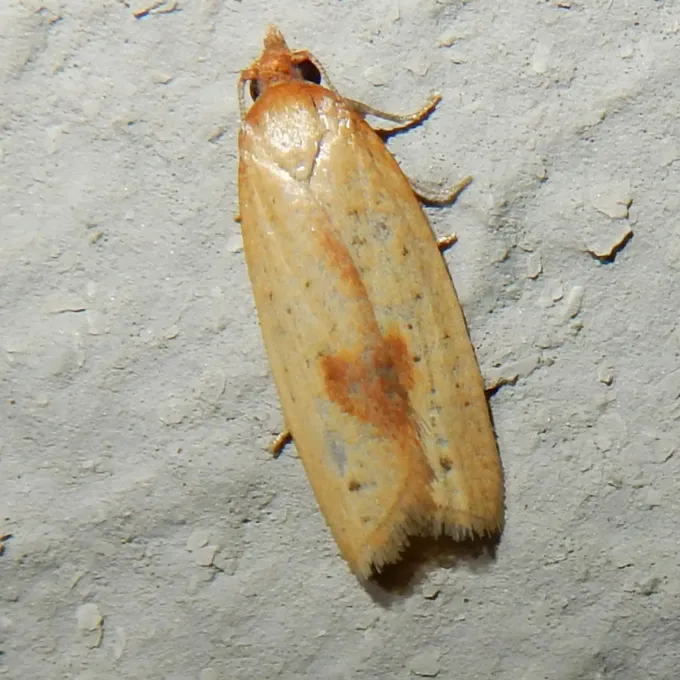
The South African carnation tortrix (scientific name: Epichoristodes acerbella) is a moth species belonging to the family Tortricidae. It is recognized as a significant pest in both protected and open cultivation systems.
Adult moths have a wingspan ranging from 15 to 22 mm. Their forewings are typically brownish-yellow or orange, marked with darker, often indistinct, patterns that provide effective camouflage.
The larvae progress through five instars. A mature larva reaches approximately 20 mm in length and possesses a greenish body with a light brown head, making it difficult to distinguish from leaf veins.
Pupation occurs within sheltered areas such as curled leaves or deep inside flower buds. The pupae are reddish-brown and are often encased in silk threads spun by the larva before transformation.
This species is highly adaptable and can survive in various climates, though it prefers the stable, warm conditions found in greenhouse environments.
What it damages
This pest is a generalist feeder that predominantly infests plants in the Caryophyllaceae family, with carnations being the most commercially significant target. It also attacks chrysanthemums, roses, and some vegetables.
Larval feeding causes severe structural damage to the plant. By feeding on buds, they prevent normal flowering, leading to significant financial losses in ornamental flower production.
The larvae create tunnels in the leaves and stems, disrupting nutrient flow. In young plants, this can cause stunted growth or complete death of the growing point.
Ornamental crops infested with this tortrix often become unsellable due to the deformation of buds and the presence of webbing, which indicates an active infestation.
Secondary infections often follow the physical damage caused by the larvae, as the entry points into plant tissues allow pathogens like fungi and bacteria to enter.
When it appears
Under greenhouse conditions, the life cycle is continuous, with generations overlapping. Reproduction is fastest at temperatures between 20°C and 25°C.
In outdoor environments, the number of generations per year depends on the local climate. In favorable regions, there can be up to four or five generations during the growing season.
The egg stage usually lasts about 10 to 14 days. Larvae are active feeders for several weeks, depending on temperature, before entering the pupal stage.
The adult moth is nocturnal and most active during the night, which makes daytime visual monitoring challenging for farm workers.
Overwintering usually occurs in the larval stage. They can hibernate in plant debris, soil, or even within persistent plant tissues if the environment remains sheltered enough.
Signs of infestation
The most visible sign is the presence of white silk webbing between leaves or buds. Larvae use this silk to bind parts of the plant together, creating a protective nest.
Skeletonized leaf patches appear where young larvae have grazed on the surface tissue, leaving behind a fine network of vascular veins.
Buds affected by the larvae often show small holes or entry points. Heavily infested buds may dry up and fail to open entirely, resulting in damaged flowers.
Accumulated frass (larval excrement) found near the webs or on the surface of leaves is a clear indicator of active feeding activity by the caterpillars.
Wilting of terminal shoots and yellowing of the surrounding foliage are late-stage symptoms indicating severe infestation and compromised internal plant health.
Control measures
Effective management begins with strict phytosanitary measures, including the inspection of all incoming nursery stock for signs of eggs or larvae.
Cultural control involves the thorough removal and destruction of crop residues. Eliminating weeds around greenhouse areas is essential to remove alternative hosts.
Biological control using parasitic wasps (such as Trichogramma species) can effectively reduce egg populations if introduced at the correct time in the life cycle.
Chemical control should rely on a rotation of insecticides to prevent resistance. Products based on Bacillus thuringiensis are often preferred due to their specificity.
- Monitor moth activity using pheromone traps to time pesticide applications accurately.
- Regular inspection of the upper canopy where eggs are typically laid.
- Prompt removal of infested buds to prevent the spread of larvae to healthy plants.
Taxonomy
- Latin name
- Epichoristodes acerbella
- Order
- Lepidoptera (butterflies)
- Family
- Tortricidae
- EPPO code
- EPIOIO
Discussion
No discussions yet — be the first.