
Epicaerus aurifer weevil
Epicaerus aurifer
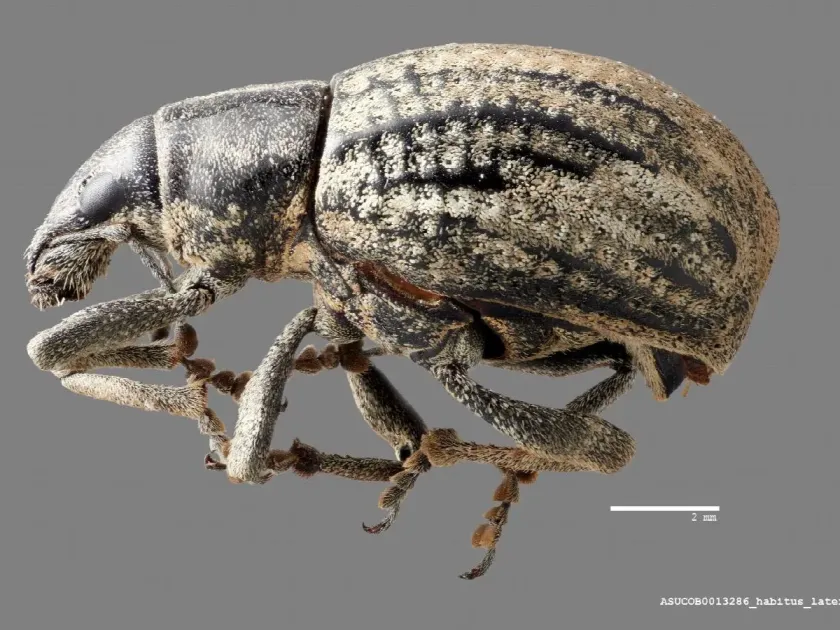
Description
How to identify
Epicaerus aurifer is a species of broad-nosed weevil belonging to the family Curculionidae within the order Coleoptera. Adult weevils are recognizable by their distinct snout and often metallic or golden-hued appearance.
The body is covered in small scales that can change color based on light refraction. Adult specimens typically measure between 8 and 12 millimeters in length, making them visible to the naked eye during inspection.
Larvae are soil-dwelling, C-shaped, and creamy-white in color, lacking legs. They spend their entire developmental period feeding underground, which makes them difficult to observe before damage occurs.
Identifying this species in the field often requires examining the characteristic patterns on the elytra and the structure of the rostrum. Entomologists use these morphological markers to differentiate E. aurifer from other common weevil species.
Adults are capable of short-distance flight and are generally more active during daylight hours. They rely on their cryptic coloration to blend in with foliage, providing a natural defense against predators.
What it damages
This weevil is recognized as a pest for various agricultural and horticultural crops. The damage is primarily caused by adult feeding on leaves, which leads to reduced photosynthetic capacity.
Favored hosts include legumes and nightshade plants. Adult feeding often starts at the edges of the leaf, creating a notched appearance that is characteristic of many Curculionidae species.
The underground larvae cause significant harm by feeding on the root systems of developing plants. This root damage deprives the plant of water and nutrients, leading to stunted growth or wilting.
Heavy infestations can result in total defoliation of young seedlings. When the population density is high, the damage can significantly reduce the overall yield potential of the field.
Economic damage is evaluated based on the density of the population and the growth stage of the crop. Early intervention is crucial to prevent the pest from reaching thresholds that jeopardize the harvest.
When it appears
Adult Epicaerus aurifer emerge from their overwintering sites in the soil during early spring as temperatures rise. This timing often aligns with the sprouting of host plants.
The peak feeding activity of the adults usually occurs during the primary vegetative growth stages. This is when the insects congregate on the foliage for both feeding and mating purposes.
The egg-laying process takes place in the soil or near the base of the plant. The larvae then hatch and move downward into the root zone to begin their development cycle.
Pupation occurs within the soil, where the insect remains protected until the adult phase is reached. Depending on the climate, the generation cycle can span several months.
As temperatures begin to drop in the autumn, the adults move deeper into the soil profile to overwinter. They remain in this dormant state until the following spring, completing the annual cycle.
Signs of infestation
The most visible sign of infestation is the notched or ragged edges on leaves, which indicate adult feeding activity. In some cases, the entire leaf margin may be consumed.
Wilting and yellowing of the foliage, even when soil moisture is adequate, often signal root damage caused by larval feeding. This is frequently observed in patchy areas across a field.
Observing adult weevils on the underside of leaves or hiding near the base of the stem during the evening or early morning is a definitive sign of an active infestation.
Frass (insect waste) found on the foliage or at the base of the plant can serve as an indicator of a concentrated pest population.
- Notched leaf margins
- Stunted plant growth
- Sudden wilting of healthy plants
- Presence of larvae in the root zone
- Visual confirmation of adults on foliage
Control measures
Crop rotation is one of the most effective cultural control methods. By changing the host plant, the life cycle of the weevil is disrupted, preventing the buildup of large populations.
Deep autumn tillage helps expose overwintering adults and larvae to environmental extremes and predators, significantly reducing their survival rate for the next season.
When populations exceed economic thresholds, the application of systemic or contact insecticides is recommended. The timing of these applications should coincide with the peak activity of the adults.
Biological control options, such as the use of entomopathogenic nematodes or fungi, can be effective in managing larval populations directly within the soil environment.
Ongoing monitoring using light traps or pheromone baits allows farmers to make informed decisions about pest control, ensuring that interventions are both timely and cost-effective.
Taxonomy
- Latin name
- Epicaerus aurifer
- Order
- Coleoptera (beetles)
- Family
- Curculionidae
- EPPO code
- EPIEAU
Discussion
No discussions yet — be the first.