
Ragweed stem borer
Epiblema otiosana
Description
How to identify
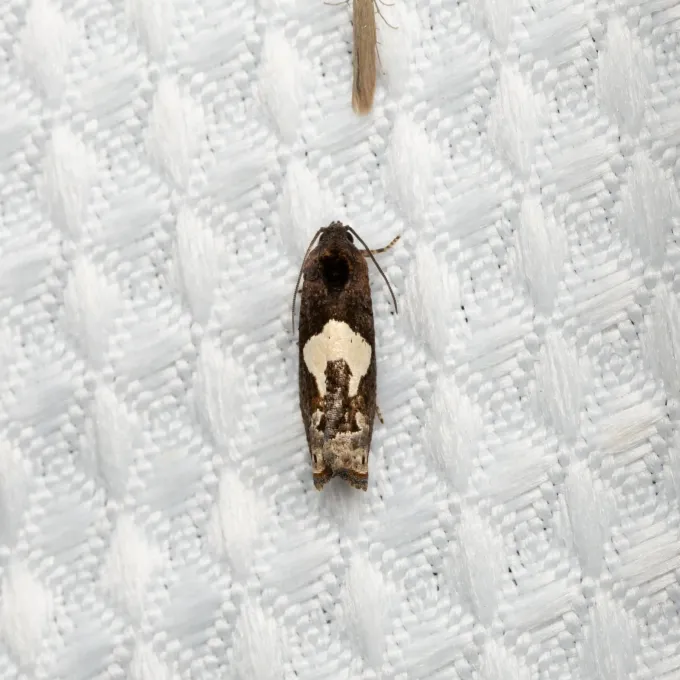
The ragweed stem borer (Epiblema otiosana) is a member of the order Lepidoptera and the family Tortricidae. The adult is a small moth with a wingspan of approximately 15–20 mm, exhibiting cryptic coloration that provides camouflage on its host plants.
The larvae progress through several developmental stages, evolving from pale to brownish in color. The presence of a dark head and thoracic shield serves as a key identification mark during field inspections of stems.
The biological cycle is strictly tied to members of the Asteraceae family. Depending on the local climate and host availability, the species can produce multiple generations per growing season.
Females lay eggs on young leaves or stems. Upon hatching, the larvae quickly bore into the stem, establishing their feeding tunnels, which offer protection from environmental factors.
Pupation occurs within the stem, where the insect remains protected. Overwintering typically takes place as mature larvae within the stems of host plant debris, ensuring survival during colder months.
What it damages
The primary host plant is common ragweed (Ambrosia artemisiifolia), but the borer may occasionally target other Asteraceae species if the preferred host is scarce in the vicinity.
By excavating tunnels within the stem, the larvae disrupt the vascular system of the plant, significantly impeding nutrient and water transport to the upper parts.
Affected plants often display stunted growth, wilting, or structural weakness, which reduces the plant's competitive vigor and reproductive output.
In cases of high infestation, the borer contributes significantly to the natural decline of ragweed populations, preventing the development of viable seeds.
While considered an agricultural pest in some contexts, its role as a potential biological control agent for invasive ragweed species is highly valued in environmental management.
When it appears
Adult emergence typically begins in late spring or early summer, synchronized with the onset of favorable temperatures for moth activity.
The peak feeding period for larvae occurs throughout the summer months, coinciding with the rapid vegetative growth phase of ragweed.
A second generation often develops in the late summer, corresponding with the budding and flowering stages of the host plants.
As autumn approaches, the final generation larvae migrate to the lower stem or root collar to enter diapause for the winter season.
Monitoring seasonal patterns is essential for accurate pest density assessment and for timing management strategies effectively.
Signs of infestation
The initial indication of an infestation is the presence of small entry holes on the stems, often surrounded by frass (larval excrement) resembling fine sawdust.
- Wilting or yellowing of the plant terminal shoot.
- Specific swellings or galls forming on the stems.
- Visible damage to leaf axils where larvae may be feeding initially.
- Premature decay of floral structures and flower buds.
- Accumulation of silk webbing near the sites of larval entry or exit.
Control measures
The biological method is highly recommended, as the borer acts as a natural suppressant of invasive ragweed, often requiring no active intervention in weed-infested areas.
Agricultural practices such as deep tillage or plowing after harvest are highly effective in destroying wintering sites and reducing the following season's population.
Pheromone traps serve as an excellent tool for monitoring adult flight patterns and assessing the risk of dispersal into nearby sensitive agricultural zones.
Chemical control is rarely utilized specifically against this species, as it is generally considered beneficial for weed management unless it transitions to crops.
Strict phytosanitary control during the transport of organic waste is necessary to prevent the unintended introduction of the borer into new geographical areas.
Taxonomy
- Latin name
- Epiblema otiosana
- Order
- Lepidoptera (butterflies)
- Family
- Tortricidae
- EPPO code
- EPIBOT
Discussion
No discussions yet — be the first.