
Ephoron virgo
Ephoron virgo
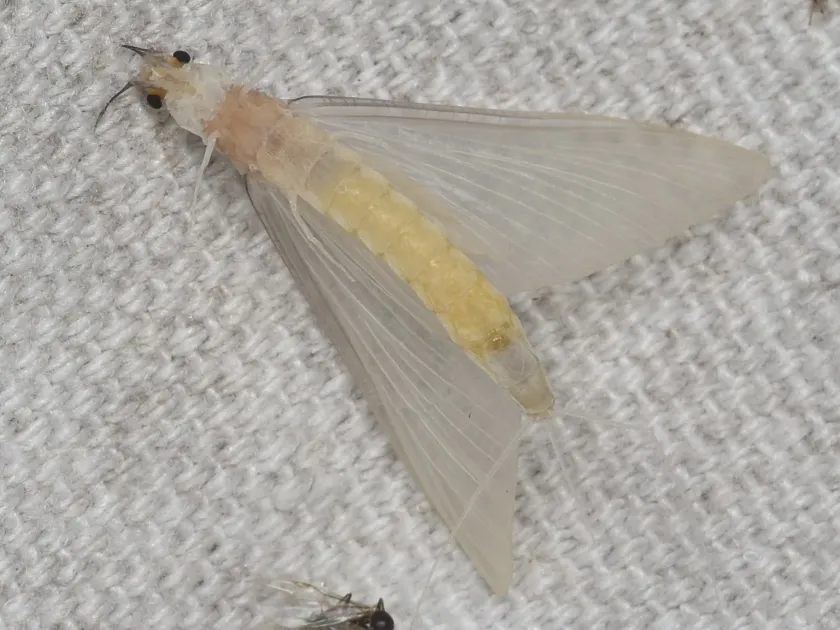
Description
How to identify
Ephoron virgo is a species of mayfly belonging to the family Polymitarcyidae, order Ephemeroptera. These insects have an incomplete metamorphosis, spending most of their life cycle as aquatic larvae.
Adult insects are characterized by their fragile, slender bodies, transparent wings, and long, thread-like caudal filaments. Males are distinct from females and play a specialized role in the mating process.
A notable characteristic of this species is the highly synchronized mass emergence, where millions of adults leave the water simultaneously, creating a swarming phenomenon.
The larvae are specialized burrowers, living in the soft, sandy, or muddy bottoms of rivers with moderate flow. They possess robust mandibles for excavating their tunnels.
Their coloration is typically pale or yellowish-brown, allowing them to blend seamlessly into the riverbed sediments, effectively avoiding predators during their development.
What it damages
It is crucial to emphasize that Ephoron virgo is not a primary agricultural pest; it does not consume crops or destroy plant foliage in any stage of its life.
The damage associated with this insect is purely technical and logistical, occurring when farm sites are located in close proximity to large, slow-moving water bodies.
During mass swarming events, the sheer volume of insects can clog irrigation filters, water intake screens, and pump inlets, causing mechanical failures in irrigation infrastructure.
The organic accumulation of dead insect masses can also cause localized pollution and unpleasant odors near farm structures located directly on the riverbank.
While the larvae exhibit burrowing behavior, this generally does not pose a significant risk to the structural integrity of well-maintained modern irrigation channels.
When it appears
The life cycle of Ephoron virgo is strictly seasonal, with mass emergence typically occurring in late summer, specifically from late July through August.
Adult life span is remarkably short, ranging from a few hours to a single day, during which time the primary goal of the insect is to mate and lay eggs back into the water.
Larval development takes approximately one year, with individuals undergoing multiple molts influenced by water temperature and the availability of organic detritus in the substrate.
As mayflies, they lack a pupal stage. The nymphs emerge from the water as subimagoes, which shed their skin one final time to reach sexual maturity as adults.
The most intense activity usually occurs during dusk and nighttime hours, as these insects are highly attracted to artificial light sources near the shoreline.
Signs of infestation
The most obvious sign of an infestation or emergence is the accumulation of dead insects on the water surface and riverbanks, which often resembles piles of snow.
Engineers and farm managers may notice a sudden decrease in flow rates within irrigation pipes due to the rapid clogging of mesh filters by insect remains.
The presence of fine, cylindrical burrow openings in the sandy or silty bottom of irrigation canals or nearby rivers is a clear indication of a healthy larval population.
Increased swarming activity around high-intensity yard lights on agricultural premises during the evening serves as a reliable marker of the emergence season.
A noticeable decaying odor in the vicinity of water reservoirs during late summer is frequently linked to the post-mating mortality of the swarm.
Control measures
Management of Ephoron virgo is focused on technical adaptation and infrastructure protection rather than eradication, as these insects are vital components of the ecosystem.
- Installing removable, fine-mesh screen filters on irrigation pumps that can be easily cleaned during peak emergence days.
- Utilizing motion-activated or yellow-spectrum lighting in farm yards to reduce the attraction of swarms toward infrastructure and equipment.
- Performing maintenance on irrigation canals to clear excessive silt accumulation where larvae thrive.
- Scheduling night-time field operations away from water sources during the peak emergence window to prevent insect accumulation on machinery.
- Maintaining riverbank vegetation, which provides natural barriers and supports predators that regulate the mayfly population naturally.
Taxonomy
- Latin name
- Ephoron virgo
- Family
- Polymitarcidae
- EPPO code
- EPHOVI
Discussion
No discussions yet — be the first.