
Ephoron
Ephoron
Description
How to identify
Ephoron is a genus of aquatic insects belonging to the order Ephemeroptera, specifically within the Polymitarcyidae family.
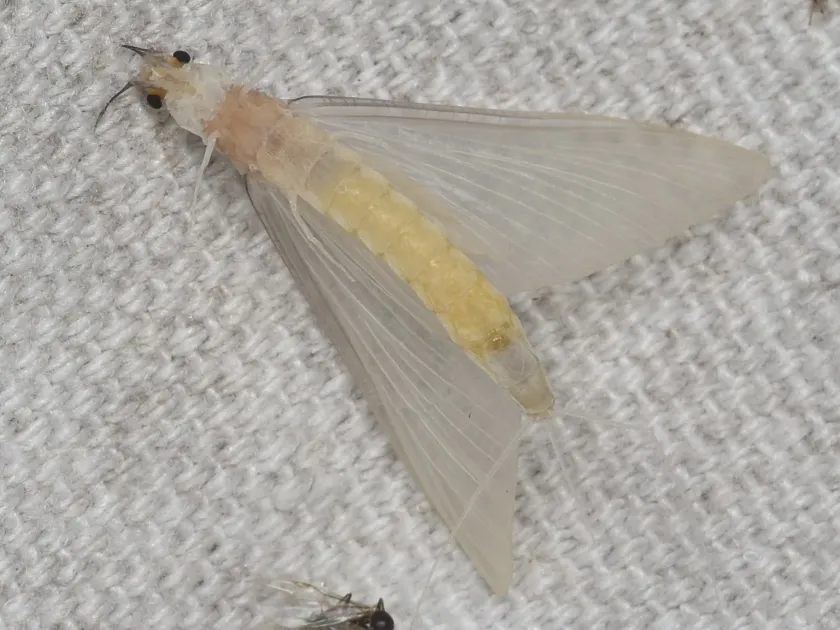
Adults exhibit the classic delicate appearance of mayflies, featuring two pairs of wings and long, filamentous caudal tails.
They are characterized by a pale, often whitish or yellowish body coloration that makes them highly visible during massive nuptial flights.
Nymphs are unique due to their specialized mouthparts, which they use to construct burrows in the sandy or silty sediments of rivers.
This genus is highly sensitive to water quality, and its presence can serve as an indicator of the ecological state of surrounding water bodies.
What it damages
Ephoron does not feed on crops, meaning it causes no direct tissue damage to cultivated plants or agricultural products.
Damage is indirect and occurs primarily when mass emergence events interfere with agricultural facilities and equipment operations.
Accumulated biomass of dead mayflies can clog water intake systems, filtration grids, and irrigation machinery used in field watering.
Massive gatherings near high-intensity lighting at night can cover sensors, cameras, and electrical panels, disrupting automated processes.
The digging activity of nymphs in irrigation ditches may subtly alter bottom topography, requiring more frequent maintenance of hydraulic structures.
When it appears
The life cycle of Ephoron is predominantly aquatic, with nymphs residing in the riverbed for most of the year.
The emergence of adults into their winged, terrestrial stage occurs during the warmest months, typically mid-to-late summer.
Flight events are often synchronized and nocturnal, lasting only a few days annually depending on local weather conditions.
The adult lifespan is extremely short, lasting from a few hours to a day, as they lack functional mouthparts for feeding.
Understanding the timing of these seasonal events is crucial for managing potential infrastructure disturbances on large farms.
Control measures
Traditional chemical pest control is not applicable as Ephoron is not a target agricultural pest and holds ecological importance.
Management focuses on technical modifications, such as utilizing specific lighting wavelengths that are less attractive to the insects.
Installing fine-mesh debris screens on irrigation inlets helps prevent clogging by the accumulated remains of the insects.
Sealing sensitive electronic enclosures and ventilation systems during the predicted emergence season minimizes the ingress of adults.
Regular maintenance of irrigation infrastructure ensures that mass emergence events do not lead to long-term operational downtime.
Taxonomy
- Latin name
- Ephoron
- Family
- Polymitarcidae
- EPPO code
- EPHOSP
Discussion
No discussions yet — be the first.