
Fatime dragonfly
Epallage fatime
Description
How to identify
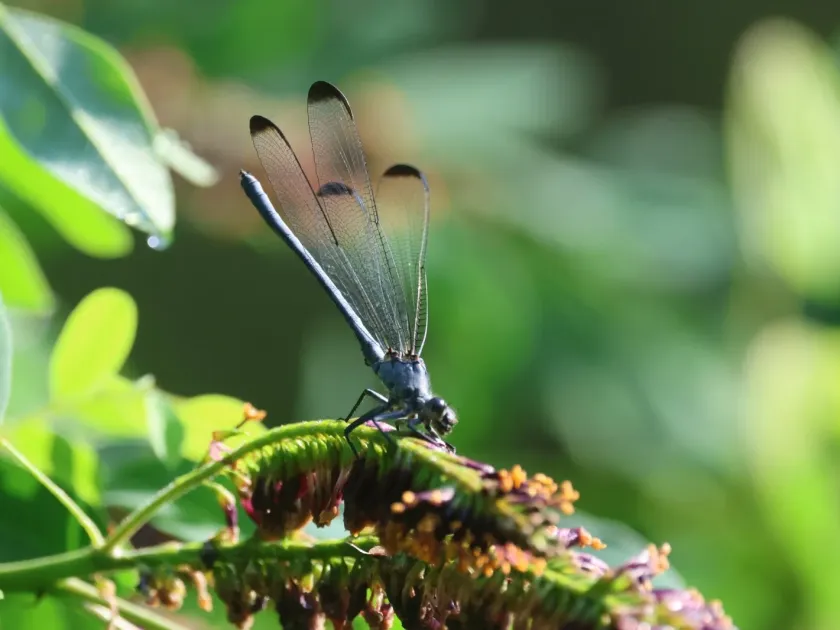
The Fatime dragonfly (Epallage fatime) belongs to the order Odonata and the family Euphaeidae. It is a striking insect characterized by a bronze-green metallic body that provides excellent camouflage in riparian zones.
The wings of the adults are transparent and often feature a distinct dark patch at the base, which is a key identification feature for this species. Their wingspan enables agile flight, allowing them to hunt effectively in their natural habitat.
They prefer fast-flowing water bodies with abundant vegetation. During sunny weather, adults are highly active, exhibiting sophisticated flight patterns while searching for prey or potential mates near the water surface.
The larvae (naiads) are strictly aquatic, living among rocks and submerged vegetation. They possess specialized gills and powerful mouthparts, which are perfectly adapted for a predatory lifestyle in the benthic zone.
Distinguishing this species involves observing the wing shape and the unique flight behavior, where they often hover over the water. They serve as an important biological indicator for water quality.
What it damages
While dragonflies are generally beneficial predators, the larvae of Epallage fatime can occasionally cause issues in aquaculture, particularly in fish hatcheries, by feeding on fish fry.
In most agricultural settings, these insects do not cause direct damage to crops. Their predatory nature often makes them beneficial, as they consume various smaller insects, including potential pests.
Massive population growth in irrigation systems can lead to ecological imbalance, although this is quite rare. The species is highly sensitive to pollutants, meaning its presence indicates a healthy water source.
There is no evidence suggesting that this dragonfly damages plant tissues or reduces crop yields. Its role in the ecosystem is primarily that of a predator and a source of food for larger animals.
From an agronomic perspective, this insect is considered a component of biodiversity. Controlling its population is only necessary in specific fish farming conditions rather than general crop production.
When it appears
The lifecycle of the Fatime dragonfly is highly seasonal and depends on temperature. Adults emerge in early summer when conditions are optimal for mating and egg-laying in aquatic vegetation.
The peak period for adult activity is between June and July. During these months, the insects are most visible as they frequent stream banks and rivers to complete their reproductive cycle.
The larval stage is the most prolonged, often lasting multiple years depending on water temperatures and food availability. This ensures that the population remains stable throughout varying seasons.
As autumn arrives, the adult population dies off, completing its lifespan. The larvae remain in the water to overwinter, showing high resilience to lower temperatures and changes in the environment.
Spring warming triggers the final phase of development, where the larvae increase their feeding rate before undergoing metamorphosis to emerge as adults, thus renewing the life cycle.
Control measures
There are no specific chemical control measures for Epallage fatime in agriculture, as they are not regarded as crop pests and are often protected components of the environment.
In fish pond management, the most effective preventative measure is the regular maintenance of water bodies, such as removing excess vegetation that provides shelter for larvae.
Ensuring water quality by minimizing fertilizer and pesticide runoff is essential for managing local aquatic ecosystems. Clean water prevents the artificial accumulation of dragonfly larvae.
Biological control, such as promoting populations of fish and birds that naturally prey on dragonfly larvae, is the most sustainable approach to maintaining balance in aquatic environments.
The use of chemical pesticides in or near aquatic areas is discouraged due to the risk of destroying non-target species and causing long-term damage to the local biodiversity.
Taxonomy
- Latin name
- Epallage fatime
- Family
- Euphaeidae
- EPPO code
- EPALFA
Discussion
No discussions yet — be the first.