
Kentish glory
Endromis versicolora
Description
How to identify
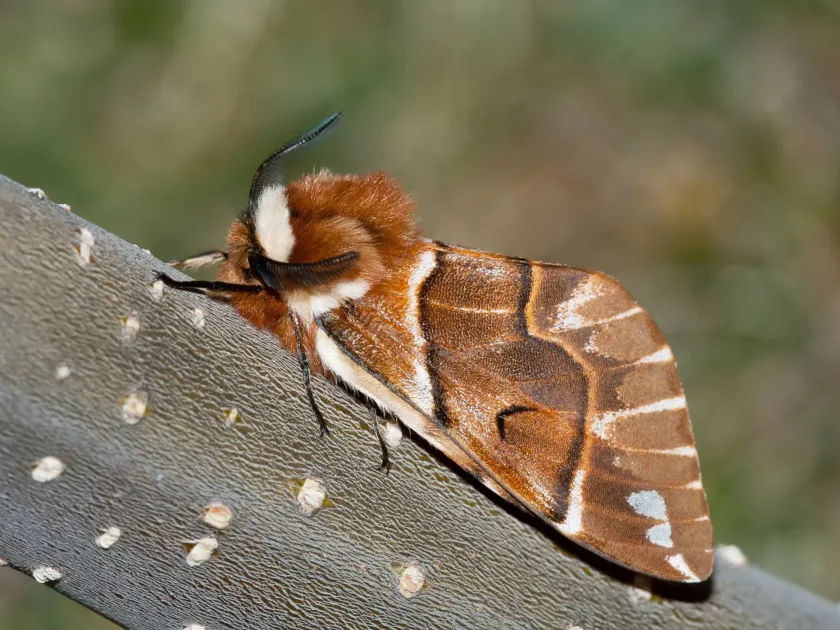
The Kentish glory (Endromis versicolora) is a distinctive moth belonging to the family Endromididae. It is characterized by a wingspan of 60–80 mm and a rich orange-brown color with complex white and dark markings.
The larvae, or caterpillars, are bright green with oblique pale side stripes and a prominent bump on the eleventh segment, making them well-camouflaged on birch leaves.
The life cycle involves complete metamorphosis, typically consisting of one generation per year, which dictates the timing of its presence in the ecosystem.
Pupation occurs in a tough, silken cocoon often located in the leaf litter or just below the surface of the soil at the base of the host tree.
Adult moths are nocturnal and are often attracted to light, which makes light trapping a viable method for identifying their presence in a specific area.
What it damages
The primary host plants for Kentish glory larvae are species within the Betulaceae family, specifically silver birch (Betula pendula) and downy birch (Betula pubescens).
While birch is the preferred host, larvae may occasionally feed on alder (Alnus), hornbeam (Carpinus), and hazel (Corylus) when local populations reach high densities.
Caterpillars consume leaves from the edges, often skeletonizing them and leaving only the main veins, which significantly impacts the host tree's photosynthetic capacity.
High levels of infestation can lead to severe defoliation, which causes physiological stress to the trees, making them more susceptible to secondary pests or diseases.
In nursery settings or young plantations, the damage can be particularly detrimental, affecting the growth rates and overall health of the trees.
When it appears
Adult moths emerge early in the spring, typically between April and May, taking advantage of the initial warming of the environment.
Eggs are laid shortly after emergence, and the resulting larvae feed actively throughout the late spring and early summer, typically until July.
Once the larvae reach maturity, they descend to the soil to pupate, remaining in this state throughout the late summer, autumn, and winter months.
The timing of the larvae's activity is synchronized with the flush of new foliage on birch trees, providing them with the highest quality nutrition for growth.
Monitoring for this pest should focus on the early spring for adult activity and the late spring for larvae sightings to ensure effective management.
Signs of infestation
The most obvious sign of infestation is the presence of partially eaten leaves, where the leaf edges appear ragged or entirely missing except for the midrib.
Accumulation of larval frass (droppings) on the ground underneath the tree canopy is a clear indicator that feeding larvae are present in the foliage above.
Despite their bright green color, caterpillars can be spotted during close inspection of the leaves, especially when they are in their later developmental stages.
Heavy infestations can cause visible thinning of the tree canopy, which may be noticeable compared to neighboring, uninfested trees in the area.
The presence of empty cocoons at the base of trees in the spring is evidence of successful overwintering and suggests potential local population pressure.
Control measures
Encouraging natural predators such as insectivorous birds is a sustainable way to manage population levels, as they actively prey on larvae during the summer.
For high-value ornamental trees, localized application of biological pesticides containing Bacillus thuringiensis can be highly effective against early-stage larvae.
Mechanical removal by hand-picking caterpillars or pruning infested branches can be sufficient for small trees or isolated garden settings.
Cultivating the soil around the base of the tree in the autumn helps to disrupt the pupation sites and destroy cocoons before the next spring emergence.
- Use light traps to monitor adult moth population density.
- Apply targeted biological insecticides to control outbreaks.
- Promote bird habitat to support natural insect control.
- Conduct autumn soil disturbance to reduce pupal survival.
- Inspect birch trees regularly during the larval development period.
Taxonomy
- Latin name
- Endromis versicolora
- Order
- Lepidoptera (butterflies)
- Family
- Endromidae
- EPPO code
- ENDMVE
Discussion
No discussions yet — be the first.