
Kentish glory
Endromis
Description
How to identify
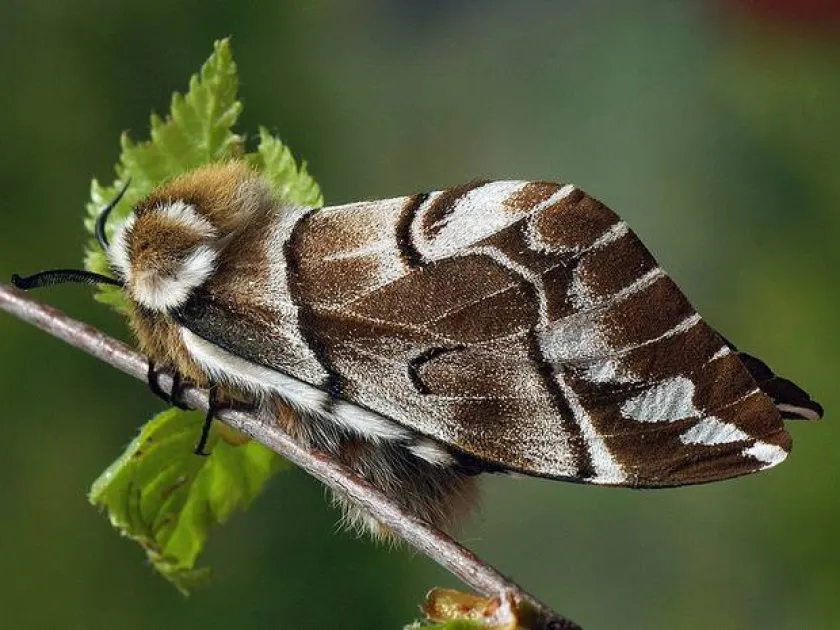
The Kentish glory (Endromis versicolora) is a moth belonging to the family Endromidae in the order Lepidoptera. Adults are notable for their large, beautifully patterned wings, which display a blend of orange-brown, white, and dark shades that provide excellent camouflage on tree bark.
The larvae are bright green caterpillars with pale oblique stripes, featuring a distinctive bump on the anal segment. They reach up to 60 mm in length and are well-adapted to life in the canopy of birch trees, where they feed throughout the spring and summer months.
What it damages
The primary host plants for this species are members of the Betulaceae family, specifically birch (Betula). However, they have been recorded on alder (Alnus), hazel (Corylus), and lime (Tilia) in some forest habitats.
While typically not causing widespread mortality in healthy forests, heavy infestations can cause significant defoliation. This stress weakens the host tree, making it susceptible to secondary pathogens such as wood-boring beetles and fungal infections.
When it appears
The adult moth has a short flight season, usually appearing in April or early May, often before the host trees have fully leafed out. Females deposit eggs in small batches on the branches of the host tree.
The caterpillars emerge in late spring and feed voraciously through June and July. By mid-summer, they descend to the ground, spinning a robust cocoon within the leaf litter or soil, where they remain in diapause until the following spring.
Signs of infestation
Early-stage infestations are identified by the presence of skeletonized leaves high in the canopy. Larvae congregate in groups when young, feeding on the leaf tissue while leaving the veins untouched.
As the larvae mature, they consume whole leaves, leading to sparse foliage and significant branch exposure. The presence of large amounts of larval droppings (frass) under the canopy is a clear indicator of a significant infestation that warrants observation.
Control measures
Integrated pest management in forest areas relies on maintaining biodiversity. Encouraging local bird populations, such as tits and warblers, provides natural control as they consume large numbers of caterpillars during the breeding season.
In nurseries or high-value landscapes, the use of biological insecticides containing Bacillus thuringiensis is recommended during the early larval stages. Chemical treatments should be used sparingly to preserve beneficial insect populations in the ecosystem.
Taxonomy
- Latin name
- Endromis
- Order
- Lepidoptera (butterflies)
- Family
- Endromidae
- EPPO code
- ENDMSP
Discussion
No discussions yet — be the first.