
Endothenia moth
Endothenia hebesana
Description
How to identify
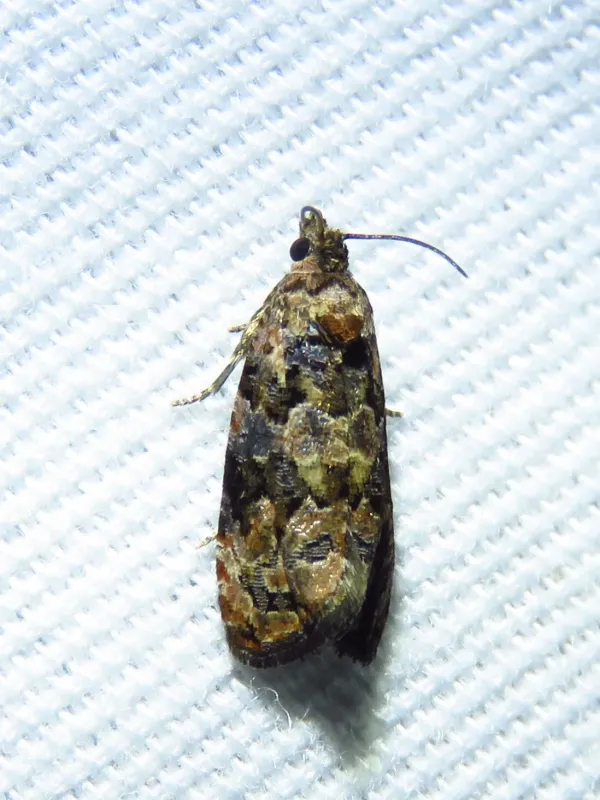
The Endothenia moth (Endothenia hebesana) belongs to the Tortricidae family of moths. These small insects are characterized by a wingspan ranging from 12 to 15 mm, with brownish-gray forewings that bear intricate, darker patterns for camouflage.
The larvae, or caterpillars, are the primary damaging stage. They exhibit color variations during their growth, typically transitioning between light beige, green, or pinkish tones depending on their host plant and age.
The life cycle involves multiple generations per season, depending on the local climate. These moths typically overwinter in the pupal stage, encased in protected cocoons within plant debris or soil.
Accurate identification is often assisted by the presence of characteristic webbing, which the larvae spin to bind leaves or petals together for protection during their feeding phases.
Adults are nocturnal and can be monitored using pheromone lures or light traps, which help agriculturists determine the optimal timing for implementing control measures.
What it damages
The Endothenia moth primarily targets ornamental and flowering plants, with a strong preference for members of the Scrophulariaceae family, including snapdragons and veronicas.
Larval feeding is concentrated on reproductive organs such as buds and flowers. By boring into these structures, they destroy the tissue, preventing normal bloom development.
In addition to floral damage, the larvae are known to burrow into the stalks and stems of host plants. This disrupts nutrient transport, leading to wilting, stunted growth, and structural weakness.
Heavy infestations can lead to significant aesthetic losses for ornamental gardens, as the plant's structural integrity and blooming potential are severely compromised.
Furthermore, the wounds created by the larvae provide entry points for secondary fungal and bacterial pathogens, which can exacerbate the decline of the affected plants.
Signs of infestation
One of the most obvious signs of an infestation is the presence of silk webbing, which pulls leaves or petals together, forming a protective shelter for the larva.
Frass, or caterpillar excrement, often accumulates at the entrance of bored holes in buds or along stems, providing a clear visual indication of active feeding sites.
Premature shriveling and browning of flower buds indicate that a larva has successfully burrowed inside and is consuming the inner reproductive tissues.
Deformed or bent stems are often the result of larval tunneling, which compromises the rigidity of the plant and causes erratic growth patterns.
During the peak of the flight season, one may observe the small adult moths fluttering near host plants during dusk or the early evening hours.
Control measures
Cultural control is a cornerstone of management, involving the prompt removal and destruction of infested buds and stalks to prevent larvae from completing their life cycle.
Sanitation practices, such as deep tilling of the soil in late autumn, are effective in destroying pupae that overwinter in the top layer of the substrate.
Biological control options, specifically products containing Bacillus thuringiensis, provide an effective and environmentally friendly way to target larvae while preserving beneficial garden insects.
Systemic insecticides may be used as a last resort in cases of severe infestation, though application must be carefully timed to coincide with early larval stages.
- Remove alternate weed hosts to reduce breeding grounds.
- Utilize light traps to monitor and decrease adult moth populations.
- Maintain healthy plant vigor through balanced fertilization to improve resistance.
Taxonomy
- Latin name
- Endothenia hebesana
- Order
- Lepidoptera (butterflies)
- Family
- Tortricidae
- EPPO code
- ENDTHE
Discussion
No discussions yet — be the first.