
Heather tortrix
Endothenia ericetana
Description
How to identify
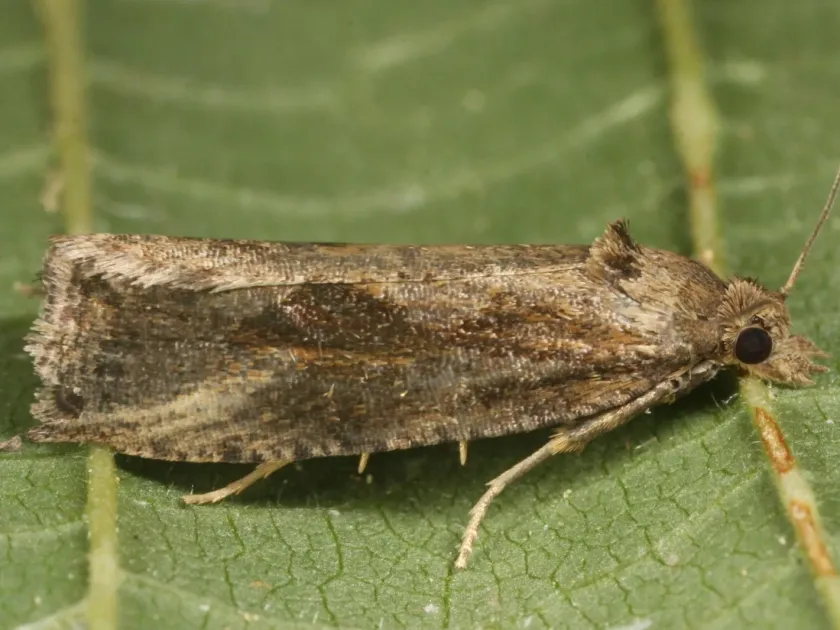
The Heather Tortrix (Endothenia ericetana) is a moth species belonging to the family Tortricidae. The adult moth has a wingspan of approximately 15–20 mm.
The forewings exhibit a mottled pattern of brown, gray, and ochre colors, which provides excellent camouflage against dead foliage and twigs.
Larvae develop through several stages, changing their color from pale yellow to a greenish-gray with a distinct dark head capsule.
This species is well-adapted to temperate climates, often found in habitats where heather and related species are abundant.
Correct identification often requires expert examination of the wing pattern or genitalia, as it shares similarities with other members of the Olethreutinae subfamily.
What it damages
The larvae primarily feed on members of the Ericaceae family, most notably common heather (Calluna vulgaris) and species of Erica.
In garden settings, they can cause significant damage to ornamental heather plantings, often resulting in unsightly webs and damaged foliage.
The caterpillars consume leaves and tender shoots, which often leads to the stunted growth or deformation of the affected branch tips.
Heavy infestations can lead to the browning and dieback of affected areas, significantly reducing the aesthetic value of the plants.
Weakened plants are often more susceptible to secondary fungal pathogens, further exacerbating the damage caused by the larvae.
When it appears
Adult moths are typically active during the summer months, specifically from June through August, being primarily crepuscular.
Females deposit eggs on the foliage or near the leaf axils, providing the emerging larvae with immediate access to food sources.
Upon hatching, larvae construct silken webs that serve as both protective shelters and a source of food as they feed on the enclosed leaves.
The species overwinters as a mature larva, hiding in the leaf litter or near the base of the host plant to survive colder temperatures.
Pupation occurs in the spring, typically within the debris or among the leaves, before the next generation of adults emerges.
Signs of infestation
The most visible sign of infestation is the presence of leaves that have been rolled, folded, or bound together with silk.
The presence of frass (dark caterpillar droppings) trapped within the silken webs is a definitive indicator of current larval activity.
Affected plants often show patches of browning, withered tissue where the caterpillars have consumed the internal leaf layers.
The webbing itself may appear as fine, thread-like structures holding the edges of leaves together or connecting adjacent shoots.
Observing stunted, misshapen tips on heather plants is a classic symptom that warrants a closer inspection for larval nests.
Control measures
Cultural control practices, such as removing garden debris and leaf litter around the base of the plants, are effective in reducing overwintering populations.
For small-scale infestations, manual removal and destruction of the webs and affected shoots can successfully manage the pest.
Biological control using Bacillus thuringiensis (Bt) is highly effective and safe for beneficial insects, provided it is applied during the larval feeding stage.
Chemical control should be considered a last resort and applied only when population thresholds are exceeded, avoiding contact during flowering periods.
- Regular inspection of heather plants throughout the growing season.
- Maintaining plant vigor through proper watering and fertilization.
- Using pheromone traps for monitoring moth activity.
Taxonomy
- Latin name
- Endothenia ericetana
- Order
- Lepidoptera (butterflies)
- Family
- Tortricidae
- EPPO code
- ENDTER
Discussion
No discussions yet — be the first.