
Plum fruit moth
Enarmonia
Description
How to identify
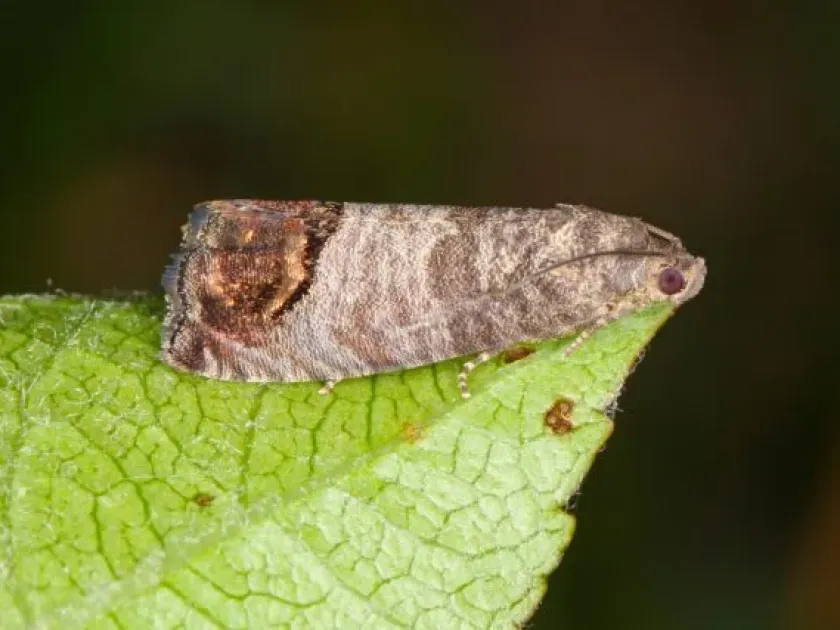
The plum fruit moth (Grapholita funebrana) is a member of the Tortricidae family within the order Lepidoptera. The adult moth is small, with a wingspan ranging from 12 to 15 mm, and displays dark brown wings with greyish patterns.
The larva undergoes several instars, eventually growing to about 10–12 mm in length. Its body color shifts from creamy-white to a distinct reddish-pink, while the head capsule remains dark, almost black.
This pest overwinters as a mature larva inside a tough silken cocoon. These cocoons are typically hidden in bark crevices or just beneath the soil surface under the tree canopy.
Pupation occurs in early spring, and adult emergence usually aligns with the post-blossom period. Moths are primarily nocturnal, showing peak activity levels during dusk and the early night hours.
Depending on the latitude and seasonal temperatures, the plum fruit moth can complete multiple generations per year, creating a continuous pressure on fruit crops throughout the season.
What it damages
The larvae primarily target plums but are also known to infest damsons, apricots, cherries, and peaches. They bore into the fruit to feed on the flesh, typically moving toward the developing pit.
Once inside, the larva consumes the fruit interior and often causes damage to the pit itself. This tunneling process leads to premature ripening and heavy fruit drop.
Infested fruit becomes riddled with frass (insect excrement), which makes the produce unmarketable and susceptible to rot. The damage ruins the interior quality and appearance of the harvest.
Entry holes created by the larvae serve as vectors for fungal infections, most notably the brown rot (Monilinia), which can spread rapidly through the orchard after an initial infestation.
In cases of high population density, entire harvests can be lost. Even a single larva per fruit is sufficient to degrade the commercial value of the yield significantly.
Signs of infestation
A primary indicator of infestation is the presence of sap or gum exudation on the surface of the fruit, marking the site where the young larva entered the plum skin.
Sudden and premature fruit fall, especially during the peak summer months, is a classic warning sign of active larval feeding occurring within the fruit clusters.
Visible boreholes on the fruit surface, often accompanied by brown granular waste, indicate that the fruit is already occupied by a developing larva.
During the dormant season, careful inspection of the tree bark can reveal silken cocoons tucked into deep crevices, signifying that the pest is overwintering in the immediate vicinity.
Pheromone monitoring traps are essential tools for detection. The presence of adult male moths in these traps provides an early warning to begin protective management practices.
Control measures
Good orchard hygiene is essential. Regularly collecting and disposing of fallen fruit prevents larvae from leaving the fruit to pupate in the soil, effectively breaking the cycle.
Cultivating the soil around the base of the trees during the autumn or early spring can expose overwintering larvae to birds and harsh weather, reducing the population.
Installing adhesive traps or corrugated paper bands around tree trunks during the summer months helps to capture migrating larvae as they seek sites for pupation.
Chemical control focuses on applying approved insecticides timed precisely with the peak egg-hatching periods of each generation to maximize the effectiveness of the treatment.
Biological control strategies, such as the release of Trichogramma wasps, can be highly successful. These beneficial insects parasitize the moth's eggs before the larvae can emerge.
Taxonomy
- Latin name
- Enarmonia
- Order
- Lepidoptera (butterflies)
- Family
- Tortricidae
- EPPO code
- ENARSP
Discussion
No discussions yet — be the first.