
Webspinner
Embia
Description
How to identify
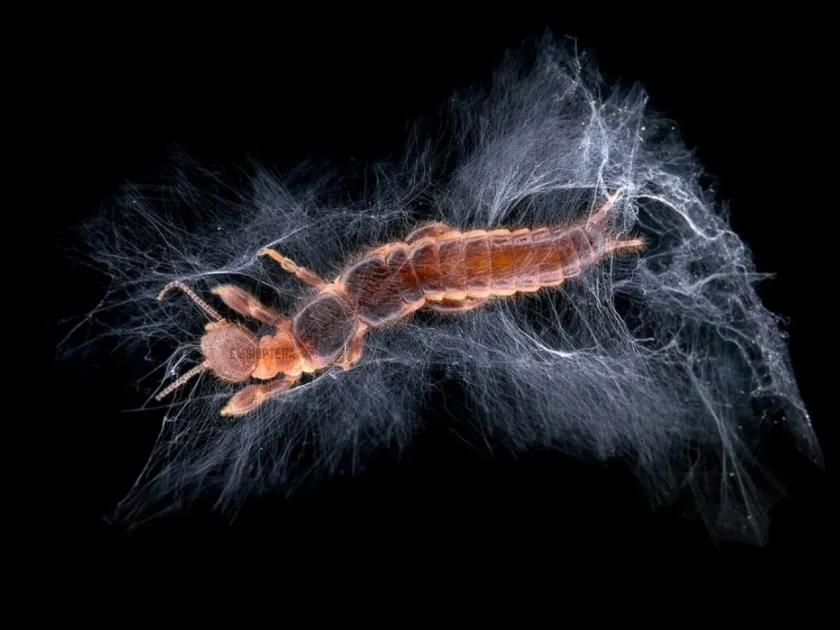
Webspinners, belonging to the order Embioptera, are small, secretive insects that are easily overlooked due to their habit of living under protective silken galleries.
Adult webspinners typically measure 5 to 20 mm in length and possess cylindrical, flexible bodies with a distinctive enlargement of the forelegs containing silk glands.
They have prognathous heads with strong chewing mouthparts, while males often feature wings, whereas females remain wingless throughout their entire life cycle.
Their coloration is generally subdued, ranging from yellowish-brown to dark brown, allowing them to blend seamlessly with bark, soil, or leaf litter.
The most unique biological feature of webspinners is their ability to weave intricate networks of silk tunnels which serve as nesting sites and protection from predators.
What it damages
While webspinners are not typically considered major agricultural pests, they can cause damage to orchard trees and ornamental shrubs under specific conditions.
They primarily feed on the outer layer of tree bark, scraping away thin layers of tissue while protected by their extensive silken webs.
Feeding activities can lead to localized bark necrosis, which weakens the outer defense of the plant and makes it susceptible to opportunistic pathogens.
In cases of heavy infestation, they may consume young foliage, buds, and delicate plant tissues, potentially affecting the growth rate of young nursery stock.
The presence of their webbing can also interfere with normal plant respiration and creates an environment conducive to the growth of certain molds and fungi.
When it appears
Webspinner activity is highly dependent on environmental humidity and temperature, with peak activity occurring during the warm, moist periods of the year.
They generally overwinter as nymphs or adults, seeking refuge deep within their silk galleries or in crevices beneath the bark of mature trees.
As spring temperatures rise, the insects become more active, extending their silk tunnels and feeding on nutrient-rich plant tissues to fuel their growth.
Summer provides optimal conditions for population expansion, and it is common to find the largest colonies during these warmer, more stable months.
By autumn, as temperatures begin to drop, their metabolic activity slows down, and they gradually settle into their winter dormant state.
Signs of infestation
The most reliable sign of a webspinner infestation is the presence of silk-like galleries running along the trunks, branches, or near the base of trees.
Upon closer inspection, these galleries contain frass (insect excrement) mixed with debris and shredded bark particles, which are incorporated into the web.
Damaged bark areas often appear thin, irregular, or scarred, indicating prolonged feeding activity that has compromised the integrity of the plant surface.
If you disturb a web gallery, you may observe the insects scurrying quickly away from the light, as they are highly sensitive to movement and vibration.
Stunted growth or unusual crusting on the bark of young fruit trees is frequently a telltale indicator of localized webspinner colony establishment.
Control measures
Cultural control is highly effective; maintaining healthy tree vigor through proper fertilization and watering makes plants less attractive to these insects.
Sanitation practices such as removing dead, loose bark and clearing debris from around the base of the trees significantly limit potential nesting sites.
Applying a white wash or lime-based coating to tree trunks can make it difficult for webspinners to anchor their silk galleries effectively.
In instances of severe infestation, targeted application of contact insecticides during the period of peak crawler activity can successfully reduce population numbers.
Regular monitoring and physical removal of the silk galleries during the early season can prevent the spread of the colony and minimize further plant damage.
Taxonomy
- Latin name
- Embia
- Family
- Embiidae
- EPPO code
- EMBISP
Discussion
No discussions yet — be the first.