
Elixothrips
Elixothrips
Description
How to identify
Elixothrips is a genus of insects within the family Thripidae, order Thysanoptera, known for causing significant damage to various botanical species.
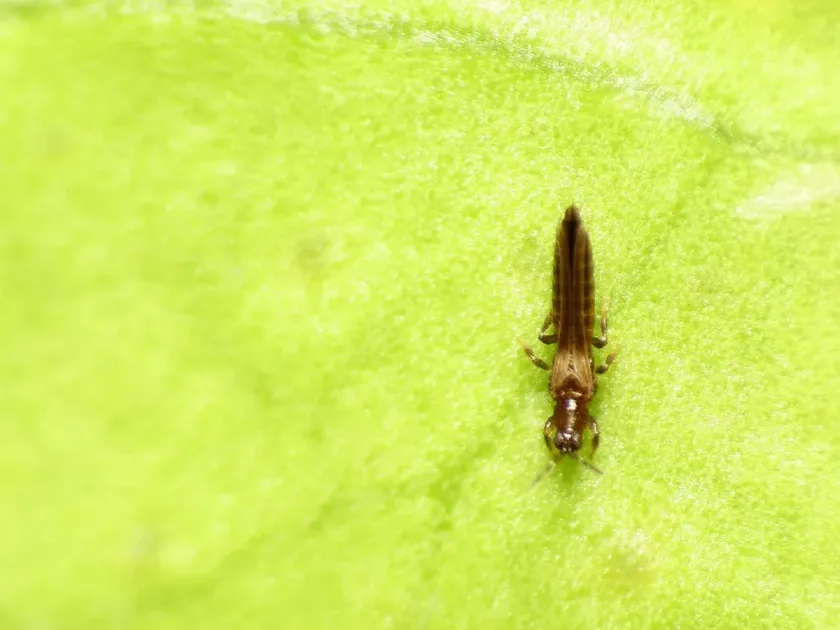
Adult specimens are typically very small, measuring about 1.5 mm in length, and often display a distinct reticulated pattern on their body surface.
Their life cycle includes egg, larval, prepupal, and pupal stages, with both adults and larvae actively feeding on the host plant's epidermis.
These insects are highly mobile, often utilizing wind or human activity to spread between greenhouse and indoor garden environments.
Due to their minute size and cryptic coloration, Elixothrips often remain undetected until significant damage to the plant tissue has already occurred.
What it damages
The primary damage is caused by the sucking mouthparts of both larvae and adults, which puncture plant cells to extract sap and cellular contents.
Host plants typically include tropical foliage plants, palms, and various ornamental species commonly found in nursery and indoor collections.
The feeding process results in the destruction of chlorophyll-containing cells, leading to a visible loss of vigor and potential chlorosis in the affected leaves.
Chronic infestations cause curling, stunting, and deformation of new growth, significantly reducing the aesthetic value and marketability of ornamental crops.
Over time, the cumulative impact of feeding can lead to necrotic patches, leaf drop, and an overall decline in the plant's physiological health.
Signs of infestation
The most common sign of an Elixothrips infestation is the presence of silvery or mottled streaks on the surface of the leaves.
Accumulated dark, pinhead-sized fecal spots on the underside of the foliage serve as a strong diagnostic indicator of thrips activity.
Wilting and premature leaf senescence occur as a consequence of localized tissue damage and the loss of essential plant fluids.
Presence of larvae and adults can be confirmed by inspecting the undersides of the leaves, especially near the midribs where they tend to aggregate.
Severe infestations often leave the plant looking dull and patchy, with signs of tissue death appearing as the insect population density increases.
Control measures
Integrated pest management (IPM) is essential for controlling Elixothrips, starting with rigorous monitoring using blue or yellow sticky traps.
Improving cultural practices, such as maintaining optimal humidity levels, can help deter population growth, as thrips generally prefer drier conditions.
Application of systemic insecticides is often necessary for significant outbreaks to ensure that the chemical reaches the feeding insects inside the leaf tissue.
Quarantine procedures for all new plant additions are vital to prevent the introduction of these pests into clean nursery environments.
Repeated applications of pesticides are required to disrupt the life cycle, targeting successive generations that hatch from eggs embedded in the plant tissues.
Taxonomy
- Latin name
- Elixothrips
- Order
- Thrips
- Family
- Thripidae
- EPPO code
- ELIXSP
Discussion
No discussions yet — be the first.