
Electric eel
Electrophorus
Description
How to identify
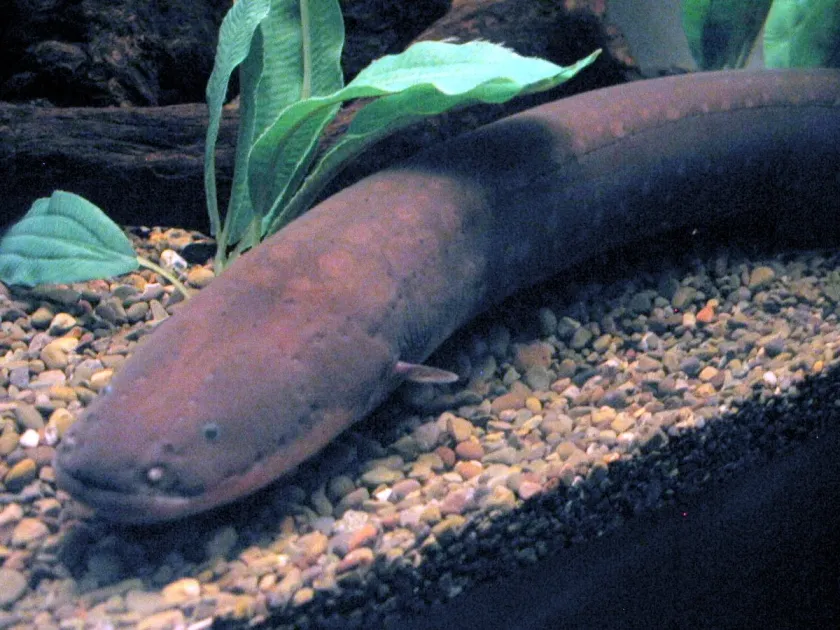
The Electric eel (Electrophorus) is a genus of freshwater fish classified within the order Gymnotiformes and the family Gymnotidae. Despite the common name, it is not a true eel but is closely related to catfish and carp, exhibiting a long, cylindrical body that lacks dorsal and pelvic fins.
The most distinctive biological feature of the Electrophorus is its complex system of electric organs, which allow it to generate both low-voltage signals for navigation and high-voltage discharges for defense or predation. These organs can produce currents reaching several hundred volts.
The morphology of the animal is perfectly adapted to muddy, oxygen-poor environments. Since the gills provide only a fraction of the necessary oxygen, the fish exhibits obligate air-breathing behavior, surfacing regularly to gulp atmospheric air directly into its vascularized mouth cavity.
Adult individuals can grow up to 2.5 meters in length. Their skin is covered with a thick layer of mucus which serves as a protective barrier, reducing the risk of self-electrocution and protecting the animal from external pathogens in its habitat.
Geographically, this species is native to the Amazon and Orinoco basins in South America. They occupy a unique ecological niche, often found in stagnant, swampy waters where the lack of dissolved oxygen restricts the presence of most other aquatic vertebrate species.
Control measures
The Electric eel is not a pest that damages crops, as it is strictly carnivorous and does not feed on vegetation. However, its presence near agricultural infrastructure, such as irrigation canals or flood-controlled reservoirs, requires specific safety measures for farm staff.
To prevent interaction with these fish during agricultural maintenance or water management tasks, physical exclusion devices such as fine-mesh stainless steel screens are recommended at all water intake points to block movement from river systems into irrigation networks.
Safety protocols for field staff should include the use of insulating gear, such as rubber boots and gloves, when working in or near water bodies known to harbor electric fish species, as accidental contact can result in significant electrical shock.
Monitoring the presence of large fish in irrigation channels is part of routine infrastructure maintenance. In cases where they infiltrate high-traffic areas, they should be professionally relocated to prevent workplace accidents rather than attempting to eradicate them with pesticides.
Maintaining clear, free-flowing water systems and minimizing stagnant areas around agricultural facilities naturally reduces the suitability of the habitat for Electrophorus, thereby mitigating any potential hazards to farm personnel and equipment.
Taxonomy
- Latin name
- Electrophorus
- Family
- Electrophoridae
- EPPO code
- ELECSP
Discussion
No discussions yet — be the first.