
Elasmus brevicornis
Elasmus brevicornis
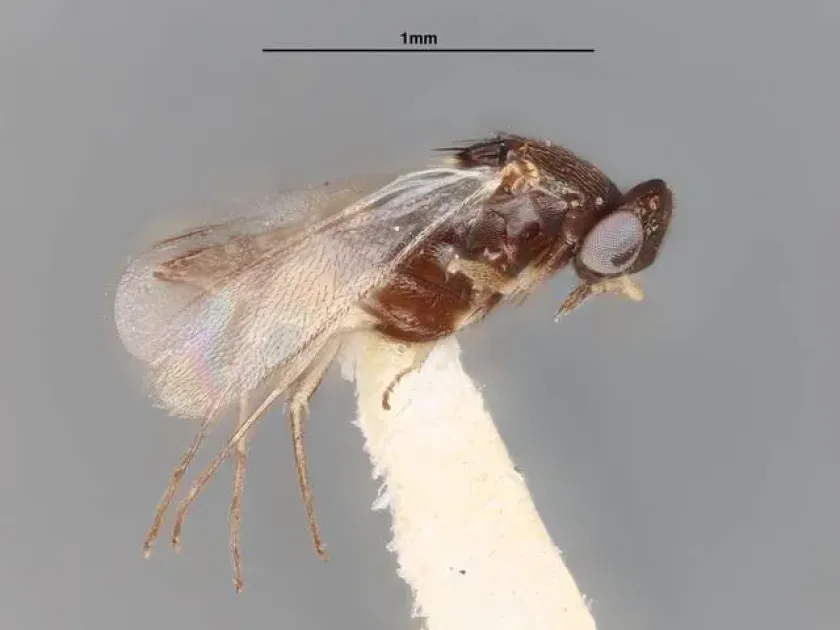
Description
How to identify
Elasmus brevicornis belongs to the family Eulophidae, within the order Hymenoptera. This small insect is known for its role as a parasitoid, often found interacting with various larval stages of Lepidoptera.
The adult insect is typically dark with a subtle metallic luster. Its body is compact, and the wings feature specialized fine hairs, a common trait in this genus which aids in identification under laboratory conditions.
Accurate field identification often requires specialized equipment, such as magnifying lenses or microscopes, due to the insect's minute size and high mobility during flight.
The life cycle is closely linked to the availability of host larvae. Understanding this dependency is crucial for predicting population spikes in agricultural settings.
Researchers focus on the morphology of the antennae and wing venation to distinguish Elasmus brevicornis from other related species within the Eulophidae family.
What it damages
The primary impact of Elasmus brevicornis is its parasitic relationship with moth larvae, which are often pests of agricultural crops such as leafy greens and various grains.
While the insect helps suppress pest populations, its role is viewed with nuance in commercial agriculture. In some cases, it can interfere with other beneficial biocontrol agents being introduced to protect crops.
The damage caused by the host larvae to plants is the primary concern for agronomists, and Elasmus brevicornis acts as a regulator of these larvae.
Economic damage is typically assessed by measuring the reduction of pest density versus the potential loss of other beneficial predatory insects.
By balancing the presence of this parasitoid, farmers can maintain a healthier ecological environment within their fields, preventing massive pest outbreaks.
When it appears
The activity of Elasmus brevicornis is strongly correlated with warm weather, usually peaking in mid-to-late summer when Lepidopteran larvae are most abundant.
Optimal development occurs in temperatures between 22°C and 28°C. Development slows down significantly during cooler periods or extreme heat stress.
The insect typically overwinters in its pupal stage within the remnants of its host or inside plant debris, which necessitates careful soil management and post-harvest clearing.
Multiple generations can occur within a single growing season, allowing the population to adapt quickly to changes in pest density.
Regular monitoring during the mid-season is recommended to assess population trends and the overall health of the agricultural ecosystem.
Signs of infestation
Key signs of its presence include the discovery of parasitized moth larvae that appear lethargic or stationary on plant leaves. These larvae often stop feeding and eventually die.
Microscopic examination of the host larvae may reveal exit holes, indicating that the adult parasitoid has successfully emerged after its development cycle.
A sudden decrease in the number of active pest caterpillars on a crop can be a strong indicator of the presence and effectiveness of Elasmus brevicornis.
Entomological traps are useful for identifying the presence of adults in the canopy, helping to map the distribution of the parasitoid across the field.
Farmers should look for signs of host decay, as the larvae serve as the developmental chamber for the next generation of parasitoids.
Control measures
Management strategies focus on integrated pest management (IPM). Maintaining a diverse landscape and avoiding broad-spectrum insecticides is essential for preserving the parasitoid population.
Soil cultivation after harvest helps reduce the overwintering success of the parasitoid pupae, thereby managing population levels for the next season.
Selective pesticides should be chosen when intervention is necessary, ensuring they are non-toxic to beneficial hymenopterans like Elasmus brevicornis.
Implementing monitoring programs helps agronomists decide when to intervene, balancing natural control with the need to protect the crop.
- Use of crop rotation to break host pest life cycles.
- Avoidance of blanket chemical spraying to protect natural predators.
- Sanitation practices that remove host-supporting plant debris.
Taxonomy
- Latin name
- Elasmus brevicornis
- Order
- Hymenoptera
- Family
- Elasmidae
- EPPO code
- EASMBR
Discussion
No discussions yet — be the first.