
Elasmus
Elasmus
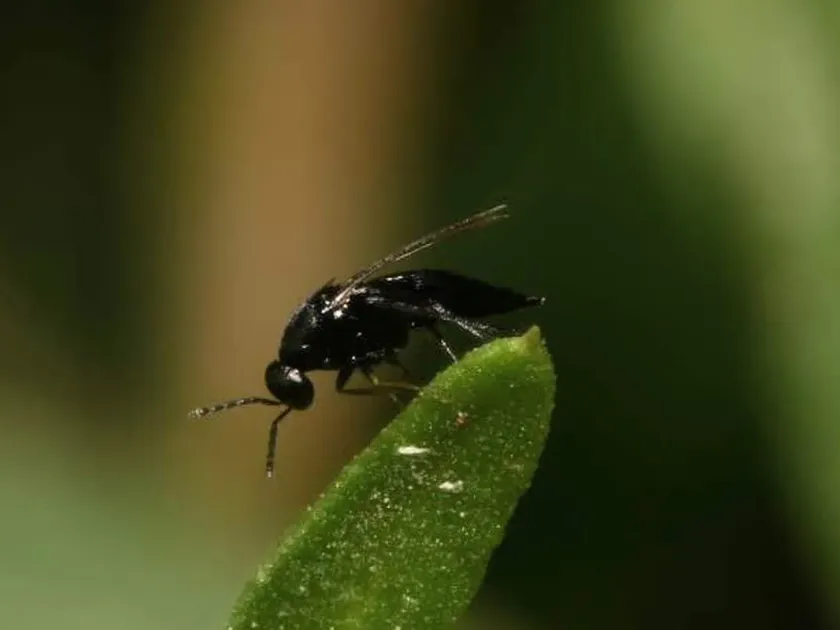
Description
How to identify
The genus Elasmus belongs to the order Hymenoptera and the family Eulophidae. These are tiny parasitoid wasps, often characterized by a dark, metallic-reflective appearance.
Adults possess specialized hind legs adapted for jumping, and their bodies are somewhat flattened, which aids in navigating confined spaces like the burrows of their hosts.
The wing venation is a diagnostic feature typical for the superfamily Chalcidoidea, making identification under a microscope essential for accurate species determination.
As parasitoids, they often develop either inside or attached to the exterior of the host larvae, playing a complex role in the ecological structure of field crops.
Most Elasmus species are known for being secondary parasitoids, which often complicates their classification as either beneficial or problematic in agricultural settings.
What it damages
The primary concern regarding Elasmus in agriculture is their role as hyperparasitoids, which can negatively impact beneficial primary parasitoids like Braconidae and Ichneumonidae.
By parasitizing the natural enemies of crop pests, Elasmus can lead to unexpected outbreaks of primary lepidopteran pests, indirectly affecting crop yields.
While they do not consume plant tissue themselves, their presence in large numbers disrupts the natural biological control agents responsible for suppressing pest populations.
They target larvae of various lepidopterans, including stem borers, leaf rollers, and other moth species that reside in corn, wheat, and sunflower crops.
Economic damage is typically measured by the reduction in the efficiency of integrated pest management programs due to the suppression of primary beneficial wasps.
When it appears
The seasonal occurrence of Elasmus is highly synchronized with the life cycle of their host lepidopteran populations and local climatic conditions.
Activity usually begins in late spring, following the emergence of overwintering generations triggered by rising temperatures and photoperiod shifts.
Peak population density occurs during the mid-summer months, coinciding with the highest availability of host larvae within the canopy of the target crops.
Multiple generations per year are possible in warmer climates, ensuring the species persists throughout the growing season of the host plants.
Overwintering typically takes place in the pupal stage, often protected within the remnants of the host's cocoons or sheltered in crop debris.
Signs of infestation
Visual symptoms on plants are virtually nonexistent because the wasps do not directly feed on leaves, stems, or fruits of the crop.
Signs of infestation are detected through careful inspection of host larvae, which may show evidence of parasitism, such as tiny exit holes in the integument.
A noticeable decrease in the population of primary beneficial insects, despite the presence of suitable host targets, can indicate high activity of secondary parasitoids.
Dissection of cocoons belonging to lepidopteran pests often reveals the larvae of Elasmus huddled together, confirming their presence within the agroecosystem.
Field monitoring using yellow sticky traps or sweep netting can capture adult wasps for laboratory identification, providing data on the current parasitoid pressure.
Control measures
Management strategies for Elasmus focus on maintaining the ecological balance rather than direct eradication, as they are part of the natural community.
Reducing the use of broad-spectrum insecticides is crucial, as these chemicals frequently target beneficial parasitoids more heavily than the primary pests.
Cultural practices, such as the efficient management of crop residues, help to disturb overwintering sites, reducing the overall pressure for the next season.
Crop rotation remains an effective long-term strategy to break the life cycles of the host lepidopterans, thereby limiting the availability of hosts for Elasmus.
If chemical intervention is necessary for primary pest control, selective biopesticides are preferred to preserve the existing complex of natural enemies.
Taxonomy
- Latin name
- Elasmus
- Order
- Hymenoptera
- Family
- Elasmidae
- EPPO code
- EASMSP
Discussion
No discussions yet — be the first.