
Oil palm weevil
Elaeidobius
Description
How to identify
The oil palm weevil (Elaeidobius kamerunicus) belongs to the order Coleoptera and the family Curculionidae. It is a vital insect specifically adapted for the pollination of the oil palm plant.
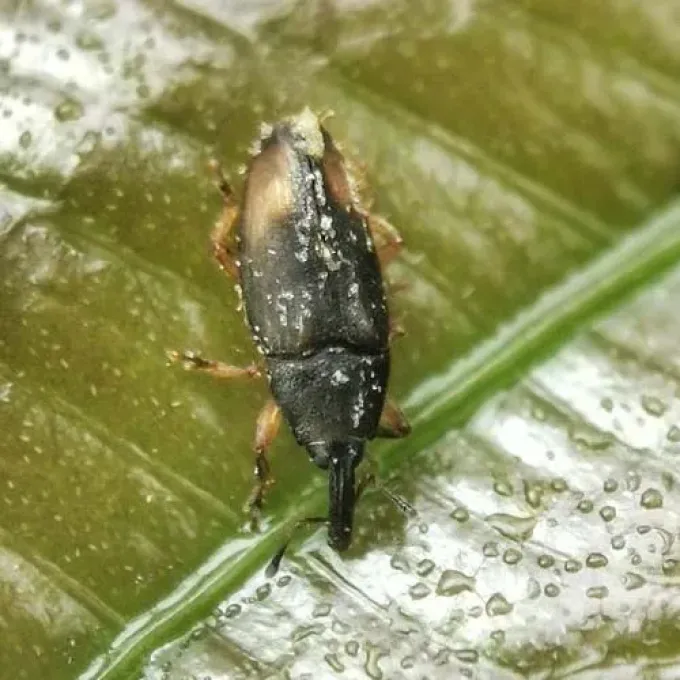
The adult insect is characterized by a dark, robust body and a distinct elongated rostrum, which it uses to explore the intricate structures of palm flowers.
Larvae are legless, whitish grubs that complete their development entirely within the male inflorescences of the oil palm, feeding on plant tissues.
The lifecycle from egg to adult is relatively short, allowing for the rapid generation of populations required to maintain high pollination rates in commercial crops.
Native to West Africa, this species was introduced to Southeast Asian plantations, where it revolutionized the oil palm industry by significantly increasing fruit set.
What it damages
While primarily a beneficial pollinator, the weevil can cause damage if the population density becomes excessively high within a single plantation.
Larval feeding can lead to the structural degradation of male inflorescences, potentially reducing the overall availability of pollen during certain stages.
In most commercial settings, this damage is negligible compared to the massive agricultural benefit provided by the successful fertilization of female flowers.
Occasional over-infestation may create entry points for secondary infections or opportunistic pathogens, necessitating careful observation by plantation managers.
The economic impact of this "damage" is rarely negative, as it is usually viewed as a natural trade-off for the increased yield efficiency.
When it appears
The oil palm weevil remains active throughout the year, as it thrives in the stable, warm, and humid conditions of tropical palm plantations.
There are no distinct seasonal breaks in their development, as oil palms flower continuously, providing a steady supply of resources for the weevils.
Population density is heavily influenced by the availability of male flowers, which serve as the primary site for both feeding and reproduction.
Movement of adult weevils between palms is most frequent during sunny hours when temperatures are ideal for flight and dispersal.
Generations overlap consistently, meaning that all life stages (egg, larva, pupa, adult) can typically be found simultaneously within the plantation.
Signs of infestation
The presence of the weevil is most easily detected by observing adult insects on the surface of recently opened male inflorescences.
Visual signs of infestation include the presence of fine powder-like pollen on the leaves and stalks, a byproduct of the weevils' intensive activity.
Dissecting a male inflorescence may reveal the internal tunneling and damage caused by the larvae, confirming active colonization.
The darkening and early senescence of specific parts of the male inflorescence often indicate that the weevil population has been feeding in that area.
Large numbers of weevils clustering around the base of the inflorescence are a clear indicator of a healthy, functioning population within the crop.
Control measures
Management of the oil palm weevil is generally focused on conservation rather than eradication, as they are essential for the economic viability of the farm.
Broad-spectrum insecticide application is strictly discouraged, as it can collapse the pollinator population and lead to drastic reductions in oil palm yields.
Biological control involves maintaining a balanced plantation environment that supports the weevils' natural lifecycle and prevents competitive displacement.
Agronomic practices, such as proper field sanitation and maintenance of tree health, ensure that the palms remain attractive to the weevils for pollination.
Regular monitoring of population dynamics using pheromone traps or visual counts allows managers to ensure that the pollination ecosystem remains optimal.
Taxonomy
- Latin name
- Elaeidobius
- Order
- Coleoptera (beetles)
- Family
- Curculionidae
- EPPO code
- ELADSP
Discussion
No discussions yet — be the first.