
Echinothrips
Echinothrips
Description
How to identify
Echinothrips is a genus of insects belonging to the order Thysanoptera and the family Thripidae. These pests are characterized by their dark body color and a relatively sedentary nature, compared to other more mobile species of thrips. They are primarily found in greenhouse environments where they thrive under controlled conditions.
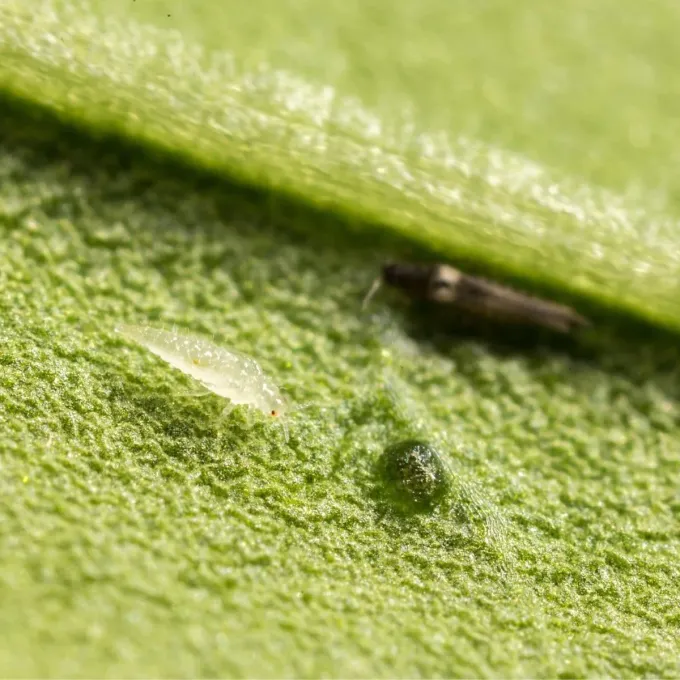
Adult Echinothrips possess microscopic spines on their body, which is a key diagnostic feature. The larvae are typically white or pale, making them difficult to spot without careful examination of the undersides of leaves, which serves as their primary feeding and breeding ground throughout their development.
What it damages
This pest targets a wide variety of ornamental plants, including foliage plants like Ficus and various blooming plants like Impatiens or Begonias. They feed exclusively on leaves, causing systemic stress by depleting the plant's resources through the extraction of cell sap from the leaf mesophyll.
Heavy infestations result in significant cosmetic and physiological damage. The feeding behavior leads to the destruction of plant cells, which disrupts photosynthesis, reduces overall plant vigor, and may ultimately cause leaves to turn yellow, wither, and drop prematurely, impacting the marketability of crops.
When it appears
Echinothrips can remain active throughout the entire year within heated greenhouses, as they do not require a winter diapause phase. Their population growth is highly dependent on ambient temperature, with warmer conditions significantly accelerating their reproductive cycle and generational turnover.
Under optimal greenhouse conditions, the insect completes its life cycle—from egg to larva, prepupa, pupa, and adult—in as little as three to four weeks. This rapid developmental rate allows the pest to reach damaging population levels very quickly if left unchecked by integrated pest management.
Signs of infestation
The first indication of an Echinothrips infestation is the appearance of small, pale stippling or necrotic spots on the upper leaf surface. Over time, these spots merge into larger discolored patches, giving the foliage a silvery or bronzed appearance as the epidermal tissue collapses.
Further inspection reveals dark fecal droppings on the underside of the leaf, alongside congregations of larvae. As the damage progresses, leaves lose their turgor, become brittle, and may show severe yellowing, which is a clear warning sign of an established and thriving pest colony that requires immediate action.
Control measures
Managing Echinothrips requires a strategic approach due to their ability to develop pesticide resistance. The use of systemic insecticides is often necessary to reach the insects, as contact-based sprays may fail to effectively reach the hidden populations located on the undersides of dense foliage.
Integrated Pest Management (IPM) is highly recommended, utilizing blue sticky traps for effective monitoring. Additionally, introducing biological control agents such as predatory mites and bugs can help suppress population growth, while maintaining proper plant sanitation is vital to prevent future outbreaks.
Taxonomy
- Latin name
- Echinothrips
- Order
- Thrips
- Family
- Thripidae
- EPPO code
- ECHTSP
Discussion
No discussions yet — be the first.