
Locust twig borer
Ecdytolopha insiticiana
Description
How to identify
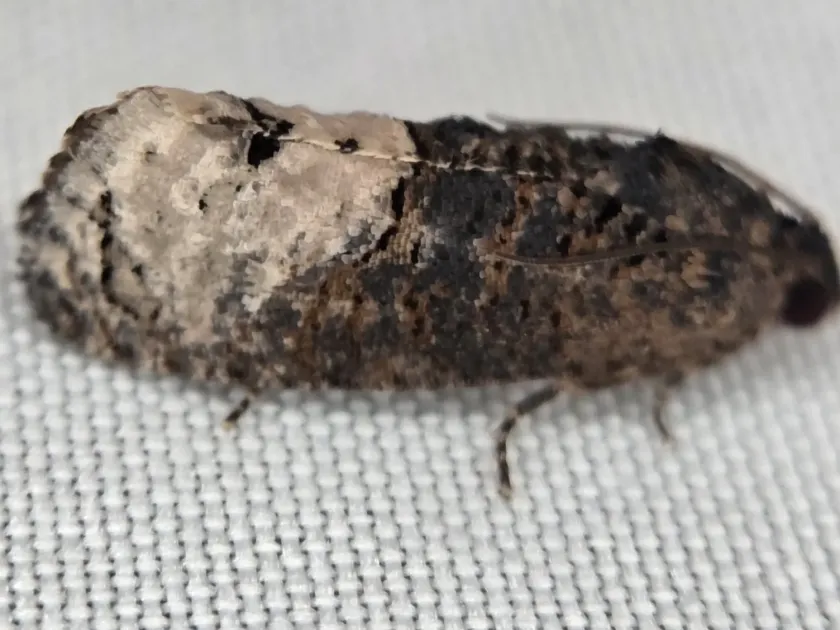
The locust twig borer (Ecdytolopha insiticiana) is a moth species belonging to the Tortricidae family. Adult moths have a wingspan of approximately 20 mm, with brownish-grey forewings marked by distinct jagged lines.
The larvae, known as the primary damaging stage, are small caterpillars. They are typically yellowish-green in color with a dark, often black or deep brown head capsule, making them easily distinguishable.
Pupation occurs within a silken cocoon constructed inside a rolled leaf or within plant debris on the ground, protecting the insect from predators during metamorphosis.
Adult moths are nocturnal, exhibiting behavior typical for the family, with flight activity occurring throughout the warmer months. Their camouflage makes them difficult to spot during daylight hours.
This species is highly adapted to its host plant, with development cycles synchronized precisely with the phenology of Robinia pseudoacacia, which is its primary food source.
What it damages
The locust twig borer targets the black locust tree. The larvae feed on the foliage and, more importantly, bore into the tender twigs, which can lead to significant structural damage.
By tunneling into the twigs, the larvae cause the terminal ends of branches to die back or break off. This results in stunted growth and a distorted appearance of the tree, especially in saplings.
Larval feeding on foliage leads to leaf-rolling, where caterpillars bind leaf edges together with silk, creating protective shelters while consuming the interior leaf tissue.
Severe infestations cause premature defoliation and weakening of the tree's vascular system, leaving the host susceptible to secondary invaders like wood-boring beetles.
In nursery settings, the damage is particularly detrimental, as it ruins the form of the trees and reduces their commercial value, sometimes causing irreparable deformities.
When it appears
The insect typically emerges in late spring, aligning with the flush of new growth on locust trees. The timing of adult emergence is crucial for successful egg-laying.
Following mating, females deposit eggs on the undersides of young leaves or near the base of leaf petioles. The embryonic development is relatively fast in warm weather.
Larval activity peaks in mid-summer, when the majority of the population is actively feeding and tunneling into new growth. This is the period of highest risk for trees.
Multiple generations may occur in a single growing season, depending on the latitude and climate conditions. This leads to continuous pressure on the trees throughout the summer.
Winter is spent as a pupa within protective leaf litter or debris at the base of the tree, emerging as adults the following spring when temperatures rise sufficiently.
Signs of infestation
The most visible sign of infestation is the presence of rolled or folded leaves, which serve as shelters for the developing larvae.
Terminal twigs may show signs of wilting or dying, and closer inspection often reveals an entry hole made by the larva as it bores into the woody tissue.
Frass (larval excrement) is often visible near the entry points or within the rolled leaf structures, indicating active feeding by the caterpillar.
Withered or brown tips on branches are clear indicators of successful boring activity. During dry spells, these symptoms become even more pronounced across the canopy.
A overall lack of foliage density and abnormal branching patterns, characterized by "witches' broom" effects or multi-stemming, are common indicators of chronic infestations.
Control measures
Mechanical control involves the pruning and destruction of infested twigs and rolled leaves, which is practical for small-scale plantings or home garden environments.
Biological control methods, such as the application of Bacillus thuringiensis (Bt) sprays, are highly effective against larvae while minimizing impact on non-target insects.
Chemical intervention with systemic or contact insecticides may be necessary in large nursery or forestry operations. Timing is critical, with applications aimed at the egg-hatch stage.
Maintaining tree vigor through proper irrigation and nutrition can help trees better withstand and recover from light infestations.
- Implement pheromone-based monitoring to determine the precise timing for insecticide application.
- Encourage local bird populations and parasitic wasps that act as natural predators to larvae.
- Sanitize the area around trees by removing leaf litter in late autumn to eliminate overwintering pupae.
Taxonomy
- Latin name
- Ecdytolopha insiticiana
- Order
- Lepidoptera (butterflies)
- Family
- Tortricidae
- EPPO code
- ECDYIN
Discussion
No discussions yet — be the first.