
Woodlouse spider
Dysdera crocata
Description
How to identify
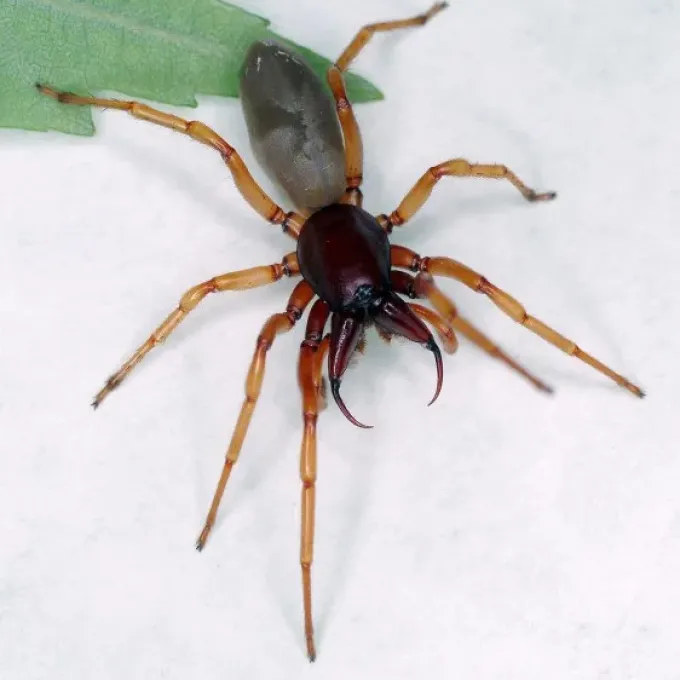
The woodlouse spider (Dysdera crocata) is a member of the Dysderidae family. It is easily recognized by its distinctive reddish-orange cephalothorax and large, prominent chelicerae.
Adult specimens measure between 11 and 15 mm. The abdomen is typically smooth and varies in color from dull gray to dark brown, while the legs are pale orange.
This spider is a nocturnal predator. Its six eyes are arranged in a tight semi-circle, which provides the necessary sensory input for hunting in low-light environments.
The life cycle involves female spiders constructing silken cocoons in moist, protected areas beneath stones, logs, or deep within the soil surface.
It is important to emphasize that this species is not an agricultural pest, as it strictly feeds on woodlice and other small soil-dwelling invertebrates.
What it damages
There is no documented evidence of the woodlouse spider causing damage to crops. It does not feed on plant tissues, nor does it affect roots, stems, or fruits.
In fact, this spider can be considered beneficial. By preying on woodlice (Isopoda), it helps control populations of creatures that occasionally feed on seedling sprouts.
The main concern for growers is the spider's aggressive posture; when handled, it may bite, and its long fangs can penetrate human skin, causing temporary pain.
Its impact on soil structure is minimal, and it does not compete with beneficial pollinators or larger predators of garden pests.
Generally, the presence of Dysdera crocata indicates a healthy, moist soil environment, which is often desirable for overall garden biodiversity.
When it appears
The woodlouse spider is active primarily from spring through late autumn. During summer nights, they roam actively to search for prey.
In winter, they retreat into subterranean chambers or deep cavities within compost or debris piles to overwinter in a state of diapause.
Control measures
No formal control measures are required for this species, as it is a non-pest organism that contributes to biological control.
If population reduction is desired for safety or aesthetic reasons, improving soil drainage and reducing surface debris will discourage their residency.
Avoid chemical treatments, as they are unnecessary and may inadvertently kill other beneficial insects that contribute to a healthy garden ecosystem.
Mechanical management, such as turning over the soil or moving woodpiles away from sensitive plant areas, is the most effective and eco-friendly method.
Regular maintenance of the greenhouse environment, such as drying out overly moist corners, effectively limits the habitat suitable for this species.
Taxonomy
- Latin name
- Dysdera crocata
- Family
- Dysderidae
- EPPO code
- DYDRCR
Discussion
No discussions yet — be the first.