
Dugesia
Dugesia
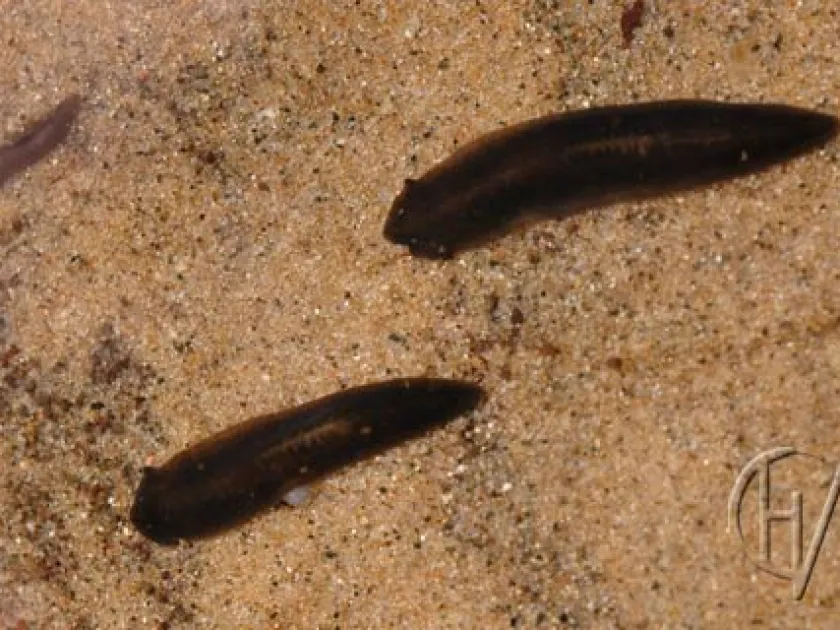
Description
How to identify
Dugesia is a genus of planarian flatworms belonging to the order Tricladida. While primarily found in freshwater habitats, certain species can inhabit waterlogged soils or greenhouse environments where moisture levels remain consistently high.
Physically, an adult Dugesia is a small worm measuring 5 to 20 millimeters in length, characterized by a triangular head featuring two light-sensitive eyespots. Its body is covered in cilia, allowing for smooth gliding movement across damp surfaces.
The biology of these organisms is tied to moisture availability. They act as predators or detritivores and are known for their exceptional regenerative capabilities, which allow them to survive and thrive even in unstable environmental conditions.
Reproduction occurs through both sexual and asexual means, including transverse fission. In environments with excessive irrigation and poor soil aeration, their population can increase rapidly, forming dense clusters in the root zones of plants.
It is important to note that Dugesia are not typical agricultural pests that feed on plant tissues. However, their presence in greenhouse substrates is a strong indicator of waterlogging and a compromised microbial balance in the growing medium.
What it damages
The damage caused by Dugesia is largely indirect. Large clusters of these worms in the root zone can obstruct the efficient uptake of water and nutrients by plant roots due to the excessive mucus they secrete.
By creating a moist, anaerobic environment, they indirectly facilitate the entry of pathogenic fungi and bacteria into roots. They often act as indicators of underlying rot processes rather than primary agents of destruction.
Plants in pots or greenhouses may show symptoms of inhibited growth, yellowing of the lower leaves, and a general loss of turgor, which might be misidentified as damage caused by sap-sucking or chewing insects.
In open-field conditions, they rarely pose a significant threat due to the lack of stable, constant moisture required for their survival. Nevertheless, the use of improperly decomposed organic fertilizers can sometimes create localized favorable conditions.
While they do not parasitize plants directly, their metabolic waste can alter the pH balance of the rhizosphere, which may adversely affect plants sensitive to soil acidity fluctuations.
Signs of infestation
The primary sign of a Dugesia infestation is the presence of translucent, gelatinous, or slimy secretions on the surface of the growing medium, particularly inside pot saucers or near drainage holes.
During irrigation or slight soil disturbance, one may observe small, flat, worm-like organisms moving actively before retreating into deeper, wetter layers of the soil.
Stunted development of seedlings, characterized by a cessation of growth despite the absence of obvious root rot pathogens, often indicates poor aeration exacerbated by the moisture levels favored by these worms.
The presence of large populations of soil-dwelling nematodes or other microorganisms, which serve as prey for Dugesia, is another indirect sign that the environment has become suitable for their proliferation.
Upon visual inspection, the organisms appear as flat, leaf-like bodies that desiccate rapidly if the substrate is allowed to dry out, leaving behind a thin film of dried mucus.
Control measures
The most effective method of control is a rigorous adjustment of the irrigation schedule. Dugesia cannot survive in dry conditions, so allowing the substrate to dry between waterings is the primary defense strategy.
Improving soil aeration is essential for long-term prevention. Incorporating perlite, vermiculite, or coarse sand into the potting mix helps optimize structure and prevents water stagnation in the root zone.
If a massive infestation is detected, complete replacement or heat-sterilization of the substrate is recommended, as the residual mucus can harbor secondary fungal or bacterial infections.
Chemical insecticides are generally ineffective and economically unjustifiable for this purpose. Agronomic control through improved drainage management remains the standard practice for greenhouse production.
- Clean drainage holes and saucers regularly to prevent water accumulation.
- Avoid over-watering and maintain proper soil drainage.
- Use high-quality, sterile potting mixes to prevent initial contamination.
Taxonomy
- Latin name
- Dugesia
- Family
- Planariidae
- EPPO code
- DUGESP
Discussion
No discussions yet — be the first.