
Yellow dryomyzid
Dryomyza flaveola
Description
How to identify
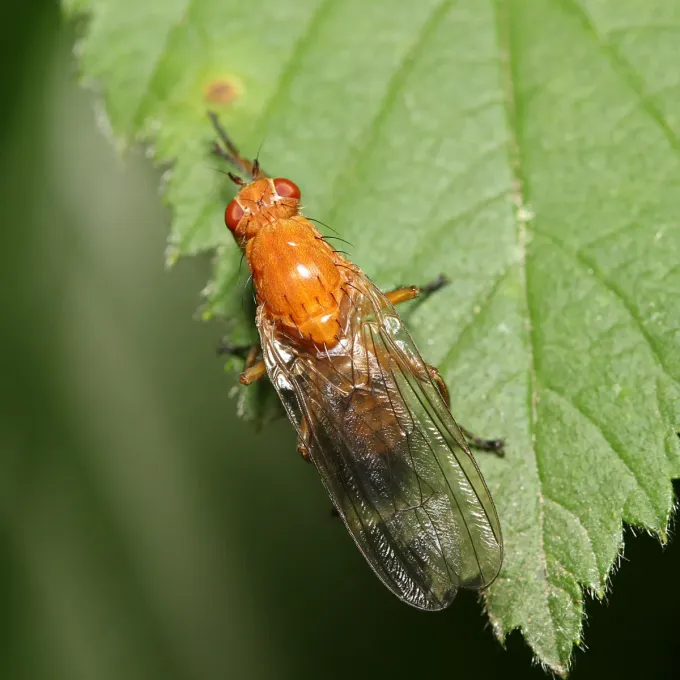
The yellow dryomyzid (Dryomyza flaveola) belongs to the Dryomyzidae family, order Diptera. It is a small yellowish-brown fly characterized by a specific wing venation pattern.
Adults possess a slender body, long legs, and transparent, sometimes slightly yellowish wings. They are primarily active in forest environments and areas where various types of mushrooms grow, which serve as the habitat for their larvae.
The larvae of this pest are whitish or yellowish and have a worm-like body shape. They undergo several developmental stages, gradually increasing in size and accumulating nutrients within the substrate.
The life cycle of the insect is intrinsically linked to decaying organic matter and mushroom tissue. Adult flies lay eggs directly in or near the fruiting bodies, ensuring the larvae have an immediate food source upon hatching.
This species is a typical representative of the entomofauna that prefers humid and shaded conditions, which facilitates larval survival during periods of high moisture.
What it damages
The primary food source for yellow dryomyzid larvae is the fruiting bodies of various gilled mushrooms. In forest ecosystems, they damage both wild edible and inedible species.
In commercial mushroom production, this pest poses a significant threat. The larvae tunnel through the flesh of the mushroom, rendering the product unmarketable and damaging its structural integrity.
Damage to the mushroom's structure leads to premature decomposition and rotting. This not only reduces the visual quality of the crop but also invites secondary fungal and bacterial infections.
The greatest damage occurs during the active growth phase of the fruiting bodies, as larvae feed intensively from the inside out, leading to weight loss and tissue destruction.
Beyond direct physical damage, the presence of larvae in mushrooms creates sanitary risks, making the produce non-compliant with quality and safety standards.
Signs of infestation
The first sign of infestation is the presence of small entry holes on the surface of the cap or stem. The tissues around these holes often show signs of softening.
When cutting into the mushroom, internal tunnels filled with larval excrement and decay products can be observed. The flesh in affected areas often turns dark and produces a distinct unpleasant odor.
Infested fruiting bodies rapidly lose turgor and become waterlogged. In some cases, the surface of the mushroom may become slimy due to larval activity and the development of secondary microflora.
In cases of severe infestation, the larvae themselves can be found within the mushroom tissue. They often congregate in the lower part of the stem or where the gills attach to the cap.
At early stages, the presence of adult flies in the cultivation area should be treated as an early warning sign, prompting immediate monitoring of the fruiting bodies.
Control measures
Strict sanitary practices in cultivation areas are the primary method of control. It is essential to promptly remove old or damaged fruiting bodies that serve as breeding grounds for the pest.
Using insect-proof netting on ventilation points prevents adult flies from entering the cultivation facility. Maintaining an optimal microclimate is crucial, as excess humidity attracts the flies.
Regular disinfection of equipment and substrate areas helps reduce the pest population during early stages. Heat treatment of the substrate prior to use is a mandatory preventive measure.
Biological control agents, such as entomopathogenic nematodes or fungi that target dipteran larvae, can effectively reduce the population of Dryomyza flaveola without harming the crop.
Chemical control methods must be used with extreme caution and in strict accordance with regulations, as mushrooms are highly efficient at absorbing and retaining chemical residues.
Taxonomy
- Latin name
- Dryomyza flaveola
- Order
- Diptera (flies)
- Family
- Dryomyzidae
- EPPO code
- DRYZFL
Discussion
No discussions yet — be the first.