
Dryomyza
Dryomyza
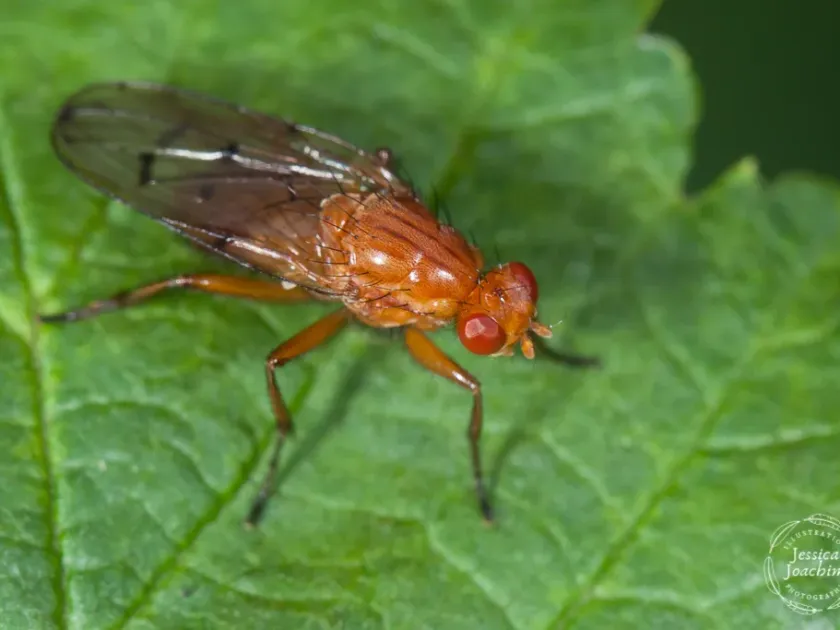
Description
How to identify
Dryomyza is a genus of flies belonging to the family Dryomyzidae, within the order Diptera. These flies are commonly found in environments with high moisture and organic decomposition, where they play a role as part of the ecosystem's saprophagous fauna.
Adult flies are generally yellowish to brownish, characterized by distinct wing venation and a body structure typical of the family. They are relatively small but can be easily spotted in damp areas near soil or decaying matter.
The larvae are legless, maggot-like creatures, often creamy or pale in color. They possess specialized mouthparts adapted for consuming decomposing plant tissues or organic matter found in the soil and rhizosphere.
The lifecycle is highly dependent on environmental humidity and temperature. Females lay eggs in moist substrates, and the larvae develop rapidly when the environmental conditions favor the decomposition of organic materials.
Taxonomically, they are distinct from other household or agricultural flies. Proper identification is crucial for farmers, as mistaking them for other species may lead to ineffective control strategies.
What it damages
Dryomyza primarily affects vegetable crops and seedlings in greenhouse environments or field patches with poor soil aeration and water management. They are attracted to stressed plants or those already suffering from minor tissue damage.
The larvae feed on the roots, bulbs, and stem bases. Their burrowing activity disrupts the structural integrity of the plant's root system, making it difficult for the plant to absorb essential nutrients and moisture.
By creating pathways in plant tissues, larvae facilitate the entry of phytopathogenic bacteria and fungi, leading to severe root rot or stem decay that can compromise the health of the entire plant.
In greenhouses, where constant humidity is maintained, Dryomyza populations can reach levels that cause visible economic losses by killing seedlings or weakening mature vegetable plants.
The damage is cumulative. While an individual larva might cause minimal harm, a colony can rapidly destroy the root system of a crop, leading to stunted growth or total plant collapse.
Signs of infestation
The earliest symptom is the wilting of foliage, especially during peak daylight hours. This is often an indication that the root system has been compromised by larval feeding, reducing the plant's hydraulic conductivity.
Visible signs include a softening of the stem base and the presence of rotting tissues. If the soil around the base is moved, one might find larvae or the characteristic channels left behind by their feeding activity.
Secondary signs include the appearance of mold or wet rot symptoms on the roots. In many cases, the affected area will emit an unpleasant, pungent odor characteristic of organic decay.
The increased presence of adult flies hovering around the base of vegetable plants is a strong indicator of an active infestation that requires monitoring and potential intervention.
Yellowing of the leaves starting from the lower parts of the plant, combined with poor root anchor strength when pulling on the stem, confirms that the root system has been significantly degraded.
Control measures
Effective management begins with strict sanitation. Removing plant debris and organic waste from the growing area reduces the breeding sites for Dryomyza, forcing the population to decline naturally.
Soil moisture management is critical. Improving drainage and preventing waterlogging makes the environment less attractive for the flies to lay eggs and significantly slows the development of existing larvae.
Biological controls such as entomopathogenic nematodes or specialized microbial pesticides can be applied to the soil to target larvae directly without leaving harmful chemical residues on the crops.
When infestation levels are high, targeted chemical insecticides registered for soil application may be used. These must be applied according to local regulations to ensure safety and efficacy.
Crop rotation is a powerful tool to break the lifecycle of Dryomyza. By switching to non-host crops, the pest is deprived of the necessary conditions for its continued survival and mass propagation in a given area.
Taxonomy
- Latin name
- Dryomyza
- Order
- Diptera (flies)
- Family
- Dryomyzidae
- EPPO code
- DRYZSP
Discussion
No discussions yet — be the first.