
Dryocoetiops
Dryocoetiops
Description
How to identify
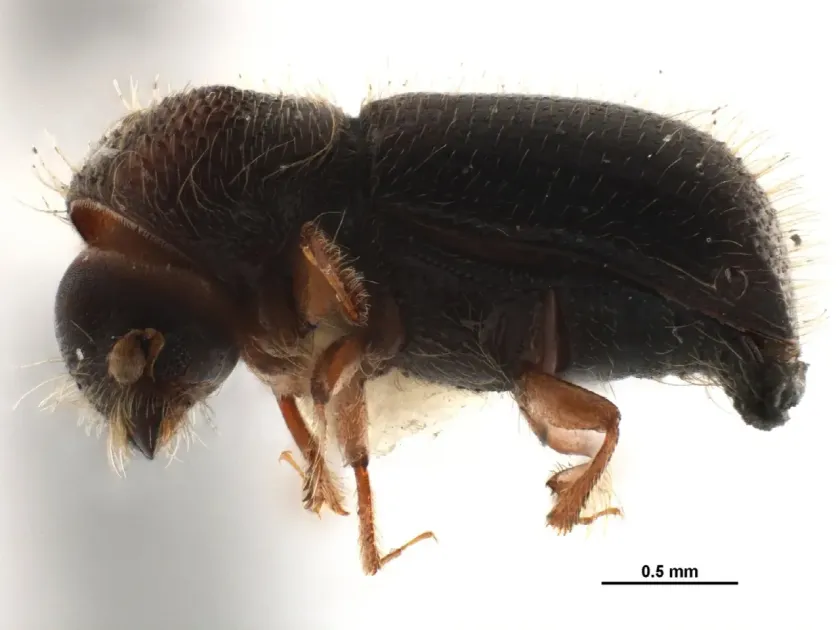
Dryocoetiops is a genus of beetles belonging to the family Curculionidae, subfamily Scolytinae. These insects typically have a cylindrical body shape, measuring between 2 and 4 millimeters in length.
The adult beetles are generally dark brown to black in color. Their bodies are often covered with fine hairs, which are important diagnostic features for distinguishing this genus from other related bark beetles.
The head of the beetle is concealed by the pronotum, a characteristic anatomical feature of most members within this group. The antennae have a distinct club, the structure of which is essential for taxonomic classification.
Larvae of Dryocoetiops are legless, white to yellowish in color, and have a sclerotized dark head capsule. They live and develop exclusively within the inner bark and phloem of the host tree.
Accurate species-level identification often requires careful microscopic examination of the beetle's elytra patterns and specific morphological structures on the pronotum.
What it damages
Dryocoetiops species are significant pests of forest and ornamental trees. They are known to infest a variety of coniferous and, in some cases, broad-leaved tree species.
The beetles feed on the cambium and phloem, which disrupts the tree's nutrient and water transport systems. Chronic infestation leads to severe physiological stress and tree decline.
While they primarily target stressed or weakened trees, high populations of Dryocoetiops can successfully attack healthy trees, causing widespread damage in affected stands.
Their boring activity facilitates the entry of secondary pathogens, including wood-decaying fungi and bacteria, which can accelerate the mortality of the host tree.
The economic impact of this pest is substantial in silviculture, as it reduces timber quality and can cause large-scale ecological damage to forest plantations.
Signs of infestation
The most common sign of infestation is the presence of small, round entry holes on the bark of the tree, typically 1–2 millimeters in diameter.
A fine, wood-colored powder known as "frass" is often found accumulating around these entry holes as the beetles expel debris while excavating their tunnels.
Removing a portion of the bark reveals a gallery system consisting of longitudinal maternal tunnels and lateral larval tunnels that expand as the larvae grow.
Foliar symptoms, such as premature yellowing or wilting of needles or leaves, are clear indicators that the tree's vascular system has been compromised by the infestation.
In advanced cases, one might hear faint tunneling sounds under the bark, and the tree may show signs of bark shedding or excessive resin production as a defense mechanism.
Control measures
The primary control measure involves the timely removal and disposal of infested trees to eliminate breeding sites and prevent the spread of the population to healthy trees.
Maintaining sanitary conditions in forest areas by removing logging debris and dead wood is crucial to prevent the build-up of beetle populations.
Pheromone traps are effective for monitoring beetle activity and can also be used in mass trapping programs during the peak flight periods of the adults.
For high-value ornamental trees, contact insecticides applied to the bark surface can provide a barrier that prevents the beetles from initiating new infestations.
Promoting overall forest and tree health through proper site selection and maintenance is the best preventive strategy against attacks by bark-boring pests like Dryocoetiops.
Taxonomy
- Latin name
- Dryocoetiops
- Order
- Coleoptera (beetles)
- Family
- Curculionidae
- EPPO code
- DRYTSP
Discussion
No discussions yet — be the first.