
Hazelnut bark beetle
Dryocoetes coryli
Description
How to identify
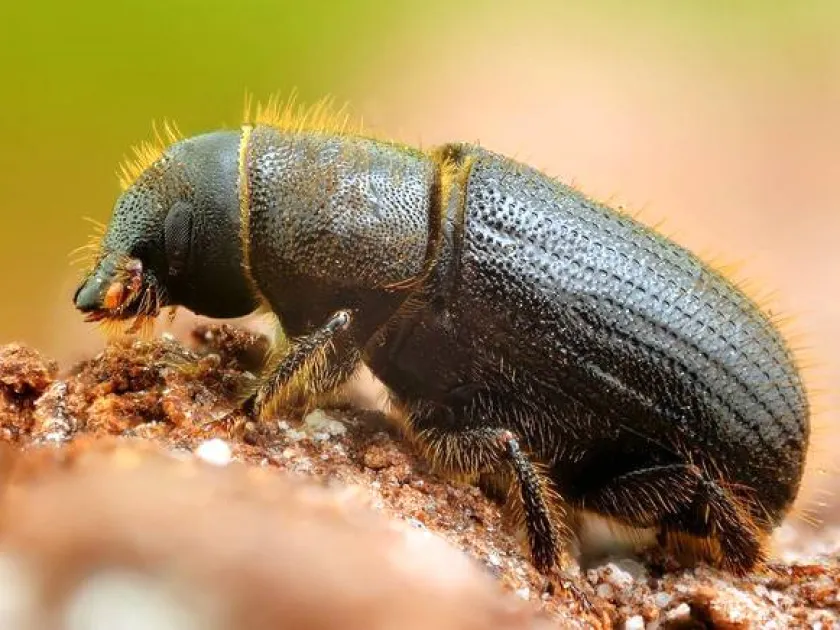
The hazelnut bark beetle (Dryocoetes coryli) is a small wood-boring insect belonging to the family Curculionidae, subfamily Scolytinae. Adult beetles are typically 2–3 mm long, displaying a cylindrical body shape with a dark brown or black coloration.
These insects are characterized by their cryptic nature, spending most of their lifecycle under the bark of host trees. Identifying them requires careful inspection of the tree bark for entry points and the presence of fine wood dust created by their boring activities.
As members of the Coleoptera order, these beetles have a complete metamorphosis cycle. The adults are adapted for life in tight galleries, possessing dense hairs and a specific thoracic structure that facilitates movement within the cambial layer of the tree.
While primarily associated with hazel (Corylus spp.), this beetle can impact other broadleaved trees. Understanding the taxonomy of Dryocoetes coryli is essential for effective pest management, as its biology dictates the timing and method of intervention.
The species is considered a secondary pest, meaning it usually targets trees already weakened by drought, disease, or mechanical stress, though it can become a primary threat in neglected or overcrowded orchards during periods of extreme environmental stress.
What it damages
The primary host for this beetle is the common hazel (Corylus avellana). When the population reaches high densities, the beetle can also colonize other hardwood species in the immediate vicinity, causing significant damage to the plant's vascular system.
Larvae and adults feed on the cambium and phloem layers. This feeding activity severs the nutrient transport channels, leading to reduced vigor, branch dieback, and, in severe cases, the eventual death of the entire tree if the infestation reaches the main trunk.
In hazelnut orchards, the damage manifests as decreased nut production and diminished overall tree health. Infected trees often exhibit a loss of leaves and stunted growth, making them prone to secondary infections by various wood-decay fungi.
Weakened trees are unable to produce enough sap to "drown" the invading beetles, allowing the pest to colonize successfully. This creates a feedback loop where the stressed tree becomes a breeding ground for future generations of bark beetles.
Economic losses arise from both the physical loss of wood and the long-term impact on orchard productivity. Effective management of the host plant's health is the primary defense against the economic damage caused by this specific beetle species.
When it appears
The active flight season for adults typically begins in early spring, once temperatures consistently exceed 12–15 degrees Celsius. This timing is closely linked to the phenology of the host plant, particularly the start of the sap flow in hazel trees.
Depending on the climatic zone, the beetle may complete one or two generations per year. Warmer regions with long growing seasons allow for faster development, which increases the pressure on trees throughout the late spring and summer months.
Females bore into the bark to create egg galleries, where they lay eggs. After hatching, the larvae create their own perpendicular feeding tunnels, growing and feeding until they are ready to pupate in specialized chambers within the wood or inner bark.
As autumn approaches, the beetles prepare for overwintering. They usually hibernate in the adult stage, remaining within the bark galleries or in the wood of the host, surviving until the arrival of warmer spring weather triggers the next cycle.
Environmental conditions play a crucial role in population dynamics. Hot and dry summers are particularly favorable for Dryocoetes coryli, as the resulting water stress in hazelnut trees reduces their natural chemical defenses against bark beetle attacks.
Signs of infestation
The most reliable sign of an infestation is the presence of "frass" or boring dust on the bark surface, near branch crotches, or at the base of the tree. This sawdust-like material is often the first visible indicator of activity.
Tiny entry holes, often less than 1 mm in diameter, are visible upon close inspection of the bark. These holes are the work of adults boring into the tree to begin the establishment of their brood galleries.
Foliage symptoms include wilting, yellowing, or early leaf drop. Affected branches lose their turgor and turn brown, often showing signs of dieback starting from the tips and progressing downwards toward the main stem of the tree.
When a piece of bark is carefully peeled away in infested areas, a complex system of tunnels can be observed in the cambial layer. These galleries may contain larvae, pupae, or adults, depending on the current stage of the pest's development.
Advanced infestations often show patches of dead or peeling bark, which may serve as entry points for other opportunistic pests. In severe cases, the tree may exhibit sunken areas in the bark, indicating where the cambium has been destroyed over a wide area.
Control measures
The most effective strategy is the maintenance of optimal orchard hygiene and tree health. Proper irrigation, fertilization, and site management ensure that hazel trees maintain a high level of vigor, which is their best natural defense against bark beetles.
Strict sanitation protocols must be followed: all infested, dying, or dead branches should be removed and destroyed by burning. It is critical not to leave infested wood in or near the orchard, as it provides a reservoir for emerging beetles.
Pheromone traps are a valuable tool for monitoring beetle activity. By tracking the flight of adults, growers can determine the optimal timing for insecticide applications, ensuring they target the pest when it is most vulnerable during the dispersal phase.
If population levels are high, systemic insecticides can be used to treat the trees. These applications should target the bark and main branches to ensure that the beetles come into contact with the active ingredients when attempting to bore into the tree.
Regular orchard inspections are essential for early detection. Spotting the first few entry holes allows for localized treatment and pruning, which can prevent the infestation from spreading to neighboring trees and becoming a major economic problem.
Taxonomy
- Latin name
- Dryocoetes coryli
- Order
- Coleoptera (beetles)
- Family
- Curculionidae
- EPPO code
- DRYOCO
Discussion
No discussions yet — be the first.