
Birch bark beetle
Dryocoetes betulae
Description
How to identify
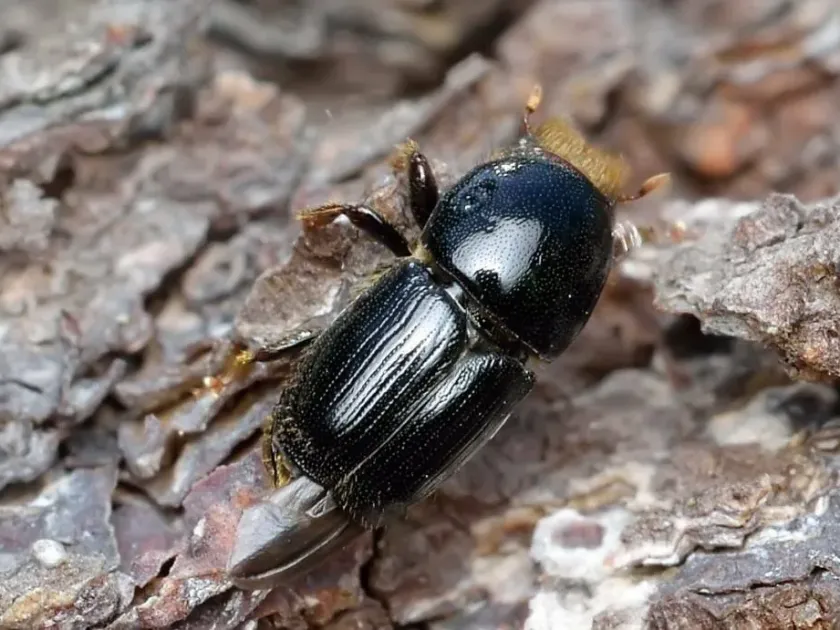
The birch bark beetle (Dryocoetes betulae) is a species of bark beetle belonging to the family Curculionidae. Adult beetles are small, cylindrical, measuring between 3.5 to 4.5 mm in length, and have a dark brown or blackish color covered with dense hair.
The development cycle consists of egg, larva, pupa, and adult stages. Larvae are legless, C-shaped, creamy-white in color with a distinctive yellowish-brown head, specifically adapted for tunneling through the phloem and cambium layers of birch trees.
They exhibit a characteristic gallery pattern beneath the bark. Unlike some other bark beetles that create simple vertical galleries, these insects construct complex, star-shaped or branched maternal galleries where eggs are deposited.
The insects typically overwinter as adults, hiding within their galleries under the bark or in the soil near the tree base. During early spring, when temperatures rise, they emerge to find and colonize new suitable host trees.
These beetles are primarily found throughout temperate regions of Europe and Asia. They are specialized pests that gravitate towards trees stressed by environmental factors, making them a significant concern for both woodland and landscape management.
What it damages
Their primary host plants are species of the Betula genus, particularly Betula pendula and Betula pubescens. They are known as secondary pests, meaning they preferentially target trees that have been weakened by drought, disease, or physical injury.
The damage occurs as the beetles and their larvae feed on the cambium and phloem. This disrupts the tree’s nutrient transportation system, effectively strangling the flow of sugars and water between the roots and the crown.
Massive colonization of a single tree often leads to rapid decline and death. Even if the tree manages to survive an initial attack, the damage makes it highly susceptible to secondary wood-decay fungi and other opportunistic pathogens.
In high-density populations, these beetles may overwhelm even relatively healthy trees. This can lead to localized outbreaks where groups of birch trees die off within a single growing season, significantly impacting the local ecosystem.
The economic impact is notable in forestry, as infested timber loses its commercial value. Furthermore, the loss of mature birch trees in ornamental parks and urban settings significantly reduces the aesthetic and environmental quality of the area.
Signs of infestation
The most visible sign of infestation is the presence of "boring dust" or frass. This fine, sawdust-like material accumulates at the base of the tree or in the bark crevices as beetles clear their entrance tunnels.
Small, perfectly round entry holes, often no larger than 1-2 mm in diameter, can be observed on the bark surface. In active infestations, these holes may show sap bleeding as the tree attempts to push out intruders.
Crown dieback is a primary indicator of successful infestation. The foliage begins to yellow and wither prematurely, and individual branches may appear dry, starting from the top and progressing downwards as the beetle population expands.
Bark shedding or loosening is another late-stage sign. As the cambium layer is destroyed by larval activity, the bark loses its physical connection to the wood, leading to patches of bark falling away and exposing the galleries beneath.
Close inspection of the galleries reveals the intricate patterns of larval feeding. The presence of these tunnels is a definitive confirmation that the tree is being used for reproduction, requiring immediate intervention to stop the spread.
Control measures
The most effective management strategy is strict forest hygiene. Infested trees should be identified and removed immediately, especially during late winter or early spring, before the new generation of adults has a chance to emerge.
Slash and woody debris resulting from logging or storm damage must be cleared or destroyed promptly. These materials are prime breeding sites for the beetles and can lead to a sudden spike in the local population if left unattended.
Monitoring using pheromone traps is highly recommended for woodland areas at risk. By tracking the population density, foresters can time their interventions precisely and prevent the outbreak from becoming widespread.
Biological control should be encouraged by protecting natural predators. Woodpeckers and various parasitic wasps are efficient in reducing bark beetle populations, and maintaining a healthy bird population helps keep these pests in check.
- Sanitary removal of infested trees
- Proper waste management of fallen branches
- Maintaining tree vigor through soil care
- Application of systemic insecticides where applicable
Taxonomy
- Latin name
- Dryocoetes betulae
- Order
- Coleoptera (beetles)
- Family
- Curculionidae
- EPPO code
- DRYOBE
Discussion
No discussions yet — be the first.