
Alder bark beetle
Dryocoetes alni
Description
How to identify
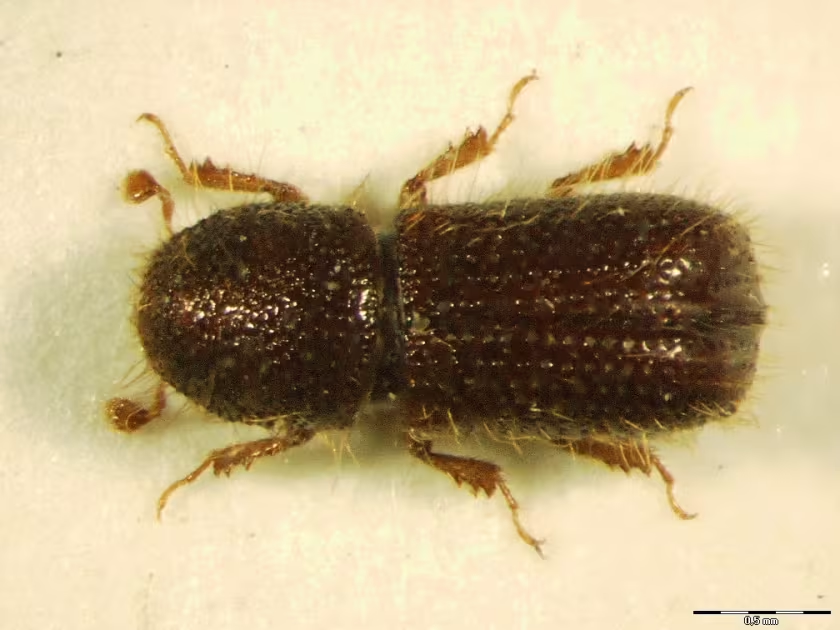
The Alder bark beetle (Dryocoetes alni) is a small insect species belonging to the Curculionidae family and the Scolytinae subfamily. Measuring roughly 2 to 3 millimeters, these beetles possess a cylindrical body, typically colored in shades of dark brown or black.
Their elytra surfaces are characterized by fine punctures and sparse, delicate hairs. The head is partially hidden by the pronotum, which is a structural adaptation commonly seen in bark-dwelling beetles of this specific group.
The larvae of this species are legless and white, featuring a curved body and a distinctly pigmented head capsule. They spend their entire developmental period within the bark and phloem layers of the host plant.
These beetles are recognized as phloeophagous insects, meaning they specialize in feeding on the inner bark layers. Their ability to remain hidden makes them persistent pests that can thrive even when populations are relatively low.
Recognizing the species requires careful observation of both the adult morphology and the characteristic boring patterns left behind in the host trees during their reproductive cycles.
What it damages
The primary host for Dryocoetes alni is the alder tree (Alnus). The beetle preferentially colonizes weakened, stressed, or recently downed trees, as these provide the most accessible nutritional environment.
While alder is the most common target, the species can also colonize other hardwoods such as hazel, beech, and hornbeam. It is distributed widely throughout European and Asian forest ecosystems.
The damage is caused by adult beetles and their larvae creating extensive galleries within the inner bark. This feeding activity disrupts the transport of water and nutrients, effectively girdling the tree.
Heavily infested trees show signs of decline, including branch dieback and thinning foliage. Once the vascular system is sufficiently damaged, the tree loses its ability to recover and eventually dies.
The presence of these beetles serves as an indicator of poor forest health, often targeting trees already stressed by drought, wind damage, or root diseases, thereby accelerating tree mortality in affected areas.
When it appears
Adult beetles emerge in early spring, usually once temperatures reach consistent levels of 12–15 degrees Celsius. This typically coincides with the arrival of stable spring weather in April or May.
Upon emergence, the beetles seek out suitable host trees. They are attracted to semiochemicals and volatile compounds emitted by trees under physiological stress, which helps them locate optimal breeding sites.
Once a suitable tree is found, the beetles excavate breeding galleries where the females deposit their eggs. The subsequent development of the next generation begins immediately after hatching.
The generation time varies based on local climate and tree health, often taking a full season to complete. Overwintering occurs either within the bark galleries or in the leaf litter at the base of the tree.
Consequently, the period of maximum infestation activity spans from late spring through mid-summer, making this the critical window for monitoring and management efforts.
Signs of infestation
The most reliable sign of an infestation is the accumulation of boring dust, a fine sawdust-like material deposited on the bark or at the base of the trunk as beetles drill into the tree.
Entry holes are visible upon close inspection, usually appearing as small, circular openings about 1 to 1.5 millimeters in diameter. Sometimes these holes may be accompanied by minor sap flow.
Crown symptoms are also key indicators: leaves may start to yellow, brown, or drop prematurely. These signs occur because the insect activity restricts the tree's internal fluid movement.
Removing a patch of bark from a suspected tree will reveal the galleries. The pattern of these galleries is specific to the species and shows the extensive feeding path of the larvae.
In advanced stages of the infestation, the bark may become loose and separate from the wood, exposing the dead or dying inner tissue beneath, which confirms the beetle's colonizing success.
Control measures
The most effective strategy for managing Dryocoetes alni is the timely removal of infested trees. Sanitation logging helps eliminate the beetle brood before the next generation emerges.
Maintaining forest hygiene is essential. Removing fallen logs and woody debris helps reduce the breeding opportunities for the population in the surrounding area, protecting healthier stands.
In sensitive or urban environments, pheromone-based monitoring tools can be used to track beetle populations and determine the appropriate timing for protective measures.
Biological control, including the encouragement of natural predators such as woodpeckers and parasitic wasps, plays a vital role in keeping beetle populations within a natural balance.
- Conduct regular forest health assessments.
- Promptly cut and remove infested or dying trees.
- Destroy logging waste through burning or chipping.
- Ensure adequate tree vigor through proper site management.
- Monitor pest presence using pheromone traps.
Taxonomy
- Latin name
- Dryocoetes alni
- Order
- Coleoptera (beetles)
- Family
- Curculionidae
- EPPO code
- DRYOAL
Discussion
No discussions yet — be the first.