
Drilus
Drilus
Description
How to identify
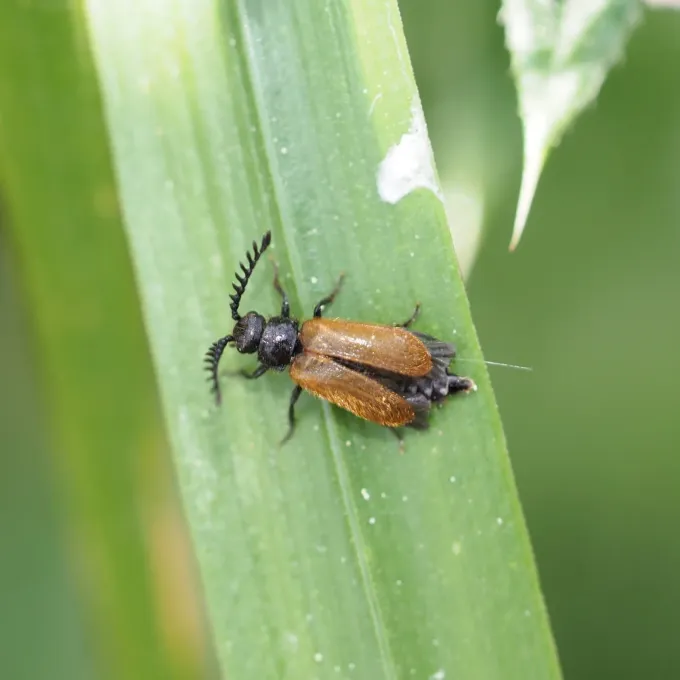
The genus Drilus belongs to the family Drilidae. These beetles exhibit extreme sexual dimorphism, making identification interesting for entomologists.
Adult males are winged, active, and resemble typical beetles, capable of flight to locate mates during the breeding season.
Females are neotenic, meaning they retain larval-like features throughout their lives, lacking wings and possessing a worm-like body shape.
Larvae are highly mobile, sclerotized, and equipped with specialized mouthparts designed to penetrate the shells of terrestrial gastropods.
Visual identification of specific species is challenging and usually requires specialist knowledge of genital anatomy or molecular analysis.
What it damages
Drilus beetles are not crop pests; they are specialized predators that feed exclusively on terrestrial mollusks like slugs and snails.
By consuming these garden pests, Drilus larvae provide significant biological control, reducing the damage caused by snails to vegetable crops.
They do not feed on leaves, stems, or roots of plants, meaning their presence is strictly beneficial to the gardener and agriculturalist.
Misidentifying them as pests occurs when gardeners find them near plants, forgetting that the beetle is there to hunt the actual pest, not the plant.
In a balanced ecosystem, these beetles act as a natural check, preventing snail outbreaks without the need for toxic chemicals.
When it appears
The life cycle of Drilus is synchronized with the activity of their prey, typically emerging in late spring and early summer.
Adult males spend their short lives searching for females, after which the females deposit eggs in the soil near snail habitats.
Larval development is often slow, sometimes spanning multiple years depending on environmental conditions and the availability of food.
They prefer humid environments, which are essential for both the larvae and their mollusk prey to thrive and remain active.
During colder months or dry seasons, the larvae retreat deep into the soil or under organic debris to survive, re-emerging when conditions improve.
Signs of infestation
The primary sign of a Drilus presence is a collection of intact, empty snail shells left behind after the predator has consumed the occupant.
Because they enter through the shell's natural opening, the shells remain undamaged compared to those attacked by birds or small mammals.
Gardeners may observe the larvae while inspecting leaf litter or moist soil during damp weather, especially in the evening.
The absence of typical snail slime trails and reduced plant damage despite moist conditions can indicate the presence of these predatory beetles.
Detection is difficult due to their secretive nature, but finding empty shells is a reliable indicator that an active natural control is at work.
Control measures
No control measures are necessary, as Drilus is an essential ally in integrated pest management (IPM) strategies.
The most important action is to avoid the use of chemical molluscicides (slug pellets), which kill these beneficial insects and disrupt natural cycles.
Encourage natural habitats by maintaining piles of leaves or logs, providing shelter for the larvae to survive throughout the year.
Minimize soil disturbance to protect overwintering larvae and ensure the population remains stable for the next season.
Acceptance of these insects as part of the garden ecosystem fosters a more resilient and sustainable agricultural practice.
Taxonomy
- Latin name
- Drilus
- Order
- Coleoptera (beetles)
- Family
- Drilidae
- EPPO code
- DRILSP
Discussion
No discussions yet — be the first.