
Dreissena
Dreissena
Description
How to identify
Dreissena is a genus of small, freshwater, bivalve mollusks belonging to the family Dreissenidae, widely known for their invasive nature.
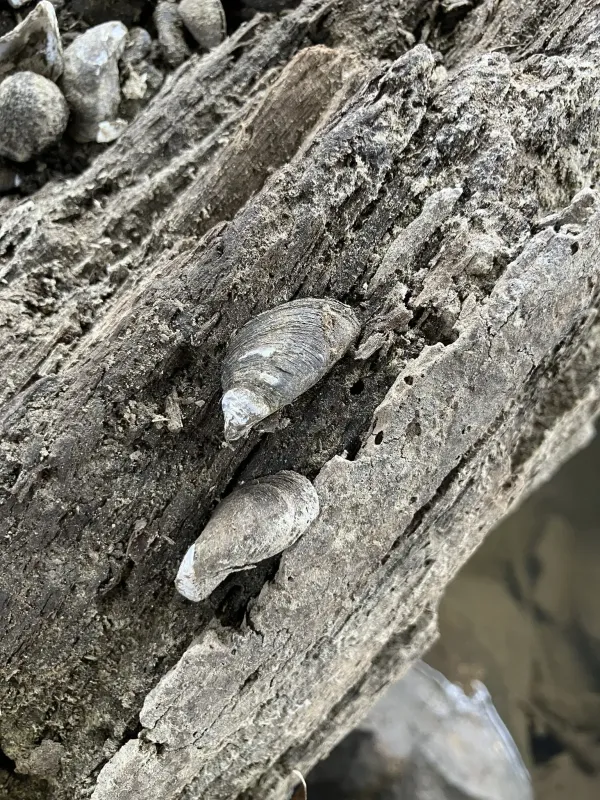
The shells of these mollusks are typically wedge-shaped and often feature distinctive dark and light striped patterns, which is why they are often called zebra mussels.
They attach themselves to solid surfaces such as pipes, rocks, and equipment using a strong bundle of proteinaceous filaments known as a byssus.
The larval stage, called veligers, is planktonic and drifts with currents, allowing the species to rapidly colonize entire water systems and lakes.
From a systematic standpoint, Dreissena belongs to the phylum Mollusca, class Bivalvia, and order Veneroida, posing significant economic threats to water infrastructure.
What it damages
Dreissena causes massive economic losses by colonizing water supply systems used in agriculture and large-scale irrigation projects.
By attaching to the inner walls of pipes, these mollusks drastically reduce flow capacity and can eventually lead to total blockages of irrigation networks.
In addition to blocking flows, they cause damage to pump impellers and sensors, leading to mechanical failures and increased maintenance costs for farmers.
The accumulation of dead shells and decay products negatively impacts water quality, introducing impurities that can clog nozzles in drip irrigation systems.
The need for constant monitoring and specialized cleaning of fouled infrastructure represents a significant financial burden for agricultural water managers.
When it appears
Reproduction of Dreissena is highly dependent on water temperature, typically occurring when temperatures exceed 12 to 15 degrees Celsius.
Peak settlement of larvae on infrastructure surfaces usually occurs throughout the summer months, creating the most intense growth periods.
The population activity remains high in late summer, with colonization rates reaching their maximum potential during these warm intervals.
While reproduction slows down in autumn and winter, established colonies survive and continue to obstruct water flow throughout the off-season.
Spring floods often mobilize colonies, leading to the breaking off of clusters that can clog filters and downstream irrigation equipment.
Signs of infestation
The most common sign of an infestation is a noticeable drop in water pressure and reduced flow rates in the irrigation system.
Visual inspection of water intake screens or pump houses often reveals dense mats of shells completely covering the structural surfaces.
Filters and strainers frequently become clogged with shell fragments, leading to increased pressure drops and system alarms.
Unusual noises or vibrations originating from pumping units are common indicators that shells have settled on mechanical parts like impellers.
A foul, sulfurous odor in the water supply is a clear signal that organic matter from dying mussel colonies is rotting inside the piping system.
Control measures
Mechanical removal through the use of high-pressure cleaning, pigging, and scrubbing of pipe interiors is the standard method for maintenance.
Ultraviolet (UV) light treatment at the point of water intake is highly effective in preventing veligers from successfully settling on surfaces.
Chemical control using authorized oxidizing agents is sometimes employed to treat closed systems, provided they meet local environmental safety regulations.
Applying specialized anti-fouling coatings to pipes and hardware can create surfaces that are difficult for mollusks to colonize successfully.
- Installation of fine-mesh screens to filter out planktonic larvae at intake points.
- Periodic thermal shock treatment by increasing water temperature.
- Monitoring water chemistry to detect changes associated with colonizing populations.
Taxonomy
- Latin name
- Dreissena
- Family
- Dreissenidae
- EPPO code
- DREISP
Discussion
No discussions yet — be the first.