
Dolurgus
Dolurgus
Description
How to identify
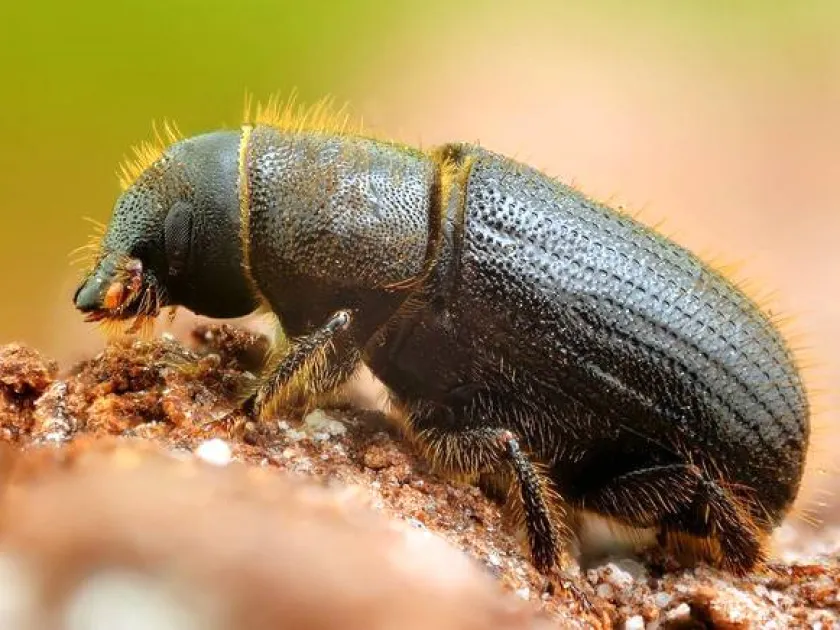
Dolurgus is a genus of beetles belonging to the Curculionidae family and the Scolytinae subfamily (bark beetles). These are small insects, typically measuring 2–3 millimeters in length, characterized by a cylindrical body structure typical for this group.
The coloration of these beetles ranges from dark brown to nearly black, providing effective camouflage against tree bark. They possess elbowed antennae with a distinct club and elytra with specific indentations and grooves, often covered in fine hairs.
Identification of the genus requires careful morphological examination, as they resemble other small bark beetles. Key diagnostic features include the structure of the pronotum and the shape of the elytral declivity.
Adult beetles have well-developed chewing mouthparts adapted for boring into woody tissues. As adults, they lead a cryptic life, making population monitoring challenging for forest managers.
The larvae are typical of the bark beetle group: legless, whitish in color, with a sclerotized head capsule. They develop directly beneath the bark or within the outer layers of the wood.
What it damages
The primary hosts for Dolurgus are coniferous tree species, particularly spruce and fir. These beetles preferentially attack weakened, fallen, or damaged trees, often acting as secondary pests.
Damage occurs primarily in forest stands, where beetles colonize bark sections on trunks and large branches. In cases of high population density, they can also attack relatively healthy trees that show signs of physiological stress.
By excavating galleries beneath the bark, the beetles and their larvae sever the phloem and cambium layers, disrupting the transport of nutrients and water throughout the tree. This often leads to rapid drying of the affected areas.
A significant danger lies in the fact that these galleries create entry points for fungal infections that cause rot. Consequently, the damage caused by Dolurgus activity is complex and multi-faceted.
The economic impact involves a reduction in timber quality, stunted growth of coniferous stands, and potential tree mortality during mass outbreaks of the pest population.
When it appears
The activity of Dolurgus is directly dependent on environmental temperatures. The first emergence of overwintered adults occurs in the spring, as soon as average daily air temperatures remain consistently above freezing.
The peak period for reproduction and colonization of new trees occurs between late spring and early summer. During this time, mating takes place, and females lay eggs in pre-excavated maternal galleries.
Summer generation development spans several months, with the maturation speed of larvae dependent on the heat availability during the specific season. In favorable years, accelerated generation cycles are possible.
In autumn, adult beetles prepare for hibernation. Some remain in feeding sites under the bark, while others may migrate to the forest floor or more protected sections of the wood.
To monitor pest activity, agronomists and forest pathologists utilize pheromone traps and controlled trap-tree methods between April and August.
Signs of infestation
The primary sign of infestation is the presence of entrance holes on the bark surface, approximately 1–1.5 millimeters in diameter. Brownish boring dust, consisting of fine wood particles, is often visible around these holes.
Needle desiccation, changing from green to yellow-brown, or intense needle drop indicates that vascular damage to the tree is extensive. Such trees are often referred to as standing deadwood.
Removing a section of the bark reveals a characteristic gallery pattern. The maternal gallery is usually longitudinal, with larval galleries branching off to the sides and widening as the larvae grow.
The presence of a large number of beetles, larvae, or pupae at various developmental stages under the bark is definitive proof that the tree has been colonized by this specific species.
Resin flow at the damage sites may indicate the tree's attempt to defend against colonization, although this mechanism is frequently ineffective in already weakened trees.
Control measures
Sanitary logging is the most effective method for managing Dolurgus populations. It is essential to promptly remove colonized and weakened trees to prevent the mass proliferation of the pest.
It is important to clear logging sites of debris and deadwood, which serve as natural incubators for bark beetles. Timber must be removed or processed before the mass emergence of new-generation beetles begins.
The use of pheromone traps allows for the detection of the pest and a significant local reduction in population size by capturing adults. This is an environmentally safe method of population control.
Chemical treatment with insecticides is justified only in ornamental plantings or nurseries where high-value trees need protection. Spraying of the trunks should be conducted during the peak beetle flight period.
- Adherence to forestry management regulations.
- Stimulation of natural conifer immunity.
- Regular forest pathology surveys.
- Destruction of trap trees after colonization.
Taxonomy
- Latin name
- Dolurgus
- Order
- Coleoptera (beetles)
- Family
- Curculionidae
- EPPO code
- DOLUSP
Discussion
No discussions yet — be the first.