
Doliopygus
Doliopygus
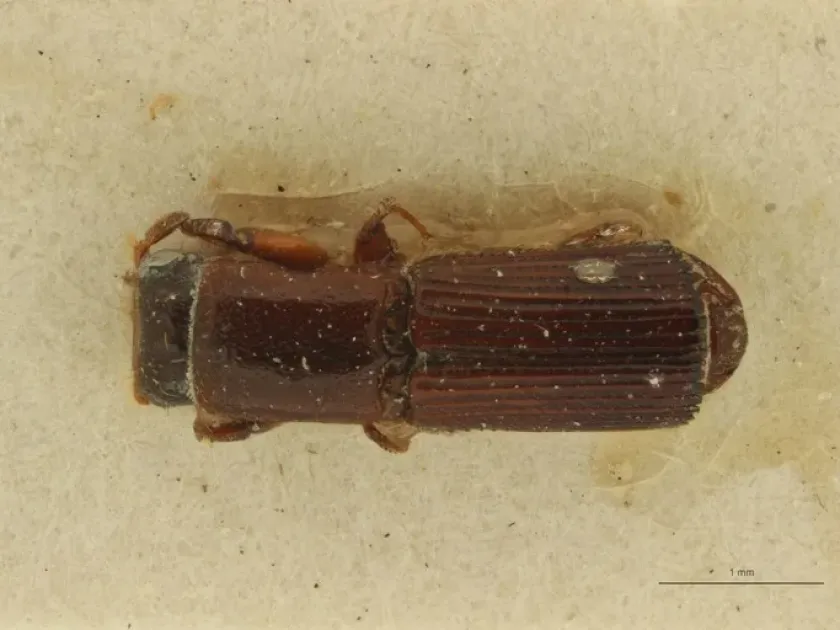
Description
How to identify
Doliopygus is a genus of ambrosia beetles belonging to the family Curculionidae and the subfamily Scolytinae. These insects are well-known for their specialized lifestyle inside woody tissues.
Adult Doliopygus beetles are typically cylindrical in shape and range from 2 to 6 millimeters in length. Their dark, elongated bodies are perfectly suited for navigating narrow tunnels within the wood.
Unlike many other bark beetles, they do not feed on wood fibers. Instead, they cultivate symbiotic fungi in their galleries. These fungi serve as the primary food source for both the adult beetles and their developing larvae.
The female beetle constructs complex galleries deep inside the tree. She carries fungal spores in specialized structures known as mycangia, ensuring that the larvae have an immediate food supply upon hatching.
Their life cycle is relatively short, often allowing for multiple generations per year under tropical conditions. This rapid turnover makes them particularly troublesome in wood production environments.
What it damages
Doliopygus species primarily attack hardwood trees, particularly in tropical regions. Both freshly cut timber and stressed living trees are highly susceptible to infestation.
The beetles bore deep into the wood, creating extensive systems of galleries. This tunneling significantly reduces the structural integrity and aesthetic value of the timber, making it unsuitable for furniture or high-end construction.
The tunnels also provide entry points for pathogenic and staining fungi. These secondary infections lead to discoloration, which further depreciates the value of the affected wood products.
In forest ecosystems, these beetles function as decomposers by breaking down dead wood. However, in industrial settings, their activity results in significant economic losses for the timber industry.
Because the damage occurs internally, it is often difficult to detect until the logs are sawn. This hidden infestation can lead to entire shipments being rejected by buyers.
When it appears
The activity of Doliopygus is closely regulated by moisture and temperature levels. In tropical environments, the beetles remain active throughout the year as long as environmental conditions favor fungal growth.
High humidity levels typically trigger peaks in beetle activity. Newly harvested timber is at the greatest risk of infestation within the first few days after felling.
During the wet season, the population density of Doliopygus tends to increase significantly. The abundance of suitable breeding substrates—stressed or freshly cut wood—drives this surge in activity.
The duration of the larval stage depends on the availability of the fungus. When conditions are optimal, the rapid development cycle can lead to explosive population growth in storage yards.
Logistics management is essential, as delaying the removal of harvested logs from the forest floor provides an ideal environment for the beetles to establish colonies.
Signs of infestation
The most reliable sign of an active Doliopygus infestation is the presence of fine wood dust, known as frass, on the surface of the timber or at the base of the tree trunk.
- Visible entry holes on the bark or log surface, usually 1–2 mm in diameter.
- Dark or bluish-black staining around the entrance holes caused by the symbiotic fungus.
- Internal galleries visible when logs are sawn, characterized by dark, narrow channels running through the wood.
- Wilting or crown thinning in living trees, which may indicate advanced internal damage.
Advanced infestations are often accompanied by a distinct smell of decay, resulting from the combined activity of the beetles and the associated fungal organisms.
Regular inspections of log piles are crucial, as the dust generated by the beetles is often the only external indication of internal damage that can affect the entire batch.
Control measures
Prompt processing of timber is the most effective control measure. Minimizing the time logs spend in the forest or in storage yards significantly reduces the window for infestation.
Applying protective insecticide treatments to the bark and ends of freshly cut logs can deter initial attacks. Proper coverage is critical for the effectiveness of chemical barriers.
Silvicultural practices, such as the rapid removal of damaged or diseased trees, help maintain forest health and reduce the overall population of the pest in the vicinity of logging operations.
Integrated Pest Management (IPM) strategies, including pheromone trapping, can be used for monitoring and early detection, allowing managers to time their protection efforts more effectively.
Proper storage of logs on elevated racks or in well-ventilated areas helps reduce moisture content, making the wood less attractive for fungal growth and beetle colonization.
Taxonomy
- Latin name
- Doliopygus
- Order
- Coleoptera (beetles)
- Family
- Curculionidae
- EPPO code
- DOLPSP
Discussion
No discussions yet — be the first.