
Ditula
Ditula
Description
How to identify
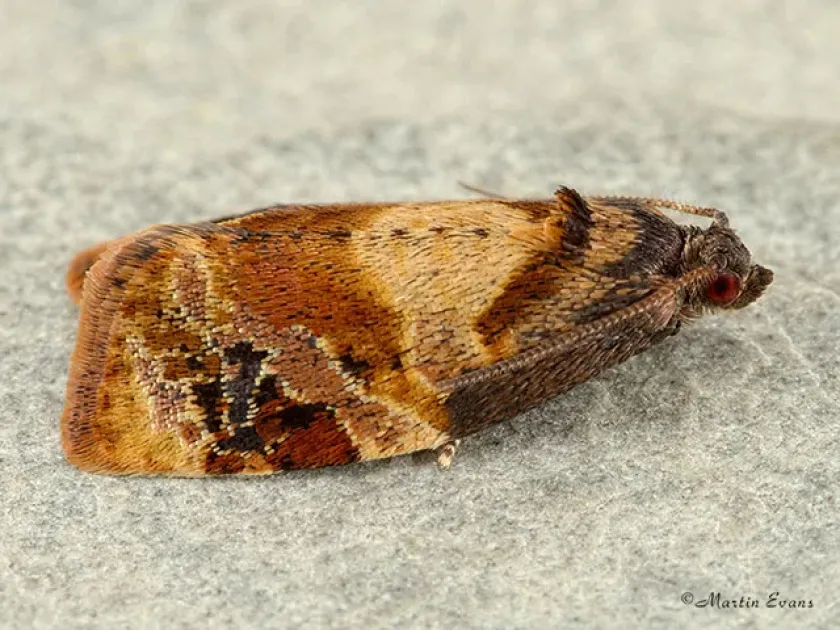
Ditula is a genus of moths belonging to the family Tortricidae. The most notable species is Ditula angustiorana, commonly known as the Red-barred Tortrix.
Adult moths typically have a wingspan of 14–18 mm. Their forewings feature a mottled brown and reddish-brown pattern, which allows them to blend in perfectly with tree bark during the day.
The larvae are typically light green with a dark brown or black head capsule. They are known for their habit of spinning silk to create shelters within leaves.
Pupae are found in protected areas, often inside rolled or tied leaves. They transition into adult moths after a period of development that varies based on temperature.
The life cycle involves complete metamorphosis, allowing these insects to survive effectively in diverse temperate climates across Europe and beyond.
What it damages
Ditula larvae are polyphagous, feeding on a variety of plants, including fruit trees like apple, pear, plum, and cherry, as well as several ornamental and coniferous species.
The damage is primarily caused by larvae feeding on buds, young leaves, and developing fruits. This feeding reduces the photosynthetic surface area of the tree.
In cases of high infestation, larvae can destroy the terminal buds, leading to stunted growth and a loss of apical dominance in young trees.
Fruit damage often occurs when larvae feed on the skin of developing fruits, creating scars that deform the fruit and lower its market value.
Conifers, especially yew and juniper, can also suffer from feeding damage, which may lead to the browning and dieback of the tips of the needles.
When it appears
These moths overwinter as young larvae in small, silken shelters hidden within bark crevices or near bud scales.
Larval activity resumes in early spring, coinciding with the bud-burst stage of the host plants, when the larvae emerge to feed on fresh growth.
Pupation typically occurs from late May through June, followed by the emergence of the first generation of adults in early summer.
Egg-laying usually takes place on the underside of leaves. After hatching, the new generation of larvae begins feeding immediately on the foliage.
The cycle continues until autumn, when larvae prepare for hibernation by seeking shelter in the bark or other protected spots.
Signs of infestation
The first sign of infestation is often the presence of damaged or hollowed-out buds that fail to open properly in the spring.
Rolled or tied leaves, bound together with silk webbing, are the most prominent visual indicator of larval presence on the tree canopy.
Frass (larval excrement) trapped within the silk nests is a reliable diagnostic sign that active feeding is currently taking place.
Visible scarring on the surface of developing fruit, often accompanied by small holes, indicates that larvae have moved from foliage to fruit.
Webbed tips on twigs and branches serve as a clear warning sign, especially in late spring and early summer when the population is peaking.
Control measures
Cultural control involves removing and destroying infested leaves and shoots to physically reduce the pest population during the season.
Winter maintenance, such as scraping loose bark from tree trunks, helps eliminate the overwintering sites for the larvae.
Pheromone traps are highly effective for monitoring the flight patterns of adult moths and determining the optimal timing for chemical treatments.
Biological control agents, including parasitic wasps (e.g., Trichogramma species) and bacteria like Bacillus thuringiensis, provide eco-friendly options.
- Application of appropriate insecticides at the bud-burst stage.
- Placement of sticky bands to trap migrating larvae.
- Encouraging natural predators such as birds and beneficial insects in the orchard.
Taxonomy
- Latin name
- Ditula
- Order
- Lepidoptera (butterflies)
- Family
- Tortricidae
- EPPO code
- DITUSP
Discussion
No discussions yet — be the first.