
Ord's kangaroo rat
Dipodomys ordii
Description
How to identify
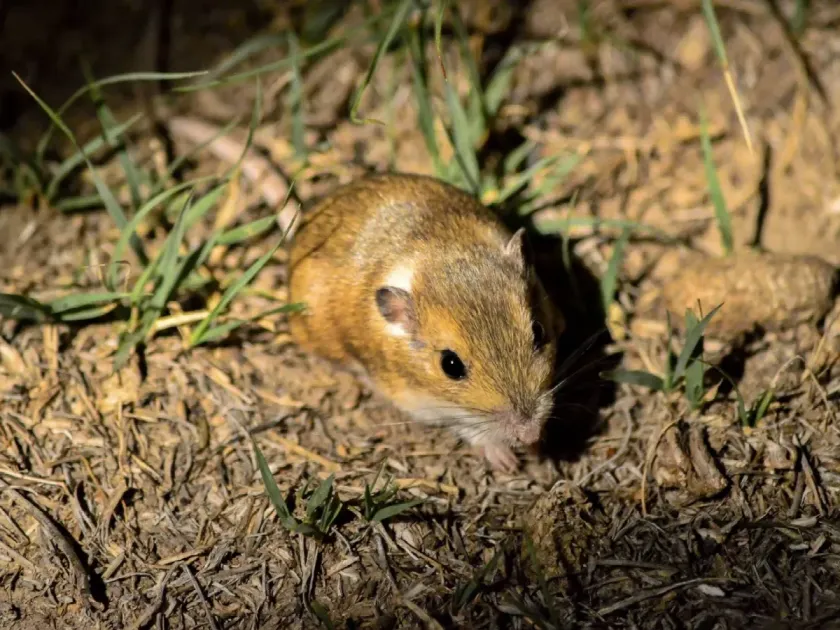
Ord's kangaroo rat belongs to the rodent order and the Heteromyidae family. It is a small mammal known for its powerful hind legs, allowing for efficient jumping and rapid movement.
The physical appearance features a sandy-brown coat that provides camouflage in desert and grassland environments, with a tail often longer than its body.
These rodents are nocturnal and possess large, sensitive eyes and ears, allowing them to navigate and avoid predators during their primary activity period at night.
They are equipped with external fur-lined cheek pouches, which are used to carry large quantities of seeds and grains back to their burrow systems.
The species is well-adapted to arid landscapes, where they maintain complex underground tunnel systems that serve as both nests and food storage units.
What it damages
The primary agricultural impact involves the consumption of sown seeds and grain, which significantly reduces crop density and may lead to total germination failure.
In cases of food scarcity, they may gnaw on the roots and bases of young crops, causing wilting and death of juvenile plants in the field.
Ord's kangaroo rats are known to cache vast amounts of grain in their burrows, leading to direct economic losses for farmers during and before harvest seasons.
Their burrowing activities disturb soil structure, potentially causing erosion and creating uneven surfaces that complicate the use of heavy agricultural machinery.
By targeting young shoots and seedlings, these pests can ruin the uniformity of a crop row, making the fields more susceptible to secondary weed infestations.
Signs of infestation
The presence of these rodents is easily identified by a network of small burrow entrances often found near open areas, fields, or sandy patches.
Small mounds of loose soil and husks of seeds left near these entrances are common indicators of a high level of rodent activity in the area.
Distinctive tracks showing large hind prints followed by shorter front prints are typically found on soft or dusty soil near damaged planting areas.
Visible gaps in the crop rows, where seeds have been removed or young plants have been clipped at the soil level, suggest active rodent foraging.
Droppings and specific paths between burrow entrances and feeding sites become apparent when conducting a close inspection of the field boundaries.
Control measures
Targeted use of rodenticides placed inside active burrow systems is the most effective approach to reducing the population while minimizing non-target impacts.
Deep cultivation and plowing of fields are recommended to destroy burrow networks and disrupt the reproductive cycle of the kangaroo rat population.
Field maintenance, including the clearing of weeds from edges and access paths, removes cover and food sources that attract the rodents to the crops.
Using ultrasonic deterrents can provide temporary relief, especially during the vulnerable germination phase of various crops.
- Encouraging the presence of natural predators like owls and hawks via artificial perches.
- Monitoring field boundaries closely to detect initial signs of colony establishment.
- Implementing physical barriers for high-value test plots or smaller agricultural areas.
Taxonomy
- Latin name
- Dipodomys ordii
- Order
- Rodents
- Family
- Heteromyidae
- EPPO code
- DPDMOR
Discussion
No discussions yet — be the first.