
Kangaroo rat
Dipodomys
Description
How to identify
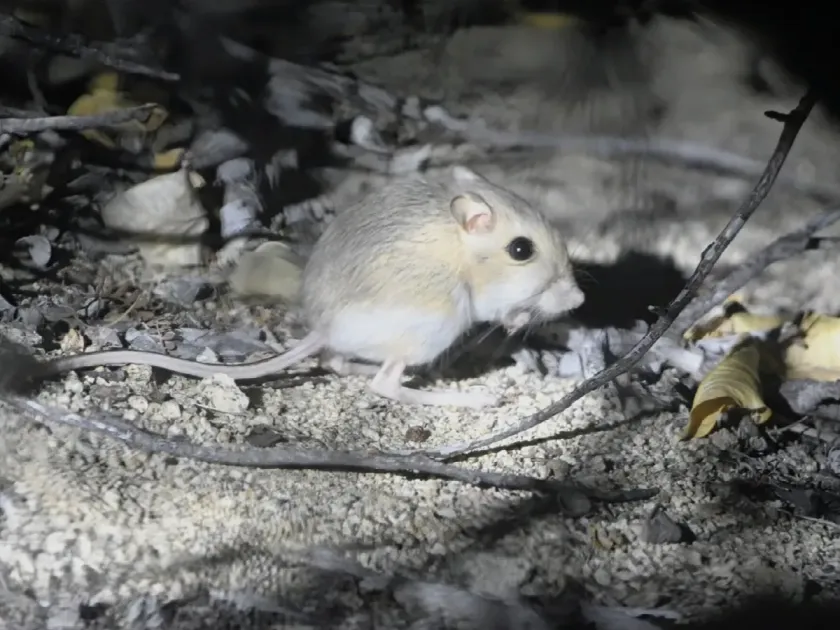
The kangaroo rat (genus Dipodomys) belongs to the Heteromyidae family, order Rodentia. They are distinct for their bipedal locomotion, utilizing strong hind legs to jump like miniature kangaroos.
These rodents are typically 10–20 cm long, excluding their very long, tufted tails. Their fur color varies from sandy to dark brown, serving as camouflage in arid landscapes and semi-desert agricultural zones.
Kangaroo rats are nocturnal and highly elusive, spending daylight hours in elaborate, multi-chambered burrow systems. They are extremely well-adapted to survive with minimal water intake.
They possess specialized fur-lined cheek pouches used to carry food items back to their burrows. This efficient harvesting behavior makes them significant agricultural threats during sowing seasons.
The biological cycle of these rodents is characterized by rapid reproduction, often producing multiple litters annually, which allows their populations to spike quickly under favorable environmental conditions.
What it damages
The primary agricultural damage caused by kangaroo rats involves the consumption of newly planted seeds, particularly wheat, oats, barley, and various legumes, leading to poor crop establishment.
They frequently dig up germinating seeds and young seedlings, causing severe gaps in rows. This loss often necessitates costly replanting efforts to maintain the target crop density.
In addition to destroying seeds, they may damage root systems while constructing their extensive burrow networks, leading to stunted plant growth or the death of individual plants in the field.
When stored in grain bins or outdoor stockpiles, they can remove large quantities of grain. A single colony can hoard significant amounts of harvestable produce in their underground chambers.
Their burrowing activities often contribute to local soil erosion and destabilize the structure of fields, which complicates mechanical harvesting and irrigation efforts in agricultural production.
Control measures
Mechanical destruction of burrows through deep tillage is one of the most effective non-chemical methods for reducing kangaroo rat populations on cultivated land.
Rodenticides can be applied as a management tool, though strict adherence to local regulations and safety protocols is required to prevent accidental poisoning of beneficial wildlife and livestock.
Biological control, such as encouraging local raptor populations (owls and hawks) by installing nesting boxes or hunting perches, can significantly suppress the density of rodents in open fields.
Physical barriers, such as underground wire mesh fencing, can be used to protect high-value nursery or seed production fields from encroachment by these agile rodents.
Consistent monitoring of field margins and proactive management of vegetation around the crop area help eliminate shelter zones, making the habitat less hospitable for colonization by kangaroo rats.
Taxonomy
- Latin name
- Dipodomys
- Order
- Rodents
- Family
- Heteromyidae
- EPPO code
- DPDMSP
Discussion
No discussions yet — be the first.