
Diostrombus mkurangai
Diostrombus mkurangai
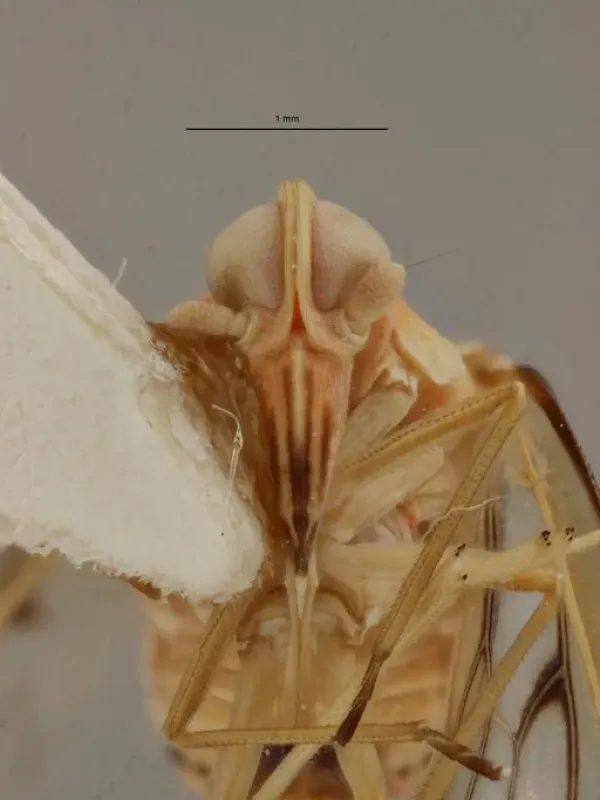
Description
How to identify
Diostrombus mkurangai is a species of insect belonging to the family Derbidae within the order Hemiptera. These insects are known for their specialized feeding habits and distinct morphological traits common to the planthopper group.
The adults are characterized by their elongated wings which, when at rest, are held in a tent-like position over the abdomen. The head structure is highly adapted for piercing plant tissues, allowing the insect to extract sap efficiently.
The life cycle involves several nymphal stages that are often cryptic, hiding in sheltered areas on the plant stems or under leaves. Their coloration provides effective camouflage, making them difficult to detect by the naked eye during initial infestation.
These insects thrive in tropical environments where high humidity and consistent temperatures favor their development. The population can increase rapidly under favorable climatic conditions, leading to significant outbreaks in susceptible crops.
As a member of the Derbidae family, the species exhibits a complex social or semi-social behavior during certain developmental stages, which is typical for many sap-sucking insects in their natural habitat.
What it damages
The primary concern regarding Diostrombus mkurangai is the damage caused to woody perennial crops, particularly cashew trees. The insect feeds directly on the phloem sap of young shoots, leaves, and flower inflorescences.
Continuous sap removal results in the weakening of the plant's physiological systems. This nutrient drain negatively impacts the overall growth rate and vigor of the trees, especially during critical vegetative stages.
Furthermore, the physical damage from piercing mouthparts creates entry points for various pathogens. The sap excreted by these insects often attracts sooty mold, which coats leaves and blocks sunlight, further reducing photosynthetic efficiency.
In cases of heavy infestation, flowering stems may fail to set fruit or may wither completely. This leads to substantial losses in agricultural yield and reduces the economic viability of the affected plantations.
Beyond direct feeding, the species is investigated for its potential role in transmitting plant viruses. This capacity makes it a serious pest that requires constant vigilance in sensitive agro-ecosystems.
Control measures
Management of Diostrombus mkurangai is best achieved through an Integrated Pest Management (IPM) program that emphasizes long-term preventive measures alongside curative interventions.
Regular field scouting is essential to identify the pest at the early stages of colonization. Early detection allows for targeted management before the infestation reaches a critical economic threshold.
- Regular pruning of infested branches to reduce population density.
- Application of bio-rational pesticides or entomopathogenic fungi.
- Controlled use of systemic insecticides during peak infestation periods.
- Preservation of natural predator habitats to maintain biological balance.
Maintaining optimal orchard hygiene and ensuring proper air circulation within the canopy are fundamental strategies that discourage the establishment of this pest in productive environments.
Taxonomy
- Latin name
- Diostrombus mkurangai
- Order
- Hemiptera (bugs, aphids, leafhoppers)
- Family
- Derbidae
- EPPO code
- DIOBMK
Discussion
No discussions yet — be the first.