
Zimmermann's pine moth
Dioryctria zimmermanni
Description
How to identify
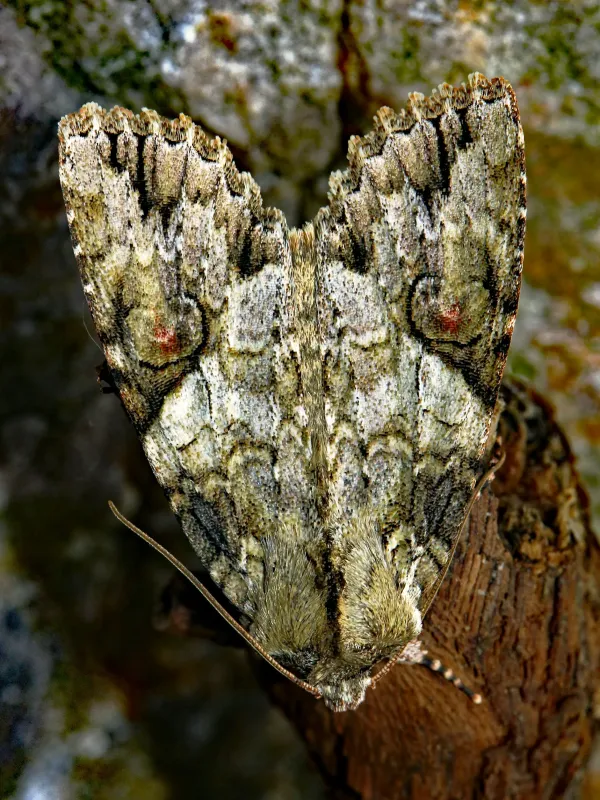
The adult Zimmermann's pine moth is a small moth with a wingspan of approximately 30 to 35 millimeters, characterized by its mottled gray-brown wing patterns that provide excellent camouflage against pine bark.
The larvae, or caterpillars, reach a length of 20–25 millimeters and feature a reddish-brown coloration with dark tubercles, each bearing a small seta (hair), which are diagnostic features for this species.
Taxonomically, this insect belongs to the order Lepidoptera and the family Pyralidae, known for their specific behavioral traits of boring into the woody tissues of host plants.
Pupation occurs within a silken cocoon constructed by the mature larva, typically inside the tunnels it has excavated in the tree, providing protection from predators and environmental extremes.
As nocturnal insects, the moths are rarely seen during the day, making the detection of the adult stage difficult for foresters and growers without the use of pheromone-baited traps.
What it damages
This pest primarily attacks various species of pine (Pinus), including Scots pine, eastern white pine, and several other ornamental and commercially important conifer species.
The larvae damage the host by boring into the terminal shoots, branches, and the main stem, where they feed on the phloem and cambium layers, causing structural weakness.
In nursery settings, larvae often target the leader shoot, causing the tree to develop a stunted or crooked form, which significantly reduces the economic value of the wood product.
The galleries excavated by the larvae also disrupt the nutrient transport system of the tree, leading to severe stress and making the tree susceptible to secondary infections or pathogens.
Extensive infestation can weaken mature trees, predisposing them to fatal attacks by wood-boring beetles, such as bark beetles, which often thrive in trees already stressed by moth activity.
When it appears
The flight period for adult moths typically begins in late spring and continues through the summer, during which time females lay their eggs on the bark near branch whorls or existing wounds.
Eggs hatch within one to two weeks, and the newly emerged larvae initially feed on the outer bark before tunneling deeper into the woody tissues to continue their development.
The most intensive feeding occurs during the summer and early autumn months, as the larvae grow rapidly and build extensive galleries within the branches and stems of the tree.
The insect typically overwinters as a late-instar larva or pupa protected within its burrow, entering a period of diapause until the return of warmer temperatures in the spring.
With the onset of spring, the life cycle resumes as the larvae finish their final feeding phase or emerge as adults, depending on the climatic conditions of the specific region.
Signs of infestation
The most visible sign of an infestation is heavy resin flow from the entry holes, which dries into conspicuous white or yellowish-brown resin masses on the surface of the bark.
Accumulations of frass, which is a mixture of caterpillar excrement and wood particles, can be found near the base of the tree or caught in branch crotches below the entry points.
Terminal shoots may exhibit browning and wilting, a clear indicator that the larvae have girdled the shoot, effectively cutting off the water supply from the roots to the tip.
Deformation of the trunk, including galls, swellings, or dead patches of bark, indicates long-term infestation where the tree has attempted to heal previous larval damage.
In severe cases, the upper portion of the tree may die back, leading to a thin, sparse crown and a significant decline in the overall vigor of the affected conifer.
Control measures
Cultural control is the first line of defense, involving the pruning and destruction of infested branches and shoots during the dormant season to eliminate larvae before they emerge.
Pheromone traps are highly effective for monitoring population levels and can be used to time chemical control measures precisely, ensuring maximum impact on the larval population.
In industrial forests and nurseries, contact-action insecticides can be applied during the period of egg hatching to prevent the larvae from successfully boring into the protected bark tissue.
Biological control agents, such as formulations containing specific entomopathogenic fungi or bacteria, offer a sustainable alternative for suppressing the moth population in sensitive areas.
Maintaining high forest health through proper spacing and site selection helps trees withstand moth pressure, preventing the widespread outbreaks that often occur in poorly managed stands.
Taxonomy
- Latin name
- Dioryctria zimmermanni
- Order
- Lepidoptera (butterflies)
- Family
- Pyralidae
- EPPO code
- DIORZI
Discussion
No discussions yet — be the first.