
Cambium moth
Dioryctria cambiicola
Description
How to identify
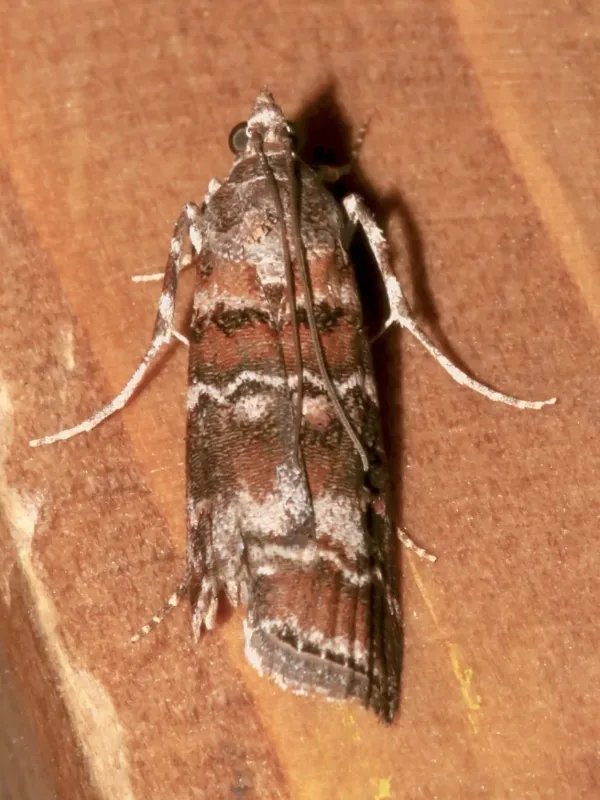
The Cambium moth, known scientifically as Dioryctria cambiicola, is a moth species belonging to the Pyralidae family. The adult moth features a wingspan of approximately 25–30 mm, with camouflage-colored wings that blend seamlessly into the bark of coniferous trees, making it difficult to detect during daylight hours.
This species is a member of the Dioryctria genus, which is widely recognized for its association with various conifer species across Eurasia. The larvae (caterpillars) undergo several developmental stages, often displaying reddish-brown to dark gray colorations that provide camouflage within the bark crevices.
The life cycle of the Cambium moth is synchronized with the physiological state of the host trees. Overwintering occurs primarily at the larval stage within protected cocoons, which are often located deep within the tunnels excavated by the larvae or in crevices beneath the rough bark of the host tree.
During the spring, as temperatures rise, the larvae resume feeding activity, actively excavating new tunnels in the cambium layer. After the larval development is complete, pupation occurs within these damaged tissues before the adult moths emerge to mate and start the next generation.
Identifying this species requires observing both the morphology of the adults and the specific patterns of damage left behind in the cambium. Entomologists often use light traps to monitor adult populations, as the moths are primarily nocturnal and active during specific periods of the growing season.
What it damages
The Cambium moth primarily infests conifer trees, with a strong preference for pine (Pinus) and spruce (Picea) species. These insects target both healthy and stressed trees, though they are more likely to establish massive colonies in trees that have previously suffered from other environmental or biotic stressors.
The primary damage is caused by the larvae feeding on the cambium and phloem layers of the trunk. By consuming these vital tissues, the larvae disrupt the tree's ability to transport nutrients and water, leading to localized starvation of the vascular system.
As the larvae expand their tunnels, they physically destroy the cambium layer, which is essential for the tree's diameter growth. Over time, extensive tunneling can effectively girdle the tree, interrupting the flow of nutrients between the crown and the root system, which may result in severe decline or mortality.
Beyond direct feeding damage, the tunnels created by the larvae serve as entry points for secondary pathogens, such as wood-decay fungi and bark-dwelling beetles. These opportunistic organisms further degrade the wood, significantly shortening the lifespan of affected trees.
In forest plantations, the presence of Dioryctria cambiicola can lead to significant economic losses, reducing the quality of timber and forcing early harvest or the removal of entire blocks of forest to prevent the spread of the infestation to surrounding healthy stands.
Signs of infestation
One of the most obvious indicators of a Cambium moth infestation is the presence of resin flow on the tree trunk. The tree produces this sap as a defensive response to the caterpillar's feeding, leading to large, hardened resin streaks running down the bark.
Around the entrance holes of the larval tunnels, one can often find piles of frass, which are small clumps of wood dust and caterpillar excrement mixed with resin. These deposits appear as reddish-brown piles, often referred to as "frass powder," accumulating at the base of the tree or on rough bark.
Affected areas of the bark may appear dried, cracked, or loose. When checking these spots, a dull sound when tapped indicates that the bark has separated from the wood due to the extensive tunneling conducted by the larvae underneath the surface.
Crown symptoms include chlorosis (yellowing of needles) followed by browning and premature needle drop. This occurs because the larval feeding prevents the tree from maintaining proper hydraulic function, leading to water and nutrient deficits that are most visible in the foliage.
By peeling back a small section of the affected bark, an observer can clearly see the winding or networked tunnels excavated by the larvae. The discovery of live larvae or pupal cases within these galleries is the definitive diagnostic sign of an active infestation by this species.
Control measures
The primary management strategy for controlling the Cambium moth is the practice of strict forest hygiene. This includes the regular identification and removal of infested, dying, or wind-thrown trees, which act as primary breeding grounds and sources for population outbreaks.
Biological control methods focus on encouraging natural predators and parasitoids. Various species of ichneumon wasps and predatory beetles naturally keep moth populations in check. Preserving these beneficial insects is essential for maintaining a balanced and resilient forest ecosystem.
In nursery or ornamental settings, systemic insecticides may be used if the infestation is caught early. Treatments are most effective when applied during the period when larvae are migrating across the bark surface to find new feeding sites before they bore into the tree.
Silvicultural practices that promote vigorous tree growth are also critical. Ensuring proper tree spacing and selecting site-appropriate species help trees maintain strong resin defenses, making them less attractive and susceptible to successful colonization by the moth larvae.
- Regular inspection of trunks for resin streaks and frass piles.
- Prompt removal and disposal of infested tree material (sanitation logging).
- Use of pheromone traps for monitoring moth flight activity.
- Conservation of natural enemy habitats within the forest.
- Ensuring healthy growing conditions to support tree vigor.
Taxonomy
- Latin name
- Dioryctria cambiicola
- Order
- Lepidoptera (butterflies)
- Family
- Pyralidae
- EPPO code
- DIORCA
Discussion
No discussions yet — be the first.