
Moon platypod
Dinoplatypus luniger
Description
How to identify
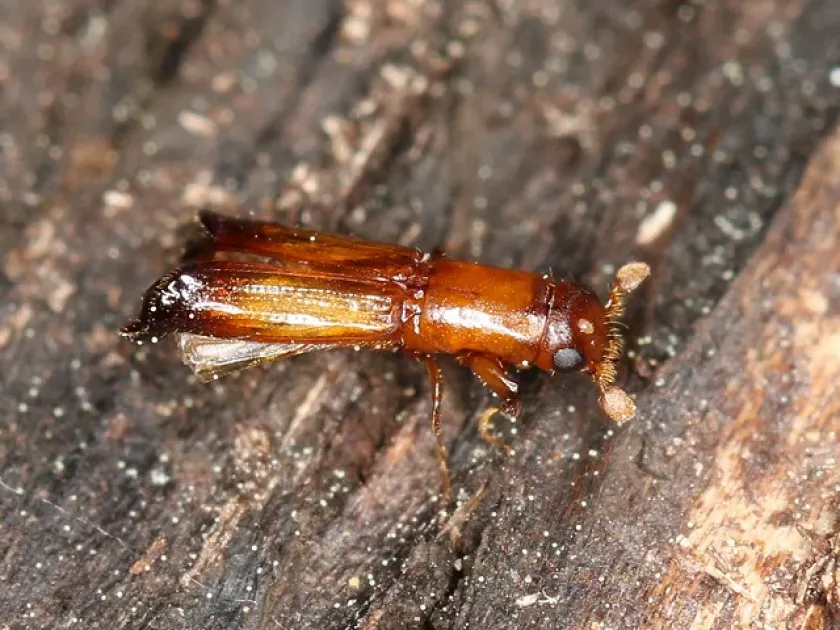
The Moon platypod (Dinoplatypus luniger) is a wood-boring beetle belonging to the Curculionidae family and the Scolytinae subfamily. It is recognized as an ambrosia beetle due to its unique symbiotic relationship with fungi within the wood.
Adult beetles are elongated and cylindrical, typically measuring between 4 and 6 millimeters in length. Their coloration ranges from dark reddish-brown to black, providing camouflage against the bark and wood surfaces they inhabit.
The head structure of the male beetle is distinct, often featuring specialized pits or projections that aid in taxonomy and species identification. Females lack these specific structural modifications, making the sexes easy to distinguish under magnification.
The larvae are legless and dwell within the galleries carved by their parents. They depend entirely on the fungal growth cultivated by the adult beetles on the walls of the tunnels, rather than feeding directly on the wood tissue.
Due to their cryptic behavior, these beetles are rarely seen on the exterior of trees. Their life cycle is almost entirely completed deep within the trunk or thick branches, making detection a primary challenge for foresters and gardeners.
What it damages
This pest attacks a variety of broad-leaved tree species. It is particularly drawn to trees that are already suffering from stress, such as drought, root damage, or mechanical wounds caused by weather or logging activities.
The primary damage is caused by the adults boring extensive, complex tunnel systems into the xylem of the tree. These galleries physically disrupt the vascular system, preventing the upward movement of water and nutrients to the canopy.
The wood quality is severely compromised by the presence of these tunnels. The holes often lead to structural instability of the timber and provide entry points for secondary wood-decay fungi, which further weaken the tree's internal structure.
Although they often target weakened hosts, healthy trees can also be overwhelmed if the pest population reaches high densities. In such cases, the sheer number of entry holes can cause rapid decline or death of the infested tree.
Economic impact is significant, particularly in the timber industry. Infested wood is often downgraded or rejected due to the presence of pinholes and fungal staining, which are characteristic of Dinoplatypus luniger infestations.
Signs of infestation
The most reliable sign of an active infestation is the presence of fine, sawdust-like frass on the bark or accumulating at the base of the tree. This material is expelled by the beetles as they continue to excavate their galleries.
Tiny, perfectly circular entry holes are visible upon close inspection of the bark. These holes are usually concentrated in specific areas where the beetle has begun its colonization, often hidden by bark crevices.
Sap exudation or gumming on the bark surface is a common reaction to the boring activity. Trees often attempt to flush out the beetles with resin, resulting in visible streaks or hardened droplets on the outside of the trunk.
Foliar symptoms include wilting, chlorosis, and premature leaf drop. These occur when the internal damage becomes extensive enough to starve the branches or the entire crown of the necessary moisture and nutrients.
In advanced cases, internal decay may lead to limb breakage or overall tree failure. If you detect small holes accompanied by dark staining or internal hollow sounds, it is a strong indicator of a severe infestation that may require immediate action.
Control measures
Sanitation is the most effective management strategy. Infested trees should be removed and destroyed before the new generation of beetles emerges, which prevents the spread of the population to healthy surrounding trees.
Maintaining tree vigor is essential for long-term protection. Proper irrigation during dry spells and adequate soil management help the tree's natural defense mechanisms, making it less attractive to colonizing beetles.
Chemical control can be used as a preventative measure during the flight season. Applying contact insecticides to the bark can kill adult beetles before they successfully penetrate the protective layer of the wood.
Integrated Pest Management (IPM) often includes the use of pheromone-baited traps. These tools are crucial for monitoring population trends and timing interventions effectively to minimize the use of broad-spectrum pesticides.
Encouraging biodiversity by protecting natural predators, such as parasitoid wasps and woodpeckers, can help keep beetle populations in check. Biological control methods should be prioritized in forest settings to maintain ecological balance.
Taxonomy
- Latin name
- Dinoplatypus luniger
- Order
- Coleoptera (beetles)
- Family
- Curculionidae
- EPPO code
- DNLPLU
Discussion
No discussions yet — be the first.