
Dinoplatypus chevrolati
Dinoplatypus chevrolati
Description
How to identify
Dinoplatypus chevrolati belongs to the family Curculionidae, subfamily Scolytinae, and is commonly classified as an ambrosia beetle. These insects possess an elongated, cylindrical body perfectly adapted for navigating narrow tunnels within the wood.
Adults are typically small and dark brown in color. They can be identified by the specific morphology of their elytra, which feature characteristic projections and grooves designed to clear boring dust from the tunnels they excavate.
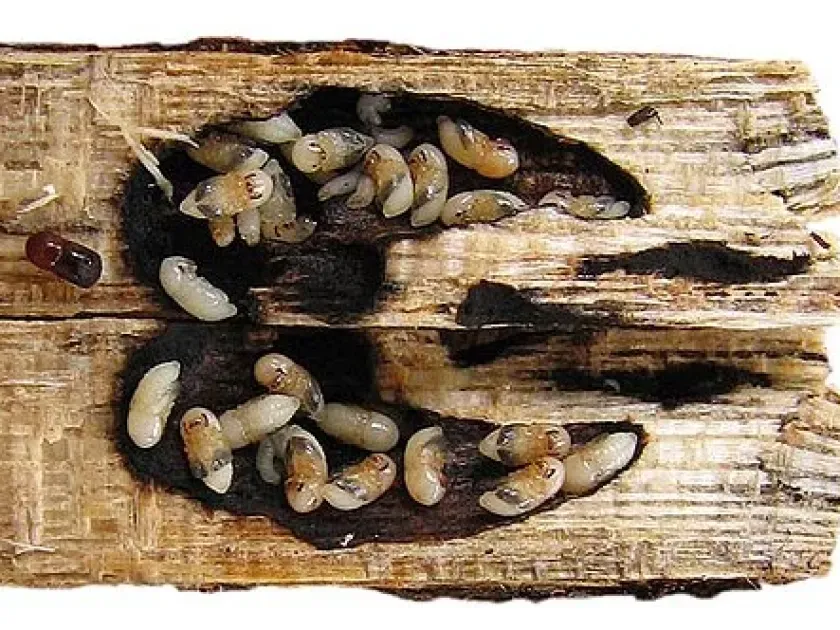
The larvae are legless, whitish grubs typical of wood-boring insects. They develop entirely within the woody tissues, relying not on the wood itself for nutrition but on symbiotic fungi, which adults introduce into the galleries upon infestation.
Sexual dimorphism is evident, with males and females exhibiting differences in thoracic and abdominal structures. Detecting these beetles in the field is difficult due to their cryptic lifestyle deep within the tree trunk.
Professional identification often involves the use of pheromone traps or destructive sampling, where wood sections are opened to analyze the unique gallery architecture, which serves as a key diagnostic feature for this genus.
What it damages
The primary hosts of this pest include various tree species, particularly in tropical and subtropical regions. It shows a strong preference for stressed, weakened, or recently fallen trees, as well as fresh timber stockpiles.
Damage is caused by both adults constructing parent galleries and larvae extending the network. This results in severe structural degradation of the wood, drastically reducing its technical quality and commercial value.
Unlike many other bark beetles, Dinoplatypus species penetrate deeply into the sapwood and heartwood. This deep-tissue infestation makes chemical control extremely challenging, as standard contact insecticides rarely reach the interior galleries.
Beyond mechanical tissue destruction, the beetle's activity promotes the spread of wood-inhabiting fungi. These fungi cause staining, such as blue stain, and various forms of decay, rendering the lumber unsuitable for fine woodworking.
Outbreaks often occur in areas with poor forest management. When sanitary regulations are neglected, the beetle population can rapidly expand, posing a significant risk to healthy but environmentally stressed neighboring trees.
Signs of infestation
The most reliable early sign of an infestation is the presence of frass (boring dust) on the tree bark. This fine, powder-like material is ejected by the beetles as they drill into the wood.
The entry holes are perfectly circular, with diameters corresponding to the body width of the beetle. They are often found in clusters, particularly on the lower part of the trunk or near bark injuries.
When the bark is removed, the gallery system becomes visible. The tunnels usually penetrate the trunk perpendicularly before branching out. The tunnel walls are often darkened due to the growth of fungal mycelium.
Late-stage indicators include foliage wilting and canopy yellowing. However, by the time these symptoms appear, the infestation is usually severe, and the host tree's overall health has already been compromised.
Another indicator is the presence of resin or sap patches on the trunk, produced by the tree as a defensive response to flush out the invaders, though this is rarely successful against high-density attacks.
Control measures
The primary strategy for management is strict adherence to forest sanitary standards. It is crucial to promptly remove fallen, damaged, or infested timber from the forest floor before the next generation of beetles can emerge.
Pheromone-based monitoring and trapping systems are highly effective for tracking population density and can be used to mass-trap adults, thereby reducing the risk of infestation in healthy tree stands.
Protecting high-value trees or timber in storage may involve the use of systemic insecticides, though these provide limited results. Consequently, proactive management and minimizing environmental stress are preferred over chemical interventions.
Natural enemies, including predatory beetles and parasitic wasps, play a vital role in population regulation. Maintaining biodiversity in forest ecosystems helps naturally suppress the beetle's proliferation.
- Regular removal of forest debris and fallen logs.
- Immediate processing or debarking of freshly cut timber.
- Ongoing monitoring using species-specific pheromone lures.
- Utilization of biological control agents like antagonistic fungi.
Taxonomy
- Latin name
- Dinoplatypus chevrolati
- Order
- Coleoptera (beetles)
- Family
- Curculionidae
- EPPO code
- DNLPCH
Discussion
No discussions yet — be the first.