
Platypodid beetle
Dinoplatypus calamus
Description
How to identify
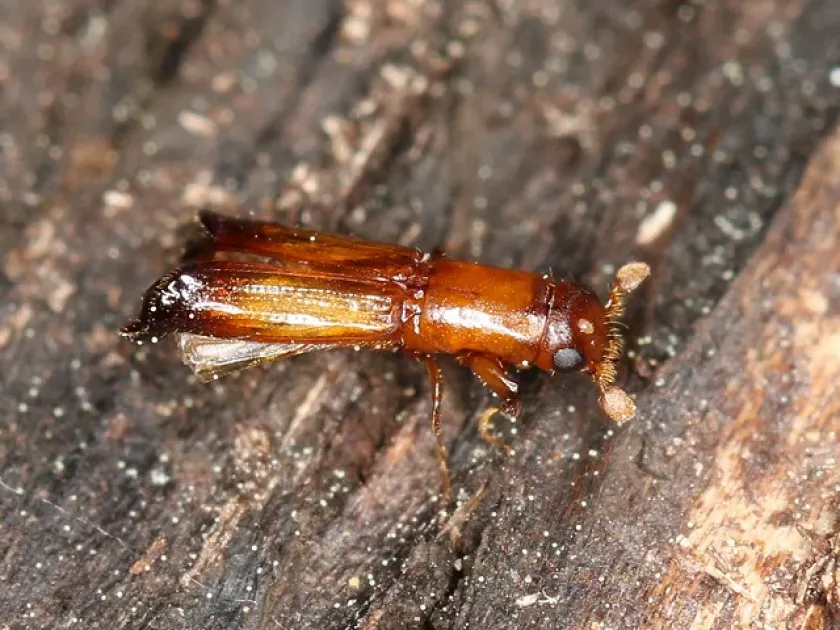
The Platypodid beetle (Dinoplatypus calamus) belongs to the Curculionidae family, specifically the Scolytinae subfamily. It is a highly specialized wood-borer with a cryptic lifestyle.
Adults possess a cylindrical, elongated body shape adapted for navigating narrow tunnels within the host tree. The color ranges from dark brown to black, aiding camouflage.
Taxonomic identification relies on the morphology of the elytral declivity (the posterior end of the wing covers), which differs significantly between males and females.
These beetles maintain a symbiotic relationship with specific fungi, which they cultivate within their tunnels; this fungus serves as the primary nutritional source for their larvae.
The species is primarily associated with humid forest ecosystems, where the density and health of woody hosts dictate the success of their colonization efforts.
What it damages
The pest attacks a variety of woody plants, including commercially valuable tropical species, often targeting weakened, diseased, or freshly cut logs.
Both larvae and adults bore deep tunnels into the sapwood and heartwood, which causes severe structural damage to the timber, rendering it useless for high-end carpentry.
Economic losses arise from the degradation of wood quality, as the galleries and associated fungal staining create irreversible defects in the timber.
Beyond physical tunneling, the beetles facilitate the entry of secondary pathogens, including wood-rotting fungi, which accelerate the decomposition of the host tree.
In high-density plantations, massive infestations can lead to the rapid decline and eventual death of young trees due to the disruption of xylem and phloem transport.
Signs of infestation
The most visible indicator of an infestation is the presence of fine wood dust, known as frass, accumulating at the base of the tree as beetles excavate tunnels.
Careful inspection of the bark reveals small, perfectly circular entrance holes, which are characteristic of the species' boring activity into the wood.
Active damage sites often exhibit sap or resin weeping, representing the tree's physiological attempt to repel the attackers through defensive secretions.
Dissection of infested wood shows a complex network of branching tunnels, frequently stained dark by the fungal mycelium that the beetles farm for food.
Yellowing leaves or premature wilting can serve as a secondary sign that the tree's vascular system has been compromised by extensive beetle colonization.
Control measures
Sanitation felling is the most effective control measure; infested trees must be removed and destroyed immediately to prevent the spread to healthy neighboring plants.
Rapid processing or removal of freshly harvested logs from the forest floor is critical, as these are primary breeding sites for emerging beetle populations.
Pheromone traps are deployed to monitor beetle activity, allowing forest managers to time control interventions during peak flight periods effectively.
Preventative chemical treatments using systemic insecticides can be applied to high-value specimens in plantations to discourage colonization during susceptible phases.
- Conducting frequent phytosanitary field inspections.
- Maintaining forest vigor through proper silvicultural practices.
- Encouraging natural predators and parasitoids to keep beetle populations in check.
Taxonomy
- Latin name
- Dinoplatypus calamus
- Order
- Coleoptera (beetles)
- Family
- Curculionidae
- EPPO code
- PLTPCA
Discussion
No discussions yet — be the first.