
Dicyrtomina ornata
Dicyrtomina ornata
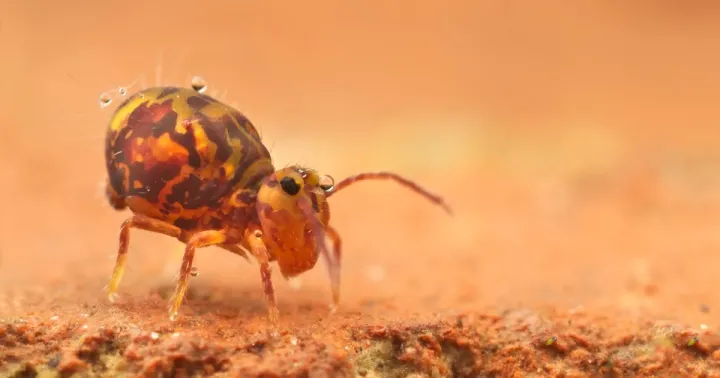
Description
How to identify
Dicyrtomina ornata belongs to the order Collembola, commonly known as springtails. These tiny arthropods are recognized by their globular, spherical body shape.
They are very small, usually ranging from 1 to 2 mm in length. Their coloration is diverse and mottled, which helps them blend into moist soil or decaying organic matter.
They possess a specialized organ called a furcula on the abdomen, which allows them to jump several centimeters when disturbed, a classic trait of the order.
These pests require high humidity to survive and thrive. They are extremely sensitive to desiccation and avoid dry or well-drained environments.
Their life cycle involves multiple molting stages, with nymphs resembling smaller versions of the adults, developing rapidly in optimal moisture conditions.
What it damages
Dicyrtomina ornata causes primary damage by feeding on delicate plant tissues, especially targeting seedlings and young sprouts in the early stages of growth.
They rasp the epidermis of cotyledons and young leaves, creating small pin-prick holes and irregular lesions that stunt growth.
In cases of high infestation density, they can completely destroy germinating seeds and emerging shoots, leading to significant yield loss.
They also feed on the root collar and underground stems, which often leads to the plant's collapse and susceptibility to various rot-causing fungi.
Greenhouse environments provide the perfect habitat for them, where they can devastate vegetable and ornamental transplants within just a few days.
When it appears
The peak activity of Dicyrtomina ornata occurs during the spring when soil moisture is at its highest and temperatures are moderate.
In greenhouses and indoor cultivation, they remain active year-round as long as the irrigation keeps the soil consistently moist.
The most susceptible period for crops is the stage from seed germination to the development of the first two or three true leaves.
Activity levels fluctuate throughout the growing season, with significant declines occurring during hot, dry weather periods.
Autumn rains can lead to a resurgence in activity as the population moves back into the top layers of soil and lingering plant debris.
Signs of infestation
Visible signs of infestation include tiny holes or "window-pane" feeding patterns on the surface of seedling leaves and cotyledons.
Observing jumping activity on the soil surface, particularly after irrigation or rainfall, is a clear indicator of their presence.
Wilting of seedlings despite adequate watering often suggests that springtails have compromised the integrity of the root system or stem.
Yellowing of the foliage, combined with slow growth, indicates cumulative damage caused by persistent epidermal feeding.
Mass failure of germination in moist potting soil is often linked to high populations of these pests consuming the sprouting embryos.
Control measures
The most effective management strategy is regulating soil moisture; allowing the top layer of soil to dry out between waterings significantly reduces their numbers.
Improving greenhouse ventilation and drainage helps to create a less favorable environment for Dicyrtomina ornata development.
Insecticidal treatments should be used selectively; contact insecticides or soil drenches can be effective but must be handled with care to avoid phytotoxicity.
Biological controls, such as introducing entomopathogenic fungi or predatory mites, can provide a sustainable way to suppress populations.
Pre-planting soil sterilization or using high-quality pasteurized potting mixes is essential to prevent introducing the pest into clean growing environments.
Taxonomy
- Latin name
- Dicyrtomina ornata
- Family
- Dicyrtomidae
- EPPO code
- DCYNOR
Discussion
No discussions yet — be the first.