
Dicranocephalus marginatus
Dicranocephalus marginatus
Description
How to identify
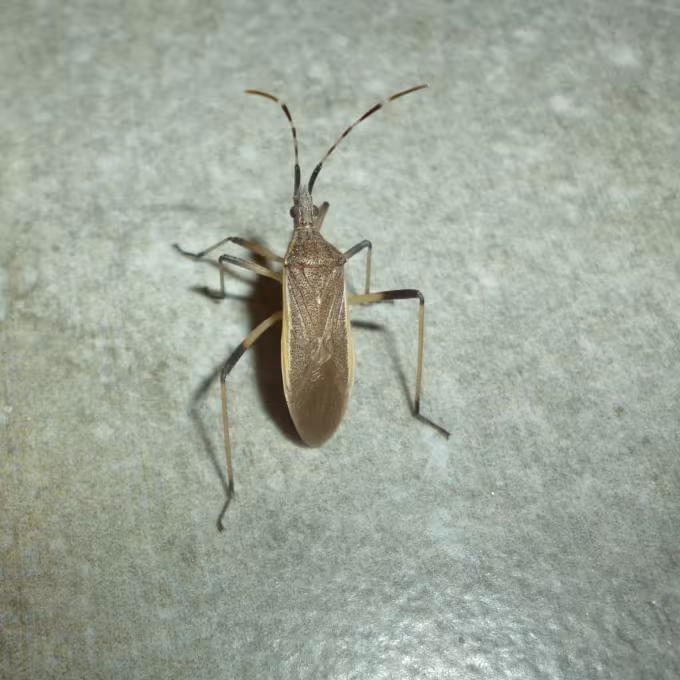
Dicranocephalus marginatus is a species of true bug belonging to the family Stenocephalidae. Adults typically measure 8–10 mm in length and exhibit an elongated body shape, colored in yellowish-brown or brownish tones, providing effective camouflage among dry vegetation.
The name marginatus refers to the distinct light-colored margins on the sides of the pronotum and abdomen, which are key diagnostic features. The head is narrow with prominent eyes, and the antennae are four-segmented, with the terminal segment being characteristically darker.
Nymphs resemble smaller, wingless versions of the adults, possessing softer cuticles. They undergo five developmental stages, progressively acquiring the morphological traits and body proportions characteristic of the mature insect as they grow.
This species is commonly found in open habitats, including meadows, field margins, and roadside vegetation. Under favorable ecological conditions, populations can surge, potentially impacting neighboring agricultural fields.
The insects overwinter primarily as adults, seeking refuge in leaf litter, debris, or the top layer of soil. This survival strategy allows them to endure winter temperatures and emerge early in the spring as soon as conditions improve.
What it damages
Dicranocephalus marginatus primarily targets members of the Fabaceae (legume) family. While they favor wild host plants like spurge (Euphorbia spp.), they readily infest cultivated legume crops, feeding by piercing and sucking sap from vegetative parts.
Both nymphs and adults contribute to crop damage. They use their specialized mouthparts (proboscis) to puncture the epidermis of leaves, shoots, and flower buds. The injection of saliva containing digestive enzymes causes tissue necrosis and retards the plant's development.
High infestation levels cause significant plant stress. Symptoms include deformed leaves, chlorosis, and premature wilting. The destruction of flower buds is particularly critical, as it directly reduces pod formation and overall harvest yield.
In addition to direct physiological damage, the feeding sites created by the bug can serve as entry points for secondary infections by pathogens, further compromising the health and quality of the legume crop.
Though not classified as a major quarantine pest, its ability to migrate between wild hosts and cultivated fields during dry summer periods requires vigilant monitoring by farmers to prevent yield losses.
When it appears
Emergence from hibernation occurs in early spring once daily temperatures consistently rise above +10°C. Upon waking, the bugs begin active feeding on early vegetation to accumulate the energy necessary for the mating season.
Peak egg-laying activity is concentrated in May and June. Females deposit eggs in clusters on the leaves or stems of host plants, ensuring that the emerging nymphs have an immediate and accessible food source.
The development from egg to adult takes approximately 40 to 50 days in temperate conditions. Consequently, multiple life stages may be present simultaneously throughout the summer months before the insects prepare for diapause in autumn.
Environmental factors significantly influence population dynamics. Hot, dry weather accelerates the developmental cycle, often leading to increased pest pressure on crops as the bugs seek moisture-rich tissues in cultivated plants.
Regular field scouting during late spring is essential. Detecting early nymphal stages allows for timely intervention, effectively preventing the population from reaching levels that could cause significant economic damage.
Signs of infestation
Identifying this pest in the field can be challenging due to its excellent camouflage. The most effective scouting method involves using a sweep net to sample the vegetation or carefully inspecting the lower surfaces of leaves.
Initial signs of damage manifest as small, white, or yellow necrotic spots where the bugs have probed the plant tissue. Over time, these spots may enlarge, causing yellowing and distortion of the leaf surface.
- Presence of adults and nymphs on the underside of leaves or stems.
- Characteristic pin-prick necrotic lesions on leaf surfaces.
- Curling and stunting of young shoots and growing tips.
- Premature flower bud drop and poor pod development in legumes.
During the day, particularly in intense heat, plants infested with these bugs show signs of reduced turgor and wilting. Close inspection often reveals aggregations of nymphs sheltering in the leaf axils or lower plant layers.
Because these insects are highly mobile, they often drop to the ground when disturbed, which can hide their presence from casual observation. Careful examination of the entire plant structure is necessary for an accurate assessment.
Control measures
The primary control strategy centers on integrated pest management (IPM), starting with rigorous weed control. Eliminating host plants like Euphorbia around field boundaries significantly reduces the bug's survival and reproduction potential.
Agronomic practices, such as deep autumn plowing of fields after harvest, are highly effective in disrupting the overwintering sites of the adults, thereby lowering the starting population density for the following season.
If thresholds for economic injury are exceeded, the application of registered systemic or contact insecticides may be required. Treatments should be timed to target the more vulnerable nymphal stages rather than the highly mobile adults.
Biological control options, including the use of entomopathogenic fungi or protecting natural enemies like parasitic wasps (Scelionidae), can help maintain population levels below harmful thresholds without relying solely on synthetic chemicals.
A comprehensive approach—combining monitoring, field sanitation, and judicious use of plant protection products—is the most reliable way to secure harvests against damage by Dicranocephalus marginatus.
Taxonomy
- Latin name
- Dicranocephalus marginatus
- Order
- Hemiptera (bugs, aphids, leafhoppers)
- Family
- Stenocephalidae
- EPPO code
- DCRCMA
Discussion
No discussions yet — be the first.