
Dicranocephalus
Dicranocephalus
Description
How to identify
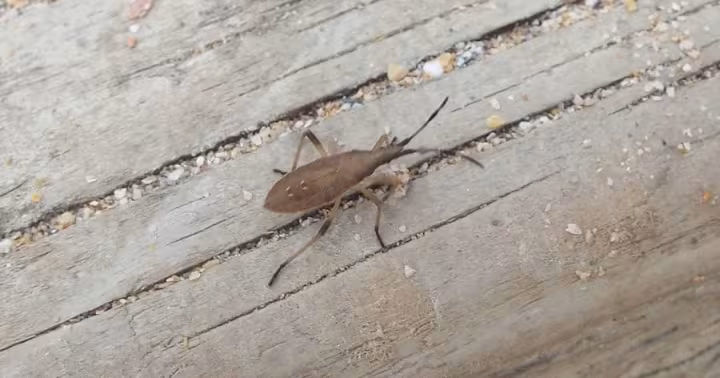
Dicranocephalus is a genus of true bugs belonging to the family Stenocephalidae within the order Hemiptera. These insects are characterized by their elongated bodies, a distinct head structure, and a specific shape of the pronotum.
Adult individuals typically reach lengths of 10–15 mm. Their coloration ranges from grayish-brown to ochre, which provides excellent camouflage on dry plant stems and within plant debris.
A distinctive feature of this family is the presence of long antennae consisting of four segments, along with a piercing-sucking mouthpart designed for feeding on plant tissue sap.
Nymphs resemble the adults morphologically but lack wings and are generally smaller in size. Their development occurs through several molting stages, gradually acquiring adult physical characteristics.
These bugs prefer open, well-warmed areas with sparse vegetation, often found in river floodplains, meadows, and along the margins of agricultural fields.
What it damages
The primary damage caused by Dicranocephalus involves feeding on the sap of the generative parts of plants. They primarily target plants from the Euphorbiaceae family, though they may migrate to cultivated crops during outbreaks.
The bugs pierce the epidermis of stems, leaves, or fruits with their proboscis to suck out nutrients. This interferes with the plant's metabolism, slowing growth and reducing overall crop quality.
Secondary infections often develop at the puncture sites as spores of fungi and bacteria enter through the micro-wounds. This leads to necrosis, spotting, and general wilting of vegetative organs.
The highest economic impact is recorded in fields adjacent to wild spurge thickets, which act as natural reservoirs for the pest population.
Damage to seed crops reduces germination rates, as the insects often suck sap from developing embryos, leading to the formation of hollow or underdeveloped seeds.
When it appears
The life cycle of Dicranocephalus is typically univoltine. Adults overwinter by hiding in plant litter, under fallen leaves, or in the topsoil layer, where they can withstand low temperatures.
In spring, as temperatures rise, the bugs emerge from their overwintering sites. Their activity period begins in late April or early May and continues until late autumn.
Females deposit eggs on the surface of host plants. The incubation period is highly dependent on weather conditions and humidity, which determine the rate of emergence for the next generation of nymphs.
Nymph development proceeds through several phases, each requiring sufficient plant sap to ensure healthy growth toward the imaginal stage.
A massive emergence of new-generation adults usually coincides with mid-summer, when their feeding activity becomes most noticeable on agricultural land.
Signs of infestation
The presence of the pest can be identified by characteristic whitish spots on leaves, which form at puncture sites due to subsequent cell death in the plant tissues.
Severe infestations are accompanied by stem curling and premature yellowing of leaves, linked to the disruption of xylem and phloem transport functions caused by the bug's enzymatic saliva.
Visual inspection of the plants allows for the detection of the insects during early morning or evening hours, when they are most active while feeding on the apical parts of the stems.
Finding a large number of adults on young seedlings serves as a warning signal, necessitating protective measures to prevent large-scale plantation damage.
In specific cases, pest excrement can be observed on the leaf surface, which serves as an indirect indicator of high population density in a particular area.
Control measures
Agrotechnical methods primarily include controlling weed reservoirs, especially spurge, which serves as the main host plant for these bugs in their natural environment.
Timely deep plowing of the soil allows for the destruction of a significant portion of overwintering adults, effectively disrupting their natural shelters in the soil and plant residue.
The use of biological insecticides based on entomopathogenic fungi is effective during the early stages of nymph development, allowing for population reduction without harming beneficial insects.
Chemical control with systemic or contact insecticides is justified only when the economic injury threshold is reached, threatening a significant loss of harvest.
Crop rotation and spatial isolation of fields from areas with dense growth of spurge weeds are key components of a comprehensive preventive protection strategy.
Taxonomy
- Latin name
- Dicranocephalus
- Order
- Hemiptera (bugs, aphids, leafhoppers)
- Family
- Stenocephalidae
- EPPO code
- DCRCSP
Discussion
No discussions yet — be the first.