
Spruce leafroller
Dichelia histrionana
Description
How to identify
The spruce leafroller (Dichelia histrionana) is a moth species belonging to the family Tortricidae, known for its impact on various conifer species, particularly spruce trees.
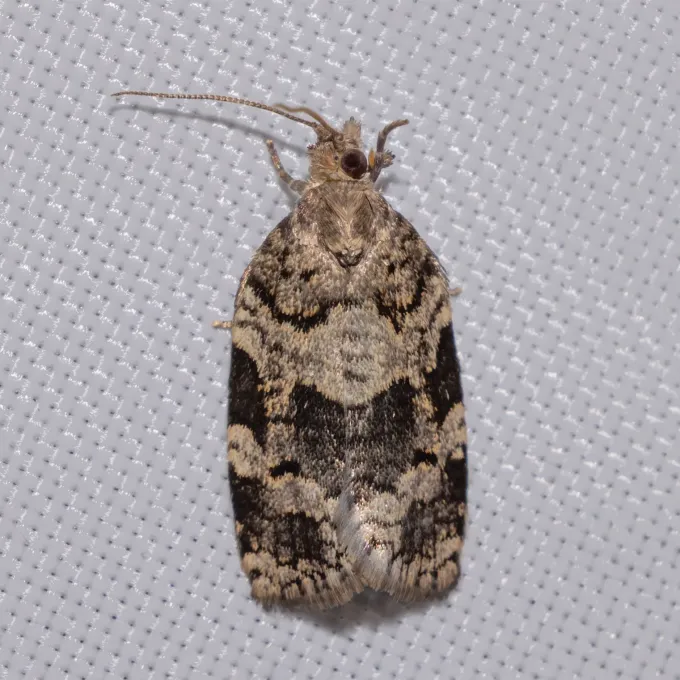
The adult moth is relatively small with a wingspan ranging from 15 to 20 mm. Its forewings exhibit a variable pattern of brownish to ochre shades, often with darker markings that act as camouflage.
Larvae, or caterpillars, progress through several instars. They typically possess a dark head and a body that ranges in color from light green to brownish, helping them blend into their surroundings.
The life cycle of the spruce leafroller follows a complete metamorphosis: egg, larva, pupa, and adult. Each stage is adapted to the specific seasonal conditions of temperate forest ecosystems.
Because they are small and often feed within protective webbed nests, identifying this species usually requires careful inspection of the foliage during the active growing season.
What it damages
Spruce trees (Picea spp.) are the primary host for this insect. The larvae feed on the needles, showing a preference for the tender young shoots and buds found at the top of the tree.
Feeding damage leads to the yellowing, browning, and eventual dropping of needles. This premature loss of foliage directly affects the tree’s photosynthetic capacity and aesthetic value.
In cases of heavy infestation, the larvae can cause significant defoliation, leading to stunted shoot growth and a distorted appearance of the tree's crown.
Weakened trees become susceptible to secondary pests, including bark beetles, which can further jeopardize the health of the host tree and potentially lead to mortality.
In nurseries, spruce leafroller activity can severely impact the quality of saplings, making them unsuitable for commercial sale or reforestation purposes.
When it appears
The species typically overwinters as young larvae. They create silk-lined hibernacula, often hidden within bark crevices or near the base of needles to survive low winter temperatures.
Activity resumes in the spring, usually around April or May, when larvae emerge to feed on developing buds and emerging fresh needles of the spruce tree.
Pupation generally occurs during the summer months, specifically in June or July. The pupae are protected within webs constructed by the final-instar larvae among the needles.
Adult flight takes place in mid-summer, providing the necessary window for mating and the laying of eggs on the host foliage for the next generation.
The development cycle is synchronized with the bud burst of the host tree, ensuring that the larvae have access to the most nutritious food source during their critical growth period.
Signs of infestation
The most visible sign of infestation is the presence of webbed clusters of needles on the branches, where larvae hide and feed securely.
Frass, or larval excrement, caught in the silken webbing on the branches serves as a clear indicator of the presence of the spruce leafroller during the feeding season.
Stunted or damaged shoots where the needles have been chewed or completely removed are common indicators of the caterpillar's activity on the tree.
In early summer, the appearance of deformed, brownish, or webbed tips on the branches strongly suggests that a leafroller colony is present within the cluster.
A noticeable thinning of the foliage on spruce trees, combined with the aforementioned signs, confirms an active infestation that may require intervention.
Control measures
Chemical control involving systemic or contact insecticides is effective if applied during the period when larvae are active and emerging from hibernation.
Biological control methods, such as applying Bacillus thuringiensis (Bt) based formulations, provide an environmentally friendly alternative to traditional pesticides.
In garden settings, manual removal of infested branches and webbed nests during the spring can significantly reduce the local population of the pest.
Promoting a healthy ecosystem that supports natural predators, such as parasitic wasps and predatory beetles, is a crucial strategy for long-term integrated pest management.
- Monitor populations using pheromone traps.
- Ensure adequate tree vigor through proper fertilization and watering.
- Conduct annual inspections to detect infestations before they become widespread.
Taxonomy
- Latin name
- Dichelia histrionana
- Order
- Lepidoptera (butterflies)
- Family
- Tortricidae
- EPPO code
- CACOHI
Discussion
No discussions yet — be the first.