
Diaprepes root weevil
Diaprepes abbreviatus
Description
How to identify
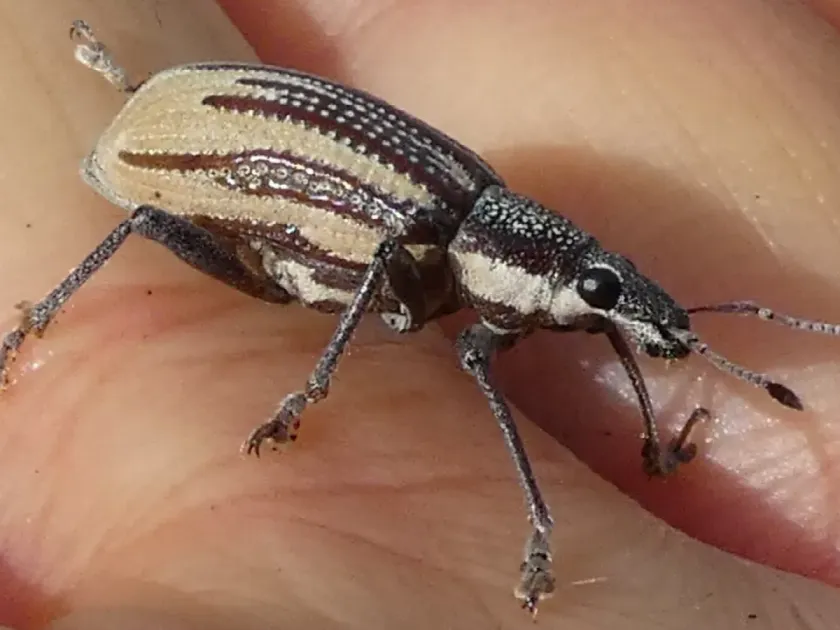
The Diaprepes root weevil, scientifically known as Diaprepes abbreviatus, is a significant insect pest belonging to the Curculionidae family. Adult weevils typically measure between 10 to 20 millimeters in length and feature a distinct appearance with a black or dark brown body marked by variable patterns of orange, yellow, or gray scales.
Identification can be challenging due to the high variation in coloration among individuals. The weevil is characterized by a short, broad snout, which is typical for the Entiminae subfamily. Its larvae, which are responsible for the most severe damage, have a white, legless, C-shaped body with a hardened brownish head capsule.
The eggs are oval and pale yellow, typically deposited by females on the surface of leaves. A unique behavioral trait of the female is gluing leaf margins together to enclose the egg mass, which provides a protective barrier against predators and environmental stress during the incubation period.
The life cycle duration of this pest is highly dependent on environmental factors, particularly soil moisture and temperature. In tropical climates, it can remain active throughout the year, allowing for overlapping generations that complicate control efforts.
As an invasive species, the Diaprepes root weevil has spread globally, primarily through the trade of ornamental plants and nursery stock. It is strictly monitored by quarantine authorities due to its broad host range and potential for devastating economic impact.
What it damages
Diaprepes abbreviatus is a highly polyphagous pest, capable of attacking over 270 species of plants. While it is particularly notorious for damaging citrus orchards, it also poses a serious threat to sugarcane, corn, potatoes, and various landscape ornamental plants.
The most devastating damage is caused by the larval stage feeding within the soil. Larvae initially feed on fine roots but quickly progress to excavating the bark of larger structural roots, which severely compromises the plant's nutrient and water uptake capabilities.
Adult weevils feed on foliage, creating distinctive semi-circular or "notched" patterns along the leaf edges. While this leaf damage is primarily aesthetic, it serves as a critical indicator for detecting the presence of a new infestation in the field.
By damaging the root system, the larvae create entry points for soil-borne pathogens, such as Phytophthora fungus. This interaction often leads to rapid tree decline, yellowing of leaves, and reduced yields, eventually resulting in total tree mortality if left unchecked.
Orchards infested with this pest often suffer from thinning canopies, stunted growth, and a significantly shortened economic lifespan. The combined effect of direct root damage and subsequent fungal infections makes this pest a primary concern for growers.
When it appears
Adult weevils are most active during periods of high humidity and rainfall, which trigger their emergence from the soil. In warm regions, this activity can occur sporadically throughout the year, though peak numbers are usually seen during the growing season.
During the peak activity months, adults emerge to feed on foliage and reproduce. This is the optimal window for monitoring and implementing management strategies aimed at preventing the next generation of larvae from establishing in the soil.
Following mating and oviposition, the larvae hatch and fall to the ground, where they immediately burrow into the soil to begin their root-feeding cycle. This subterranean behavior makes them invisible to standard monitoring, necessitating the use of specialized traps.
Overwintering usually occurs as larvae within the soil or in the root tissues. As temperatures rise, the larvae resume feeding, leading to increased pressure on the host plants as the season progresses.
Growers should maintain a consistent monitoring schedule using visual inspections and pheromone-based traps. Early detection is paramount because once larvae reach the deeper root zones, control becomes exponentially more difficult and expensive.
Signs of infestation
The primary visual sign of a Diaprepes infestation is the presence of notches on the leaf margins. Seeing these "scalloped" edges on citrus or other vulnerable crops is the most immediate warning sign that adults are present and active.
The discovery of leaf clusters glued together is a definitive sign of egg-laying activity. These leaf-nests should be inspected and destroyed manually to prevent the larvae from hatching and entering the soil environment.
General plant decline, including yellowing leaves (chlorosis), wilting, and poor shoot growth, is often the result of significant root damage. When investigating such symptoms, it is common to find girdled roots or larval feeding tunnels upon careful excavation.
Adult weevils are often visible on the foliage during the early morning or evening hours. When disturbed, they frequently drop to the ground and play dead, making them difficult to spot without a "knock-down" technique using a collection sheet underneath the canopy.
Secondary infections, such as root rot, often present as the first obvious sign of infestation. If a tree suddenly shows signs of stress and decay that match fungal symptoms, the root zone must be checked for the presence of weevil larvae.
Control measures
Integrated Pest Management (IPM) is essential for managing Diaprepes root weevil effectively. This strategy combines biological controls, chemical applications, and cultural practices to maintain populations below economic injury levels.
Chemical control focuses on timing applications of systemic or contact insecticides to coincide with adult emergence. By targeting the adults, growers can prevent them from laying eggs, effectively breaking the pest's cycle at the source.
Biological control, specifically the use of entomopathogenic nematodes, has proven highly successful in suppressing larval populations in the soil. These microscopic organisms seek out and infect larvae, providing a sustainable and eco-friendly management option.
Cultural practices include proper irrigation to maintain tree vigor, weed control to reduce adult feeding sites, and the use of certified, pest-free nursery stock. Keeping the orchard floor clean can also help in spotting adult weevils more easily.
- Implement regular monitoring using pheromone and light traps.
- Manually remove and destroy leaf-nests containing egg masses.
- Apply entomopathogenic nematodes to the soil to target underground larvae.
- Use physical barriers around tree trunks to limit adult movement.
Taxonomy
- Latin name
- Diaprepes abbreviatus
- Order
- Coleoptera (beetles)
- Family
- Curculionidae
- EPPO code
- DPREAB
Discussion
No discussions yet — be the first.