
Diaprepes root weevil
Diaprepes
Description
How to identify
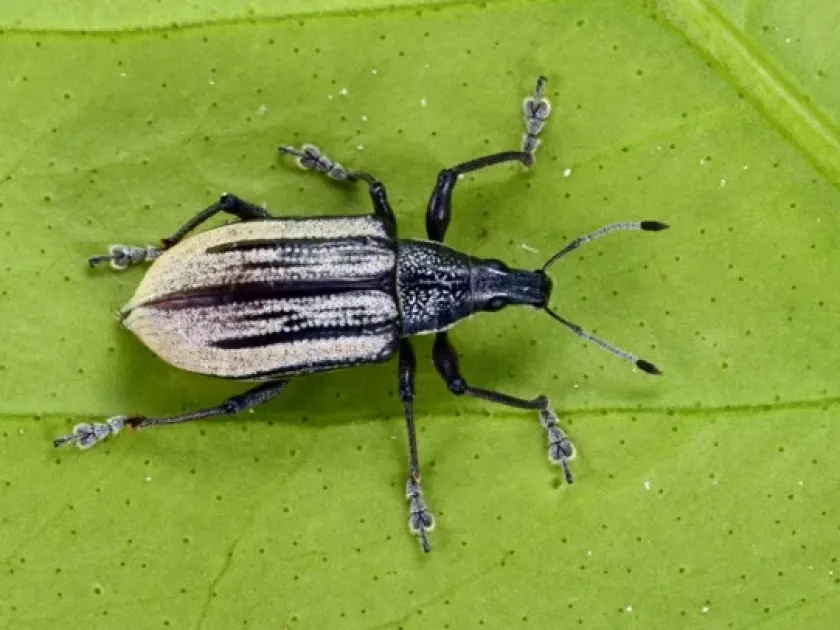
The Diaprepes root weevil (Diaprepes abbreviatus) is a significant pest belonging to the Curculionidae family and the order Coleoptera. Adult weevils are typically between 10 and 20 mm long.
These insects exhibit varied coloration, often featuring intricate patterns of black, gray, orange, or yellow scales on their elytra. This cryptic appearance helps them blend seamlessly with the bark and foliage of host trees.
The larval stage, which lives underground, is creamy-white, legless, and possesses a robust head with powerful mandibles. These larvae are highly specialized for boring into the woody tissues of plant roots.
The life cycle includes a pupal stage that occurs within the soil, followed by the emergence of adults capable of flight. This mobility allows the pest to expand its range rapidly throughout orchards and agricultural zones.
The reproductive rate and developmental speed of D. abbreviatus are highly dependent on temperature and soil moisture levels, making it particularly prolific in warm, humid climates.
What it damages
Diaprepes is a highly polyphagous pest, meaning it feeds on a vast array of plant species. While citrus is its most economically significant target, it infests over 270 different types of plants.
Key crops and plants at risk include:
- Citrus trees (oranges, grapefruits, limes)
- Potatoes and sweet potatoes
- Ornamental palms and shrubs
- Various tropical fruits like papaya and guava
- Field crops like sugarcane and corn
Adult weevils feed on leaves, creating distinct semi-circular notches along the edges of the leaf blades, which can lead to significant defoliation in severe infestations.
However, the most destructive damage is caused by the larvae, which feed on the root system, stripping the bark and boring into the central vascular tissues of the roots.
This root damage disrupts the plant's ability to transport water and nutrients, often weakening the tree to the point of collapse or death, especially when compounded by secondary fungal infections.
Signs of infestation
The primary visual clue of adult presence is the notched appearance of leaves, often referred to as "leaf notching." During the day, adults may be found hiding under leaves or in crevices.
Signs of larval damage include the gradual decline of the tree, characterized by yellowing foliage, reduced canopy density, and a general lack of vigor in the orchard.
A telltale sign of larval activity is the presence of feeding tunnels or galleries found on the roots if the soil is carefully removed near the root collar of an infested tree.
In mature orchards, infected trees may show uneven growth or start to die back from the top down, a clear indicator that the root system is failing to support the canopy.
Farmers can use monitoring tools such as sticky bands on tree trunks or sweep netting in the canopy to detect the presence of adult weevils before they establish a large breeding population.
Control measures
Effective management of Diaprepes root weevil requires an Integrated Pest Management (IPM) approach because the larval stage is largely protected within the soil profile.
Chemical control strategies generally focus on the adult weevil, utilizing contact insecticides applied to the foliage during the peak emergence periods to prevent egg laying.
Biological control has proven highly effective in many regions, specifically the application of entomopathogenic nematodes (such as Steinernema riobrave) to the soil to target and parasitize larvae.
Cultural practices are essential, including the use of landscape fabrics or specific types of mulch to prevent neonate larvae from successfully reaching the soil after hatching from leaves.
Strict quarantine measures are vital for preventing the accidental transport of infested nursery stock, which is one of the primary pathways for the long-distance spread of this damaging pest.
Taxonomy
- Latin name
- Diaprepes
- Order
- Coleoptera (beetles)
- Family
- Curculionidae
- EPPO code
- DPRESP
Discussion
No discussions yet — be the first.